

Theologian Urges Christians To Rethink Faith and Voting While Calling Modern Israel Belief 'Unbiblical'
NT Wright challenges familiar interpretations of Scripture while questioning how religious beliefs shape political decisions
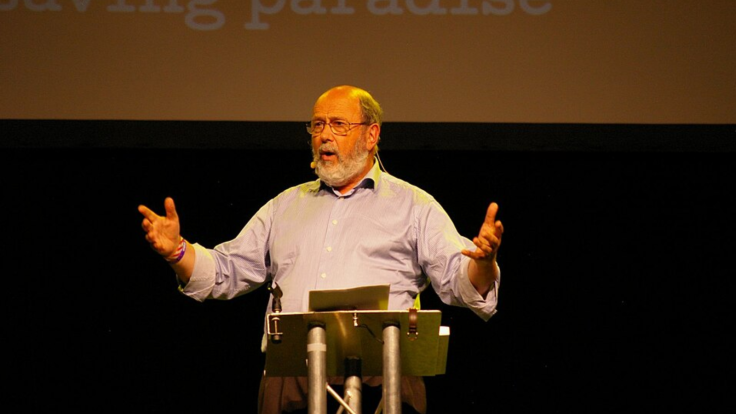
British theologian NT Wright questioned Christian interpretations of modern Israel at a conference in Dallas, Texas, on Monday, 2 November 2026.
He described the belief that the modern Israeli state fulfils biblical prophecy as a 'totally unbiblical idea', according to The Christian Post. His remarks came one day before the US midterm elections.
Wright, 77, made the comments during a question-and-answer session at Park Cities Baptist Church. The church's programme confirms that The Fresh Challenge of Romans runs from 1 to 4 November. The conference examines the Apostle Paul's letter to the Romans in its original historical and theological setting.
A former Bishop of Durham, Wright is research professor emeritus at the University of St Andrews and senior research fellow at Wycliffe Hall, Oxford. His comments connected disputes over biblical interpretation with the religious priorities voters bring to elections.
Why NT Wright Disputes the Israel Prophecy Claim
Wright criticised the interpretation that the existence of the modern state of Israel fulfils predictions in Scripture. His objection concerned a particular theological claim, not Israel's existence or every political argument for supporting it.
He identified Dispensationalism among the traditions informing that view. The framework developed during the 19th century, and some of its interpretations distinguish between Israel and the Church when discussing biblical promises and future events. Wright argued that connecting those teachings to the present Israeli state was unwarranted.
The theologian said he once regarded the belief as unusual rather than consequential. He now considers it 'a very dangerous thing to believe', The Christian Post reported.
There are differing Christian approaches to the question. Dallas Theological Seminary's published doctrinal statement, for example, anticipates Israel's restoration to its land and the fulfilment of covenant promises. That longstanding position was not issued in response to Wright's remarks.
The subject also has a place in American religious life. A Pew Research Center survey conducted in April found that 24% of white evangelical Protestants attending services at least monthly said they had heard clergy express support for Israel. The finding concerns messages from religious leaders, not whether respondents believe Israel fulfils prophecy.
Jeff Warren, senior pastor at Park Cities Baptist Church, offered a brief assessment. 'Theology matters', he said.
Wright acknowledged that views on Israel are only one consideration facing American voters. He also mentioned the economy, immigration and other concerns, describing the difficulty of choosing among competing political priorities.
His reported remarks did not endorse a candidate or party. Instead, he pressed Christians to examine which biblical teachings inform their political decisions.
NT Wright Questions Christian Nationalism and Voting Priorities
Wright urged countries claiming a Christian heritage to examine their conduct against the Sermon on the Mount. He singled out teachings on peacemaking and justice, questioning whether national priorities matched the religious language used to defend them.
His criticism extended to Britain as well as the United States. While acknowledging that Christian nationalism has different histories in the two countries, Wright said both invoke Christian identity in politics without necessarily meeting the standards they profess.
He also highlighted Psalm 72, a passage about a king's duty to defend vulnerable people and administer justice. Wright pointed to its concern for the poor, widows, orphans and those subjected to oppression.
Those passages, he suggested, offer measures for evaluating governments more demanding than appeals to national tradition. Wright said he could not currently see the priorities of the Psalms, Isaiah and the Sermon on the Mount consistently reflected in either country.
The Dallas conference itself is devoted to interpreting Romans without automatically imposing questions developed centuries after Paul's lifetime. Wright's remarks on politics emerged during its question-and-answer discussions, rather than from an advertised electoral programme.
Despite challenging some theological assumptions, Wright urged American evangelical Christians to vote. He called refusing to participate 'a dereliction of responsibilities'. The conference is scheduled to end on Wednesday, 4 November.
© Copyright IBTimes 2026. All rights reserved.