

Elon Musk Eyes Space Escape for AI Data Centres After Spending Nearly $500M on Losing Republicans
The SpaceX chief renewed his interest in putting AI computing infrastructure in orbit after election victories by candidates opposing further data-centre expansion
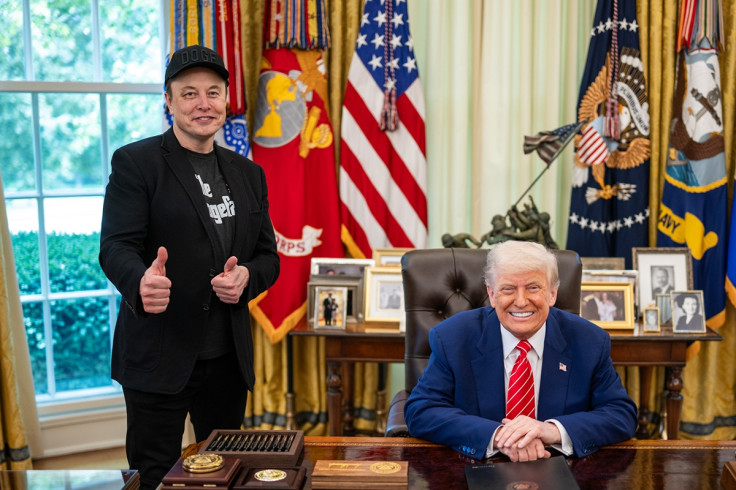
Elon Musk appears to be considering moving artificial intelligence data centres into space, just hours after Democrats scored sweeping election victories that dealt a major blow to Republicans he had spent hundreds of millions of dollars supporting.
'Data centers in space looking pretty appealing right now,' the billionaire posted on X on Wednesday, 4 November, as the political fallout from the midterm elections continued.
Data centers in space looking pretty appealing right now
— Elon Musk (@elonmusk) November 4, 2026
Musk posted the tweet after Democrats secured major victories across the country, including Gina Hinojosa's projected win in Texas, where she defeated Republican Greg Abbott. Her campaign included proposals to restrict the expansion of data centres, putting Musk's growing appetite for computing power in the spotlight.
Texas Election Raises Concerns Over Data Centre Expansion
Hinojosa campaigned on an immediate moratorium on new data centre projects until lawmakers could establish stronger protections for local communities.
She also proposed eliminating subsidies for data centre developers, banning non-disclosure agreements and requiring companies to demonstrate that their facilities would not increase household electricity and water bills.
Those proposals could complicate expansion plans for technology companies racing to secure the computing capacity needed to develop AI.
Brad Gerstner of Altimeter Capital warned that the political shift could put a significant portion of planned infrastructure projects at risk.
Speaking during a streaming interview on Tuesday night, he said forecasts anticipated 43 gigawatts of new data centre capacity coming online in 2027. However, he suggested that between 10 and 15 gigawatts of that expected capacity might not materialise.
Musk's interest in space-based infrastructure is not new. The SpaceX chief has previously argued that orbital data centres could eventually become cheaper to operate.
In March, he predicted that the cost of deploying AI computing infrastructure in space could fall below that of ground-based facilities within two or three years.
Musk's Space Plans Meet Outrage and Ridicule
Musk's latest suggestion was met with a mixture of criticism, sarcasm and outright hostility on X, with several users appearing less than sympathetic to the billionaire's proposed escape from earthly infrastructure problems.
'So you are leaving? Sweet!' wrote one user.
In an earlier exchange, Musk got into an argument with one of his followers who reportedly lost respect for him over the space data centre plans, prompting the billionaire to reply with a scathing 'You are fully ret**ded.'
Others questioned the motivation behind the idea. One user asked: 'Why? Because Zelenskyy can't bomb your bot followers in space?'
Data Centres in Space Face Major Engineering Hurdles
Despite Musk's confidence, taking large-scale AI infrastructure beyond Earth presents serious challenges.
The US Government Accountability Office warned in April that the enormous solar arrays required to power orbital data centres would need further engineering development.
Cooling is another major obstacle. Unlike facilities on Earth, equipment in space cannot rely on conventional air-based cooling systems to remove waste heat.
Property consultancy JLL has also highlighted the problem, describing space cooling as a fundamental engineering hurdle; heat cannot be carried away through convection in a vacuum.
Musk argues that consistent sunlight in space could remove some power constraints and eventually reduce operating costs. However, the difficulties remain unresolved.
Musk's latest post has offered no concrete timeline or detailed proposal. With political resistance to new data centres growing, the billionaire's vision of taking AI computing into orbit is attracting attention for reasons that extend beyond technology.
© Copyright IBTimes 2026. All rights reserved.