

Trump Health Mystery: Expert Questions 'Chronic' Bruising Despite White House Claims
Expert fears grow as Donald Trump looks 'unwell' in a manic White House speech. Is there a health cover-up? Find out more.
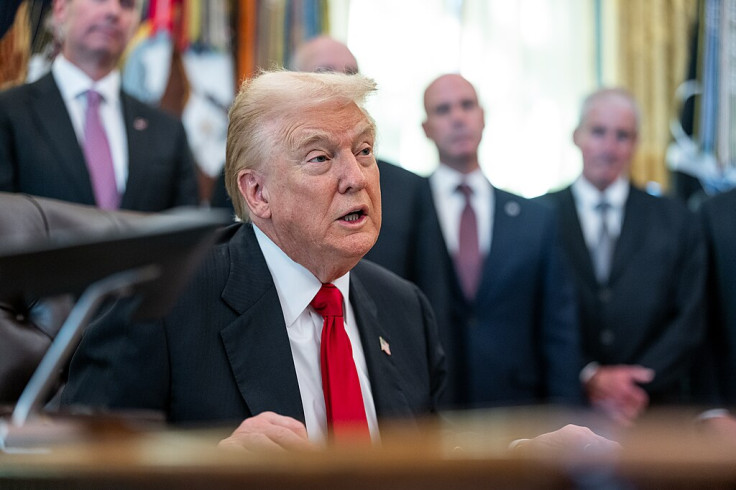
As the festive glow of Christmas trees and the warm flickering of the fireplace in the White House Diplomatic Reception Room provided a backdrop for Wednesday's televised address, the atmosphere inside the room appeared far from peaceful. For many viewers, the 18-minute broadcast was a standard update on the nation's economy, touting tariffs and claiming that grocery prices are finally falling, but for one of the country's most respected medical experts, the scene triggered immediate and serious concern.
Dr Jonathan Reiner, a renowned cardiologist who famously managed the health of late Vice President Dick Cheney for three decades, has sounded a public alarm, suggesting that the president's physical and mental state appears to be deteriorating.
Dr Reiner, currently a professor of medicine and surgery at George Washington University and a frequent medical analyst for CNN, did not mince his words as the speech unfolded on 17 December. Taking to social media, the heart specialist described the 79-year-old president as looking 'unwell,' a sentiment that has quickly ignited a fierce debate across the political and medical landscape.
While the president spoke of job creation and wage increases, Reiner noted a jarring disconnect between the surroundings and the delivery. 'The tone of this speech doesn't quite match the festive background,' Reiner observed just minutes into the broadcast. As the address continued, his assessment grew more clinical and more worrying. 'The pace of this address is manic,' he noted, describing how the president read at an unusually rapid clip from the teleprompter, skipping abruptly between pharmaceutical costs and swipes at Joe Biden, before eventually concluding, 'I'm seriously concerned about the health of the president.'
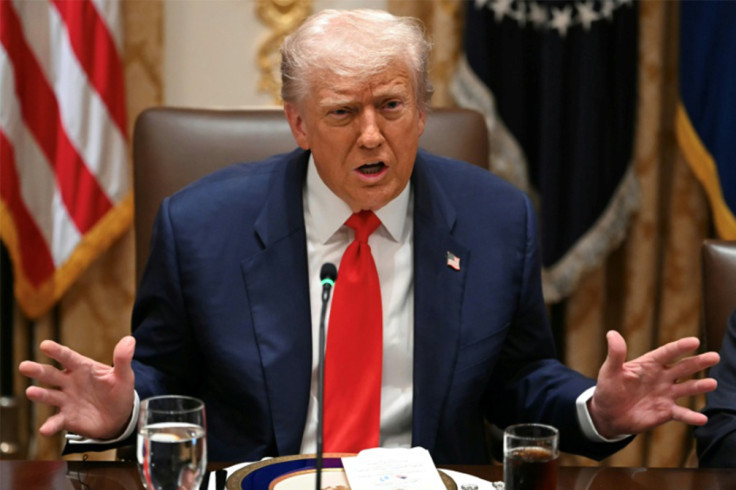
Manic Delivery And The Hand Bruising Mystery Of Donald Trump
The cardiologist's intervention has refocused national attention on a series of lingering questions regarding the president's physical condition. Chief among them is the persistent and unexplained bruising on the back of the president's right hand. These marks have been a fixture of his public appearances since the early summer, often accompanied by bandages or medical tape.
Last week, the mystery deepened when Press Secretary Karoline Leavitt was pressed by reporters about two fresh Band-Aids visible during a briefing. The official White House line remains that the contusions are merely the result of 'tissue damage from frequent handshaking' whilst taking aspirin as part of a 'standard cardiovascular prevention regimen.' Medical notes have previously suggested the president suffers from chronic venous insufficiency, and Leavitt confirmed he remains on a daily aspirin regimen, which can cause significant skin discolouration.
However, Dr Reiner remains unconvinced by the administration's explanation. Sharing a video of the exchange between Leavitt and the press, he questioned the credibility of the excuse. 'I believe that the president shakes a lot of hands, but handshaking is not a credible explanation for the chronic bruise on his hand,' Reiner argued. He further speculated on whether similar marks were present elsewhere on the president's body, hinting at a potential systemic issue rather than simple surface trauma.

Cognitive Questions And The Battle Over Donald Trump's Vitality
Beyond the physical marks, the president's recent behaviour has also come under the microscope. In late November, an incident aboard Air Force One saw the president label Bloomberg journalist Catherine Lucey 'piggy' after she attempted to ask a follow-up question regarding the recently released Jeffrey Epstein files. It was an outburst that Reiner suggested could be more than just political theatre. The heart surgeon pointed out that 'sudden bursts of anger in an older person can be a symptom of concern,' potentially indicating cognitive shifts.
In response to growing speculation, the White House released a letter from Dr Sean Barbabella on 1 December. The report confirmed that the president had undergone an MRI in October but clarified it was not to assess brain function. The memo audaciously claimed the president's cardiac age was 14 years younger than his actual age.
Instead, Barbabella insisted the imaging was a 'preventative' measure to evaluate cardiovascular and abdominal health, areas where he claimed the results were 'perfectly normal'. The explanation was complicated, however, by the president himself, who later confessed he had no idea which body part was actually being imaged.
The administration has met Reiner's critiques with characteristic aggression. White House Communications Director Steven Cheung issued a scathing rebuttal, suggesting that the doctor himself required medical attention. Cheung dismissed the concerns as a 'debilitating case of Trump Derangement Syndrome,' accusing the cardiologist of bias.
Yet, as the president prepares for another year in the world's most demanding job, the contrast between the official clean bill of health and the observations of outside experts continues to fuel a tense national conversation.
The clash between the White House's glowing medical reports and the stark observations of experts like Dr Reiner shows no sign of abating. With the president's health remaining a focal point of public discourse, the demand for greater transparency in the Oval Office has never been more pressing.
© Copyright IBTimes 2026. All rights reserved.
- MOST POPULAR IN World


