Donald Trump's 'Jaw-Dropping' Irish Unity Comments Renew Scrutiny of His Recent Public Conduct
Donald Trump's Irish unity comments have drawn criticism over their tone and raised fresh questions about his conduct during his Ireland visit
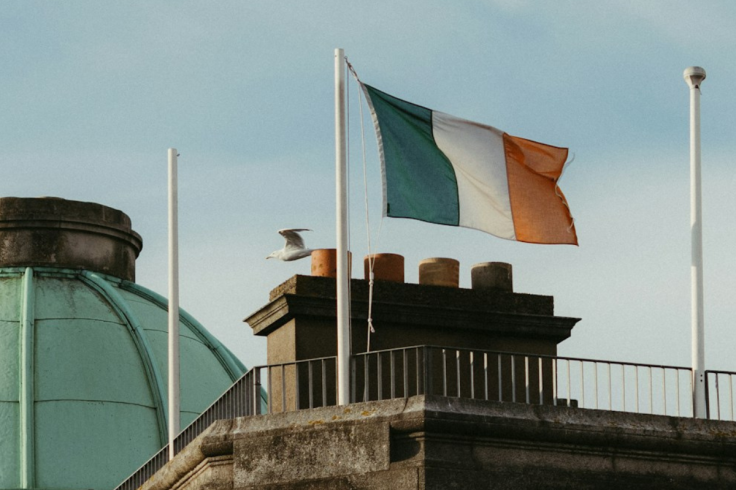
Donald Trump's remarks supporting a united Ireland have renewed criticism of his public conduct after the US president raised the issue during a two-day visit to Ireland on 12 September 2026.
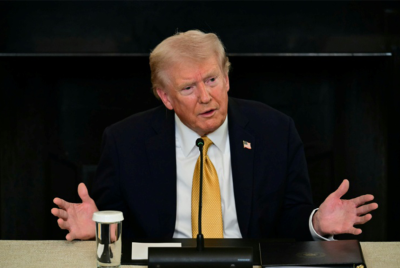
Speaking beside Taoiseach Micheál Martin in Dublin, Trump said he would 'love to see it unified', calling Irish reunification 'a fantastic thing' and saying it would happen eventually.
Donald Trump Steps Into a Delicate Debate
The news came after Trump's visit combined formal meetings in Dublin with an appearance at his Doonbeg golf resort in County Clare. His comments were made during a press exchange with Martin, rather than through a formal policy announcement, but they immediately touched a constitutional question shaped by decades of conflict and a carefully negotiated peace agreement.
Trump later repeated the substance of his view, describing a united Ireland as 'a very cool thing'. He also acknowledged that 'the UK will have something to say about it', a reminder that the constitutional future of Northern Ireland cannot be settled by an American president's preference.
BREAKING: Donald Trump has said he would 'love' to see a unified Ireland during a meeting with Irish Prime Minister Micheál Martin in Dublin.
— Sky News (@SkyNews) September 12, 2026
Replying to a reporter, the US president said 'it's going to happen eventually' adding 'the UK will have something to say about it'. pic.twitter.com/hJ2ZjdIhB5
Under the 1998 Good Friday Agreement, a border poll is not automatic. The British government can call one if it appears likely that a majority in Northern Ireland would vote to leave the United Kingdom. Any constitutional change would also require consent through the agreement's democratic process.
That framework matters because the agreement ended three decades of violence between nationalists, who sought a united Ireland, and unionists, who wanted Northern Ireland to remain part of the UK. The issue is not a slogan or a golf-club aside. For many families, it remains bound to loss, identity and the uneasy peace that followed.
Trump's intervention drew a sharp response from Gavin Robinson, leader of the Democratic Unionist Party. Writing on X, Robinson said Northern Ireland's constitutional future would be decided 'by the people of Northern Ireland, not by commentary in London, Dublin or Washington'.
The DUP leader's point was blunt, and legally important. Trump can express a view, but he has no vote in Northern Ireland and no power to order a border poll.
Why Donald Trump's Words Landed So Hard
The criticism went beyond the substance of Trump's position. Simon Kelner, writing in the i newspaper, objected to his description of Irish unity as 'cool', arguing that it showed insufficient regard for the Good Friday Agreement and the families of those killed during the Troubles.
Kelner also linked the remark to what he described as an increasingly bizarre pattern in Trump's public behaviour. He cited AI-generated social-media images and other recent posts, then argued that the Irish intervention reflected detachment from the history and sensitivities involved. Those are Kelner's characterisations, not an established medical or psychological finding.
That distinction matters. Trump's supporters and critics may interpret his communication style in sharply different ways, but the available evidence here establishes a political intervention, not a diagnosis. Nothing in the reported remarks proves that he misunderstood the agreement, although the casual language made that accusation easier to sustain.
Ireland's government moved to lower the temperature. Martin said Trump 'takes a different sort of perspective on things' and urged people to keep 'a calm perspective'. Ireland's Foreign Affairs Minister Helen McEntee similarly said Trump's comments were his own opinion and did not alter the positions of the Irish or UK governments, or the terms of the Good Friday Agreement.
Nationalists welcomed the direction of Trump's comments. Sinn Féin leader Mary Lou McDonald said the conversation around Irish unity had shifted and described reunification as a peaceful, organised national journey. Unionist politicians, by contrast, stressed that presidents do not get to decide Northern Ireland's future.
The visit also carried a less constitutional, more transactional thread. At a ceremony at the Doonbeg resort, Trump announced plans to remove a 10 per cent US tariff on Irish whiskey, saying that 'everybody's been bugging me' about the issue.
The announcement was reported as applying to Irish whiskey products, but its timing added to the impression of a trip where presidential diplomacy, personal business interests and off-the-cuff remarks sat uncomfortably close together.
More than 10,000 people joined an anti-Trump demonstration in Dublin during the visit, according to the BBC, while protests also took place near Doonbeg. Their objections covered wider US policy, not only Irish unity. Still, the scenes underlined the gap between the official welcome and the anger visible beyond the gates.
The core position remains unchanged. A united Ireland cannot be created by Trump, Martin or any other outside voice. It would depend on consent and the procedures established by the peace agreement.
The political noise may be loud, even wild at times, but the legal route is deliberately slower. And that, inconveniently for anyone looking for a dramatic shortcut, is the point.
© Copyright IBTimes 2026. All rights reserved.
- Recommended For You