

Trump Faces GOP Revolt Over 23 Pending Judicial Nominees as Democrats Prepare To Take Control of Senate
Disputes over home-state consultation and the Senate's blue-slip tradition could complicate efforts to confirm the nominees by the end of 2026
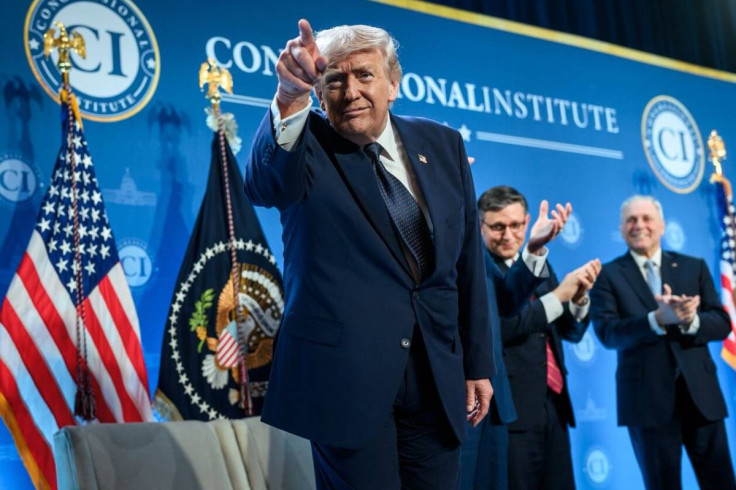
President Donald Trump's effort to confirm 23 pending judicial nominees before Democrats take control of the US Senate faces resistance from several Republicans. The dispute centres on a handful of candidates selected for federal judgeships, Reuters reported on Sunday, 15 November 2026.
The confrontation follows Democratic victories in the 3 November midterm elections, which are expected to give the party control of the Senate in January 2027.
Republicans had confirmed 57 of Trump's judicial nominees during his second term by 15 November. But disagreements over several remaining selections could complicate his final confirmation push.
At issue is a Senate tradition allowing lawmakers substantial influence over judicial appointments in their home states.
Trump Judicial Nominees Face Resistance From Republican Senators
Under Senate Judiciary Committee custom, home-state senators can obstruct district court nominations by withholding a 'blue slip' indicating their support.
Oklahoma Republican Senator Alan Armstrong has accused the White House of disregarding qualified candidates recommended by his office.
Armstrong told Reuters that the administration had 'basically ignored' his recommendations in favour of its preferred candidate.
The dispute has already prompted a change in Trump's plans for an Arkansas appeals court vacancy.
On 10 November, the White House withdrew US District Judge Lee Rudofsky's nomination to the 8th US Circuit Court of Appeals.
Arkansas Republican Senators John Boozman and Tom Cotton had opposed Rudofsky.
Trump subsequently nominated Arkansas Supreme Court Justice J. Cody Hiland for the position.
Retiring North Carolina Senator Thom Tillis has supported colleagues challenging judicial selections made without their backing.
'That's not how it works here,' Tillis told reporters, criticising the administration's approach to consulting senators.
Texas Republican Senator John Cornyn has separately declined to commit to supporting T. Elliot Gaiser for a federal judgeship in Dallas.
Gaiser heads the Justice Department's Office of Legal Counsel and was selected without Texas's customary senator-led screening process.
Without Cornyn's support, Gaiser could struggle to advance through the Senate Judiciary Committee.
Trump Judicial Nominees Face Deadline Before Democrats Take Control
The White House maintains that it wants all pending nominees confirmed before the end of 2026.
'We expect all judicial nominees pending in the Senate to be confirmed this year,' an administration official told Reuters.
Senate Majority Leader John Thune has made judicial confirmations a priority during the remaining Republican-controlled session.
The Senate scheduled a confirmation vote on Colorado District Judge Daniel Domenico's nomination to the 10th Circuit for Monday, 16 November.
Another disputed candidate is Zachary Paul West, an Oklahoma attorney general's office lawyer nominated for the Eastern District of Oklahoma.
Armstrong initially submitted a favourable blue slip for West but subsequently withdrew his support.
Tillis has backed Armstrong's objections, leaving West without sufficient expected committee votes, according to Reuters.
The Senate Judiciary Committee is scheduled to consider West's nomination on Tuesday, 17 November.
Armstrong's expected replacement by Republican Senator-elect Kevin Hern could alter the situation, although the transition depends on certification and swearing-in arrangements.
Trump confirmed 234 federal judges during his first presidency, including three Supreme Court justices.
Reuters estimates that his appointees now account for roughly one-third of active federal judges.
Cornyn and Tillis, both approaching the end of their Senate terms, retain significant influence over which nominees advance before Democrats assume control.
© Copyright IBTimes 2026. All rights reserved.