

JD Vance Defends 'Not Partisan' Trump Ads Hours Before Taxpayer Funding Is Dropped After Backlash
The Vice-President defended the advertisements as non-partisan, but criticism from Republicans and Democrats preceded the President's decision to shift future costs to his political operation
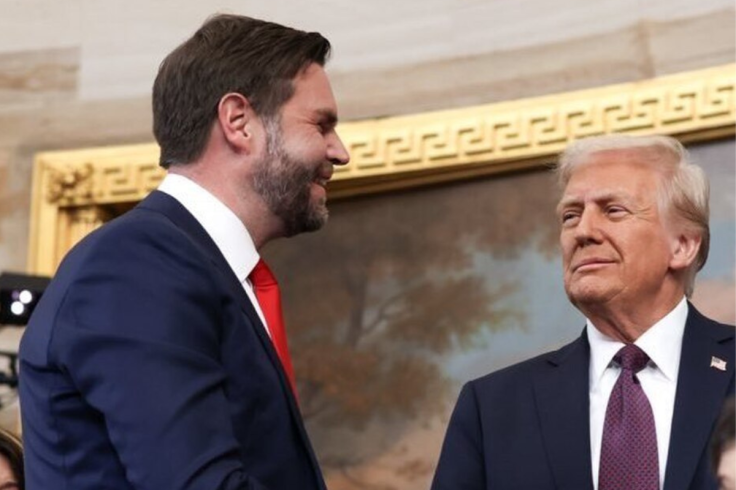
JD Vance spent Monday morning insisting the taxpayer-funded television advertisements featuring and promoting Donald Trump were not partisan, and by Monday night, Trump announced that taxpayers would no longer pay for them.
The vice-president defended the spots to reporters at Joint Base Andrews on 5 October 2026, pointing to Obama-era government-funded advertising about the Affordable Care Act as precedent.
That evening, Trump wrote on Truth Social that he would pay for the ads himself and with money raised for his super PAC, MAGA Inc., after Republicans as well as Democrats condemned the use of public money. He gave no details on whether taxpayers would be reimbursed for spots that had already aired.
'It's Not Like We're Advocating for a Particular Candidate'
Vance was asked whether the ads were a good use of taxpayer money with the midterms approaching. 'I'm sure that some people don't like it, but if you look at the message of those advertisements, they're not partisan,' he said.
'It's not like we're advocating for a particular candidate. We're trying to tell a story, I think, about how great the United States of America is,' The New Republic reported.
He argued there was precedent. 'I don't think there's anything unusual or unorthodox about it,' Vance said, adding that the president was not on the ballot and the ads contained no call to action.
Vance defends taxpayer-funded ads promoting Trump:
— FactPost (@factpostnews) October 5, 2026
"I don't think there's anything unusual or unorthodox about it. I'm sure that some people don't like it, but if you look at the message of those advertisements, they're not partisan." pic.twitter.com/jgM7cpdaic
The Obama-era Affordable Care Act advertising he cited, which Trump halted at the start of his first term, The Hill noted, was informational material about enrolment and benefits.
The ads contain overtly political language. They feature Trump pledging to defeat communism, demolish the deep state, rout the fake news media and cast out the communists, Marxists and fascists, alongside claims about his tax cuts and manufacturing, and each carries the line 'Paid for by the US government'. One closely resembled a 2024 Trump campaign advert.
'Pay for Them Myself'
The reversal came that night. 'I have decided to do the Patriotic Ads, among others, and pay for them myself, and with money I raised for MAGA, Inc,' Trump wrote, while describing government funding of the spots as 'a rather standard thing to do' and blaming the criticism on the 'Radical Left'.
A White House official confirmed the change, saying MAGA Inc would pay for the ads going forward. Neither Trump nor the White House explained how they would reimburse previously spent taxpayer money or how they would demonstrate political funding for future spots. The super PAC had amassed more than £295 million ($400 million) by the end of July.
The spending has been substantial. By Monday, an estimated £7.45 million ($10.1 million) in taxpayer money had been spent on the ads, according to the ad-tracking firm AdImpact, CNN reported.
Earlier estimates were lower. The campaign was backed by a £14.7 million ($20 million) Department of Homeland Security allocation originally associated with Customs and Border Protection funds for commemorative events.
Criticism From Both Parties
The backlash crossed party lines. Senator John Kennedy, a Louisiana Republican, said no public official, including Trump, should spend public money on private advertisements for themselves, and Senate Majority Leader John Thune had said the ads should not be paid for with taxpayer dollars.
Democrats had gone further. In a letter on 29 September, Senators Patty Murray of Washington and Chris Murphy of Connecticut said using government funding for the ads was illegal and a shockingly corrupt misuse of taxpayer dollars, and demanded contracting records from the Department of Homeland Security.
The department told Newsweek it follows all applicable rules for contracting decisions. No court or watchdog has ruled on the legality of the spending.
Trump had earlier offered to pay if the spending were deemed improper. 'If somebody said that that's wrong, I'll gladly pay the money. But these are ads for the country,' he said on 30 September.
Vance argued the ads were not partisan on the same day the president decided his political operation, rather than the government, should pay for them.
© Copyright IBTimes 2026. All rights reserved.