'You're Terrible': Donald Trump Lashes Out at a Female Reporter When Asked About the New Media Ban
In an Oval Office outburst, Trump calls a reporter 'terrible' as he announces a media ban targeting CNN, MS NOW and Politico for 'fake news' coverage
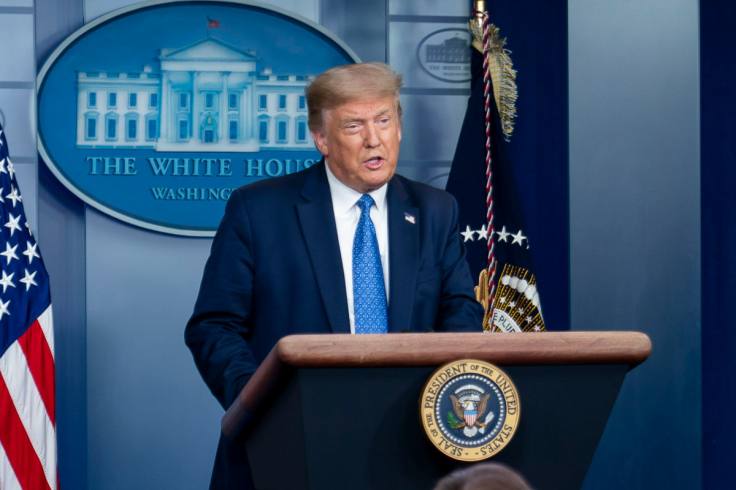
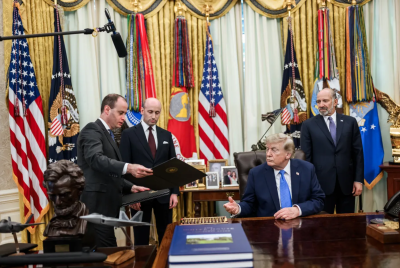
President Donald Trump has told Bloomberg News correspondent Catherine Lucey 'I think you're terrible' in the Oval Office on Friday, 18 September, after she challenged his announcement that CNN, MS NOW and Politico would be barred from the White House over what he called 'fake news.'
Trump had announced the restrictions on Truth Social shortly before the exchange, accusing the three outlets of reporting 'FICTION and LIES' about his administration and warning that other media organisations could follow.
The scope and implementation of the directive remained unclear on Friday, with journalists from the targeted outlets still reporting from the White House grounds later in the day.
'You're Terrible': Trump Clashes With Reporter Over Media Ban
During an Oval Office event, Lucey told Trump that freedom of the press was protected by the First Amendment and asked: 'Are you trying to intimidate the press from doing its job?'
'No, no, no, no. I dislike dishonest press, like you. I think you're terrible,' Trump replied.
Lucey then referred to Trump's first-term attempt to restrict CNN reporter Jim Acosta's White House access and asked why he believed the latest move would survive a court challenge.
Trump responded that he did not think a court should allow what he described as 'fake news' to be published 'day after day after day.'
Trump announced the restrictions shortly before the exchange, accusing the three outlets of reporting 'FAKE NEWS' and warning that other media organisations could be targeted next.
NBC's Kelly O'Donnell did herself no favors earlier with the way she lectured Trump about the press ban...
— Curtis Houck (@CurtisHouck) September 18, 2026
O’Donnell: “Every president takes an oath to uphold the Constitution, which includes the First Amendment.”
Trump: “Yeah, I do too. I do too. Much more so —”
O’Donnell:… pic.twitter.com/8qXYvkwk4O
He said in the Oval Office that it was 'sick' that the country allows journalists to write what he called 'purposely negative stories.'
'If they want to write them, that's fine,' Trump said on Friday. 'But I don't have to let them into the people's house.'
It remained unclear on Friday how broadly the directive would be enforced, including whether it would cover access to the White House grounds or only certain press events. Fox News reported, citing an unnamed senior White House official, that the White House was informing all three they would be banned from the White House grounds as of Saturday, though this has not been independently confirmed.
Trump, in the Oval Office, said he decided to ban the outlets because of 'cumulative stories over the last two years,' adding: 'You get sick of it.' When asked about other outlets, he subsequently mentioned The New York Times and The Washington Post.
First Amendment Fight: CNN and Politico Reject Trump Media Ban
CNN and Politico rejected the move, arguing that it infringed their First Amendment rights.
'CNN stands fully behind our White House team and their fair and accurate reporting,' a CNN spokesperson said in a statement.
'We have a right under the US Constitution to do that reporting without hindrance or interference from the government. Should the ban which President Trump threatened go ahead, it would be an illegal assault on that fundamental and constitutionally-protected right.'
Politico said on X that it would 'continue to fairly report on this White House and future ones' and 'will vigorously defend our First Amendment rights against any attempt to restrict them.'
MS NOW had not immediately commented on the announcement.
The move is likely to face a First Amendment challenge. A 2025 federal district court ruling in an Associated Press lawsuit held that, when the government opens limited-access White House events to journalists, it cannot exclude a news organisation because of its viewpoint.
The precise legal implications for Trump's latest directive will depend on how the administration implements it.
For context, shortly after his inauguration, the White House barred Associated Press from the Oval Office and Air Force One, ostensibly because the wire service refused to refer to the Gulf of Mexico by Mr Trump's preferred designation, the Gulf of America.
A federal district judge granted AP a preliminary injunction in April 2025, holding that the government could not exclude AP from selective-access events because of its viewpoint.
© Copyright IBTimes 2026. All rights reserved.
- Recommended For You