

Super Typhoon Champi Update: Storm Cancels Over 1,000 Flights as Taiwan Braces for 'Extreme Rain'
Taiwan reports one death and 171 injuries as forecasters warn of heavy rain and an uncertain storm path
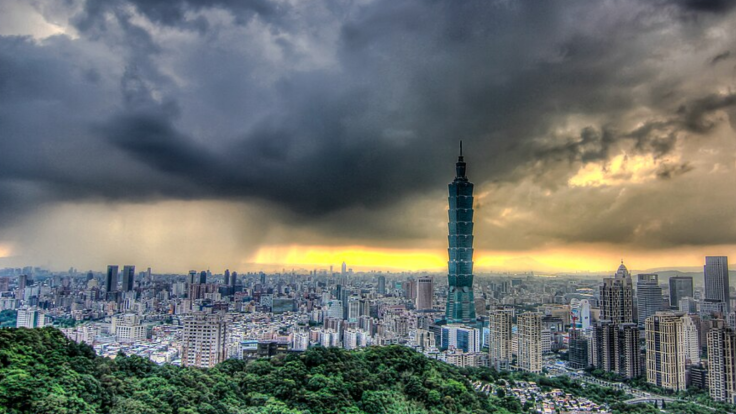
Typhoon Champi has cancelled more than 1,000 flights across East Asia and left much of Taiwan at a standstill, as authorities on Friday, 23 October 2026, reported one death, 171 injuries and 1,000 people evacuated. Forecasters warned that heavy rain would continue into Saturday, with 'extreme rain' expected over northern and northeastern Taiwan.
The storm had reached super typhoon status earlier that week, recording peak sustained winds of 298 km/h (185 mph), equivalent to a Category 5 hurricane. Friday's report cited gusts of 191 km/h (119 mph) as schools, government offices and financial markets closed across almost all of Taiwan.
Typhoon Champi Disrupts Travel Across East Asia
The closures affected an island with a population of 23 million, while flight cancellations extended across East Asia. The report did not provide a breakdown of the cancellations by airport or airline.
Officials reported that the person who died had been swept away by waves. Further details about the death, the injuries and the circumstances of those evacuated were not included in the account.
Sandbags and flood barriers were placed outside buildings as Taiwan prepared for the storm. In Suao, Lee Ming-chen, identified in the report as the head of the port town, outlined possible military assistance.
Lee stated that 'when necessary, the military will come in to help people, including using amphibious vehicles for evacuations or disaster relief'.
Elsewhere, approximately 8,400 households in Japan's southern Okinawa prefecture experienced power outages as Champi approached. Severe weather also affected the Philippines, particularly the northern Batanes islands, where large waves struck coastal communities and roads were closed.
Forecasters Warn of 'Extreme Rain' and Flood Risk
Friday's account included a forecast of 90 cm (35 in) of rain through Saturday evening. It did not specify the geographical coverage of that forecast.
James Caron, identified as Atmospheric G2's director of meteorological operations for North America and Asia, was quoted describing the rainfall threat.
'The biggest threat is extreme rain over northern and northeastern Taiwan.'
Caron explained that the northeast monsoon was already in place in late October. A typhoon passing nearby could draw that airflow towards Taiwan's terrain, he indicated, adding that greater Taipei could receive as much as 46 cm (18 in) of rain.
He warned of the risk of flash floods and landslides. The account did not specify the accumulation period for the greater Taipei forecast.
Heavy rainfall was expected to peak on Saturday morning, according to Friday's report, with dangerous conditions continuing into the evening.
El Niño Linked To Intensified Storm Conditions
'El Niño is the main driver,' Caron stated in comments quoted in the report. The account described El Niño as a pattern in which normal east-to-west trade winds weaken or reverse, allowing warm water to pool along the Americas and disrupting weather elsewhere.
Those disruptions can bring heavy rain to some regions and severe drought to others, according to the account. The World Meteorological Organization was cited as forecasting that El Niño would likely strengthen through the rest of 2026.
Track Forecast Keeps Landfall Risk in Play
Weather agencies predicted that Champi would pass close to Taiwan's northeastern coastline before moving towards Japan's Okinawa islands. The storm was then expected to curve northeast towards mainland Japan.
However, meteorologists warned that unpredictable movements could still bring Champi directly over Taiwan. The forecast route therefore did not rule out landfall.
CWA forecaster Liu Pei-teng was quoted stating that landfall remained possible if the storm 'stalls, loops, or wobbles from side to side'.
Liu also described the storm's wind radius as large, among the bigger ones in recent years. His warning addressed the duration of strong winds as well as uncertainty over where the storm would move.
'If the storm slows down, the strong winds will affect Taiwan for longer.'
© Copyright IBTimes 2026. All rights reserved.