FinCEN Corporate Transparency Act Rule Change: Treasury Orders Erasure of Domestic Ownership Records
Exemptions in reporting requirements raise questions about financial transparency and investigation efficacy
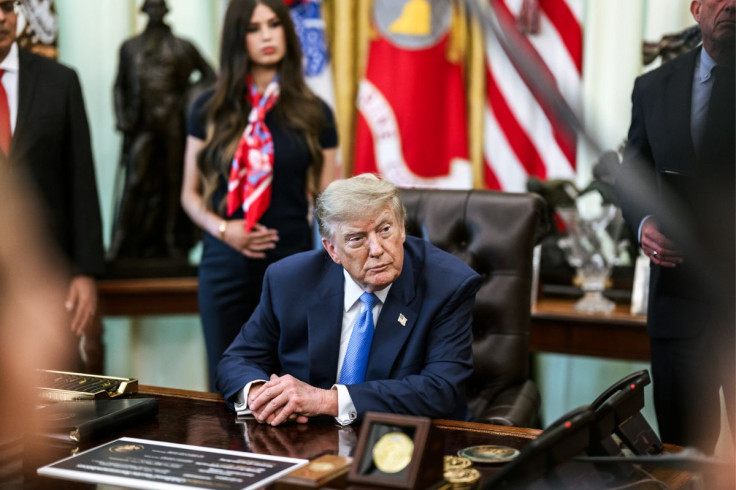
The Treasury Department has made permanent a major rollback of corporate ownership reporting requirements, exempting US companies and US persons from reporting beneficial-ownership information to the Financial Crimes Enforcement Network.
The final rule took effect on 14 August 2026, formalising exemptions first introduced through an interim final rule in March 2025. FinCEN has also said it is implementing a process to delete previously submitted information that it reasonably believes was provided by US persons, including information from company applicants, beneficial owners and recipients of FinCEN identification numbers.
The Trump administration finalized a rule exempting US companies and individuals from reporting beneficial ownership information to the Treasury Department's financial crimes unit, rolling back reporting requirements established under a 2021 law aimed at combating illicit…
— Reuters Business (@ReutersBiz) August 12, 2026
The change has renewed debate over how investigators will identify the people ultimately controlling companies used to move money through the US financial system.
What Beneficial Ownership Rules Revealed
Beneficial ownership refers to the individual who ultimately owns or controls a company, even when that control is exercised indirectly through corporate or other legal structures.
The Corporate Transparency Act was designed to require certain companies to report that information to FinCEN, creating a federal database that authorised government agencies could use in financial-crime investigations.
Under the revised framework, companies created in the US are exempt from reporting. Only certain entities formed under foreign law and registered to do business in a US state or tribal jurisdiction potentially remain reporting companies.
Those companies do not have to report US-person beneficial owners or US-person company applicants. US persons also no longer have to provide beneficial-ownership information when they are owners or applicants of reporting companies.
The change does not eliminate every mechanism for identifying corporate owners. Banks and other covered financial institutions remain subject to separate customer-due-diligence requirements. FinCEN specifically cited those requirements as one of the alternative sources available to law enforcement investigating potential illicit activity involving domestic companies.
Shell Companies Can Hide Dirty Money
The rollback matters because complex corporate structures can make it harder to establish who ultimately controls assets or receives money.
Shell companies can serve legitimate business purposes, but they can also feature in schemes involving bribery, tax evasion, stolen funds or sanctions violations. FinCEN has also imposed separate reporting requirements targeting certain real-estate transactions involving legal entities and trusts.
The new rule does not eliminate those other tools. Instead, it removes the broad federal reporting obligation that Congress originally intended to apply to many domestic companies under the CTA framework.
Trump's Real Estate Record Draws Scrutiny
The policy could attract additional political scrutiny because of Donald Trump's long history in real estate and the past encounters of Trump-linked businesses with federal anti-money-laundering enforcement.
In 2015, Trump Taj Mahal casino admitted to willful violations of federal anti-money-laundering requirements. FinCEN fined the casino $10 million (£7.4 million) after finding failures involving its anti-money-laundering programme, suspicious-activity reporting, currency-transaction reporting and record-keeping requirements.
Trump's business dealings with Russian buyers and investors have also faced scrutiny. In 2008, Donald Trump Jr. said Russians were 'a pretty disproportionate cross-section' of some Trump business assets.
'We see a lot of money pouring in from Russia,' he added. A 2017 Reuters investigation found that at least 63 people with Russian passports or addresses had bought at least $98.4 million (£72.8 million) worth of property in seven Trump-branded luxury towers in South Florida.
Reuters found that some purchases were made through corporate entities, although its investigation found no wrongdoing by Trump or his organisation and no evidence that the identified buyers had close relationships with Russian President Vladimir Putin.
Those historical transactions predate the current FinCEN rule and do not establish that Trump, his family or his businesses stand to benefit from the CTA changes. They do, however, illustrate the broader investigative importance of determining the individuals behind corporate ownership structures.
The $3 Million (£2.2 Million) SoHo Money-Laundering Claim
Trump's SoHo property has also featured in allegations involving hidden ownership and international money transfers.
A lawsuit brought by Kazakhstan's BTA Bank alleged that Trump associate Felix Sater helped facilitate transactions involving roughly $3 million (£2.2 million) used to purchase three Trump SoHo condominiums. The bank alleged that the money was linked to funds stolen from BTA and subsequently moved through an international network of companies and accounts.
An investigation by the Organized Crime and Corruption Reporting Project later traced the money used to purchase the three apartments through a complex network of offshore companies and trusts.
The allegations do not establish that Trump personally participated in or knew of an alleged money-laundering scheme. The broader issue is whether investigators can identify the people behind companies involved in property purchases, investments or financial transfers when ownership information is not readily available.
Could Hidden Owners Mask Political Money?
The rule has also raised broader questions about political money. US law prohibits foreign nationals from making certain contributions and expenditures connected to federal elections. Identifying the real source of money can therefore be important when investigators examine whether funds have been improperly channelled through corporate structures.
A complex chain of companies can make that investigation more difficult if political money appears to originate from an American entity while the individuals ultimately controlling it are unclear.
That does not mean the FinCEN change makes foreign political contributions legal or removes existing campaign-finance restrictions. But critics argue that reduced corporate ownership transparency could make some financial investigations more difficult.
FinCEN says the revised framework takes a more targeted, risk-based approach and points to alternative sources of ownership information available to authorities, including customer-due-diligence requirements imposed on covered financial institutions.
For critics, however, the change represents a significant reduction in the federal government's ability to build a comprehensive picture of who owns US companies through the CTA database. The central question now is how much investigators can still learn from alternative sources after most domestic companies and US persons were removed from the CTA's reporting requirements.
© Copyright IBTimes 2026. All rights reserved.
- Recommended For You