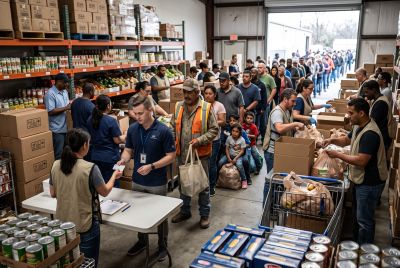
North Carolina Food Insecurity Crisis: Nearly Six Hundred Thirty Thousand People Face Rising Need
Community food banks across the state report unprecedented demand and dwindling resources as expired federal pandemic aid collides with stubborn inflation
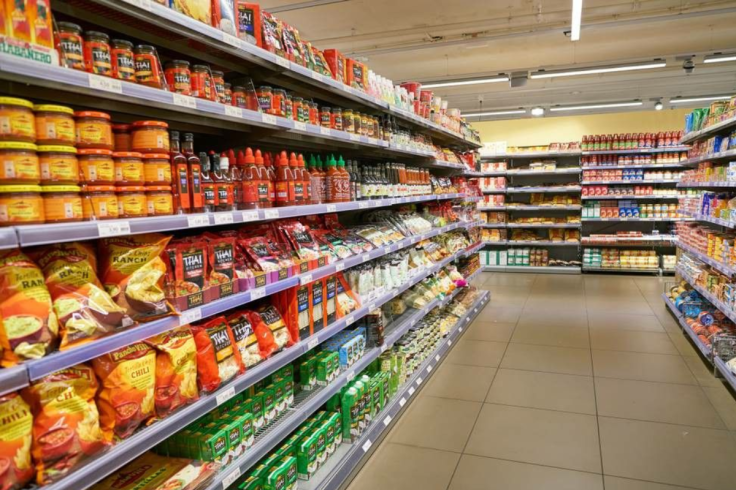
Nearly 630,000 people are now caught up in the North Carolina food insecurity crisis, with food banks across the state warning in 2024 that demand for help has surged by more than 70% since 2021.
The latest data, shared by food bank leaders in North Carolina, shows families in cities and rural areas alike struggling to afford basic groceries as the cost of living keeps climbing.
Hunger in North Carolina is not a new story, but the scale is. The sharp rise in food insecurity comes after the emergency support that cushioned many households during the COVID pandemic was rolled back.
Temporary federal aid has expired, inflation has stuck around, and the safety net, particularly for low-income families, now looks badly frayed.
As community food pantries stretch their supplies to the breaking point, local administrators warn that charitable networks alone cannot bridge the widening gap.
The deepening crisis has transformed hunger into an urgent statewide emergency, placing immense pressure on local volunteers and emergency support systems as federal funding remains tight.
North Carolina Food Insecurity Crisis Driven by Rising Costs
Food bank officials say the math simply no longer works for many households. Budgets that once stretched through the month are now collapsing halfway through, or sooner.
Amy Beros, president and chief executive of the Food Bank, said more and more people who once donated to food drives are now turning up in the same queue for help. Many of them have never had to ask for assistance before.
'It's increased cost for food, gas, health care, and childcare,' Beros said, explaining that basic outgoings have jumped across the board. 'For so many of our families, the wages have not kept up.'
Prices at supermarket tills have risen far faster than most pay packets over the past few years. When families are spending more just to keep the lights on and the car on the road, food becomes the thing they cut back on. For some, that means skipping meals. For others, it means turning to food banks.
Beros warned that the crisis could deepen further as federal funding is squeezed. She said she is concerned that more families could fall into food insecurity as support programmes are pared back while living costs remain stubbornly high.
At the same time, one of the country's biggest anti-hunger lifelines, the Supplemental Nutrition Assistance Program, is under fresh pressure. More than 1 million North Carolina residents rely on SNAP benefits, according to food bank leaders, and any reduction or tightening of that support has an immediate effect on local pantries. When cards run out, people show up in person.
Community Pantries at the Front Line of the North Carolina Food Insecurity Crisis
At street level, the numbers translate into longer queues and busier car parks outside community pantries. The Community of Hope Ministries Food Pantry in Garner, which serves families across southern Wake County, has become one of those pressure points.
To recall, the pantry already had a significant footprint before the pandemic. Executive director Amy White said that before Covid they served 399 households, representing about 1,500 individuals, through their food pantry.
That figure has now climbed as new families emerge, often with little warning and little left in their bank accounts. White said the organisation is 'seeing lots and lots of new needs' walk through the door, as parents arrive embarrassed, tired and sometimes a bit stunned that they have ended up here at all.
Across North Carolina, food bank officials say the Food Bank alone has provided more than 86 million meals, while more than 250 million meals have been distributed statewide. Those numbers are huge and impressive, but they also underscore how many people cannot cover the basics without outside help.
White said it is the faces, not the statistics, that keep her team going. 'We're seeing lots and lots of new needs walk through our door, and it's those faces that make us remain steady in our commitment to making sure that every table has food, that hunger is eliminated, and that families have a chance to survive and thrive,' she said.
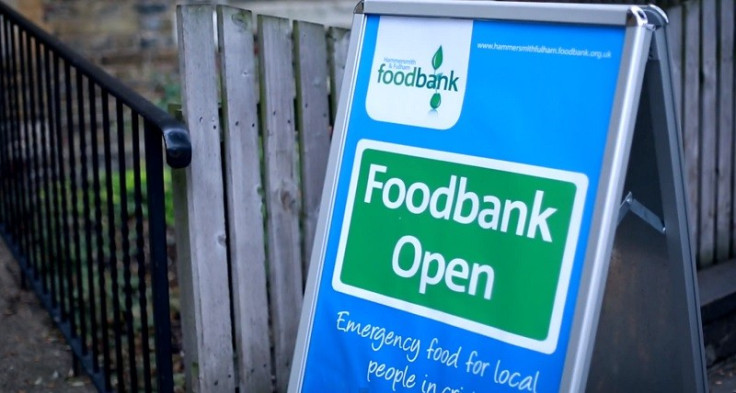
September is nationally recognised as Hunger Action Month, providing food banks with a useful rallying point. For Community of Hope and others, it is also a plea for reinforcements. White said volunteer support and community involvement remain critical as demand rises. Without people sorting tins, packing boxes and hauling crates, the system stalls fast.
From the outside, it might look like the charitable network is coping. Shelves are stocked, vans keep moving, the social media posts are upbeat. Speak to organisers and the picture is less glossy. They are proud of the work, but they are also blunt about being stretched and that the situation is, frankly, mad.
Behind the scenes, staff are trying to plan for a future in which need keeps climbing while public funding becomes less certain. Beros has already flagged that federal cuts and rising operational costs could collide with higher demand, leaving some communities badly exposed.
Churches run collections, businesses sponsor drives, neighbours drop off extra groceries. It is human-scale stuff, and it matters. But the figures- 630,000 people food insecure and counting- suggest that charity alone will not fix the North Carolina food insecurity crisis, however hard everyone works.
© Copyright IBTimes 2026. All rights reserved.
- Recommended For You