

Why The UN Is Quietly Monitoring Comet 3I/ATLAS — And Why Scientists Say It Can't Be Ignored
An interstellar comet's rare arrival is driving a coordinated global scientific surveillance campaign under the United Nations' International Asteroid Warning Network.
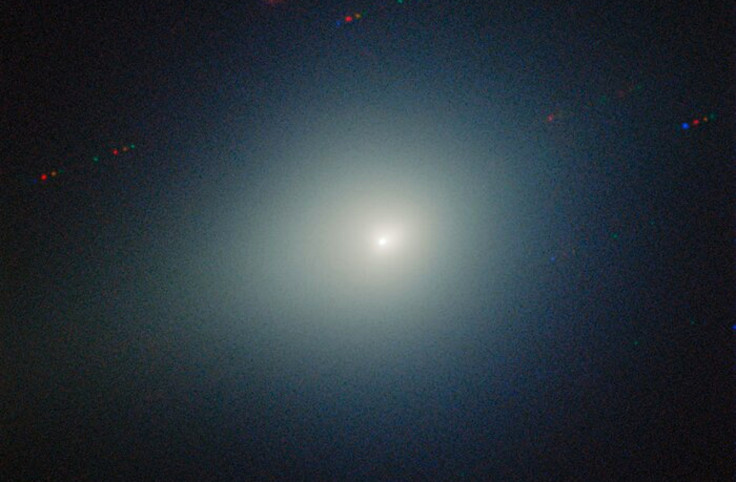
A global network of observatories, led by the United Nations-endorsed International Asteroid Warning Network (IAWN), has been mobilised to track the interstellar object 3I/ATLAS. This coordinated effort is designed to refine planetary defence protocols and gather unprecedented data on a visitor from another star system.
This campaign underscores the scientific and strategic importance of 3I/ATLAS, whose unusual chemistry and high-speed trajectory have made it an extraordinary target for study.
The ATLAS Survey and Discovery
3I/ATLAS was first detected on 1 July 2025 by the Asteroid Terrestrial-impact Last Alert System (ATLAS), a NASA-funded robotic survey designed to scan the entire sky every 24 hours. Operating from observatories in Hawaii, Chile, and South Africa, the system is engineered to provide early warnings of potentially hazardous near-Earth objects.
Its hyperbolic trajectory immediately confirmed its interstellar origin. Unlike objects gravitationally bound to the Sun, 3I/ATLAS is moving fast enough to escape our Solar System and will never return.
A Global Scientific Campaign
The International Asteroid Warning Network has initiated a dedicated observing campaign aimed at improving techniques for tracking extended cometary bodies as they traverse the sky. Official notices from IAWN outline a coordinated effort from 27 November 2025 through 27 January 2026 that will enlist observatories worldwide to refine astrometric measurements of 3I/ATLAS.
IAWN is a worldwide planetary defence collaboration established under the recommendation of the United Nations to coordinate the detection, monitoring, and characterisation of asteroids and comets that could pose hazards to Earth. Its mandate includes validating impact alerts and disseminating data to governments and scientific communities.
IAWN's decision to centre its latest exercise on an interstellar comet reflects both the rarity of these visitors and the technical challenge they present. Scientists have described cometary objects as particularly difficult to measure astrometrically because their diffuse comae and changing brightness can bias positional data. The campaign will teach astronomers advanced techniques to extract precise orbit information from such bodies.
International cooperation has been key. More than 80 observatories and citizen scientists have signed up to participate, and the campaign includes workshops and coordinated data submissions designed to produce consistent and accurate datasets.
Scientific Importance Beyond Earth Impact
Comet 3I/ATLAS itself is scientifically invaluable, offering a rare glimpse into material formed around other stars. Infrared spectroscopy from the James Webb Space Telescope reveals a coma rich in carbon dioxide, water, and carbon monoxide, with ratios unusual compared with typical Solar System comets. These chemical signatures are among the highest ratios of carbon dioxide to water ever observed.
Ground-based photometry from the ATLAS network and other telescopes has documented pronounced changes in colour and brightness, suggesting complex dust and gas dynamics as the comet responds to solar heating.
NASA, the European Space Agency (ESA), and other space missions, including Hubble, Mars orbiters, and heliophysics spacecraft, have all gathered data, helping to build a multi-wavelength picture of 3I/ATLAS as it reached perihelion and began its outbound journey.
These observations have implications far beyond this single object. Interstellar visitors carry chemical and physical records of their stellar nurseries, and analysing them helps astronomers understand the diversity of planetesimal formation processes across the galaxy.
Countering Misconceptions With Data
Despite the scientific focus, 3I/ATLAS has also become the subject of speculation and misinformation online. Some commentators have claimed that space agencies are withholding data or that unusual behaviour suggests non-natural origins. Such claims have circulated on social platforms but lack substantiation from official sources. NASA and ESA publicly state that 3I/ATLAS shows typical cometary behaviour and poses no threat to Earth.
NASA's official press advisories and mission briefings have continued to release images and technical descriptions as government operations permit, underscoring that there is ongoing data collection and analysis.
The scientific community sees transparency and data sharing as essential. In November 2025, NASA hosted an event to release a series of images from multiple spacecraft and telescopes, emphasising the collaborative nature of this research.
At its closest point to the Sun on 29 October 2025, 3I/ATLAS passed inside the orbit of Mars before re-emerging on the opposite side of the Sun, where renewed Earth-based observations resumed in late November.
🚨 The International Asteroid Warning Network Just Targeted 3I/ATLAS
— Skywatch Signal (@UAPWatchers) October 23, 2025
It finally happened. The International Asteroid Warning Network (IAWN) the UN endorsed planetary defense group has initiated a global monitoring campaign for the interstellar visitor 3I/ATLAS.
This marks the… pic.twitter.com/buI7dDGgvg
Unprecedented Opportunity for Planetary Defence and Science
While the International Asteroid Warning Network's current campaign is termed an 'exercise,' many scientists view it as a proof of concept for how future interstellar visitors might be tracked, characterised, and, if necessary, responded to with planetary defence strategies.
The fact that IAWN has chosen a rare interstellar comet as its primary target highlights the dual nature of these objects: they are both scientific treasures and, in principle, test cases for global coordination in the face of unexpected celestial phenomena.
Astronomers stress that this campaign strengthens readiness and pushes observational techniques forward. The data gathered will serve both immediate scientific goals and future planetary defence frameworks capable of responding to any object exhibiting true Earth-impact risk.
© Copyright IBTimes 2026. All rights reserved.