

11-Year-Old Boy Who Shot His Adoptive Father to Death After Taking His Nintendo Away Faces Adult Trial
The case of Clayton Dietz highlights the complexities of prosecuting minors in adult court.
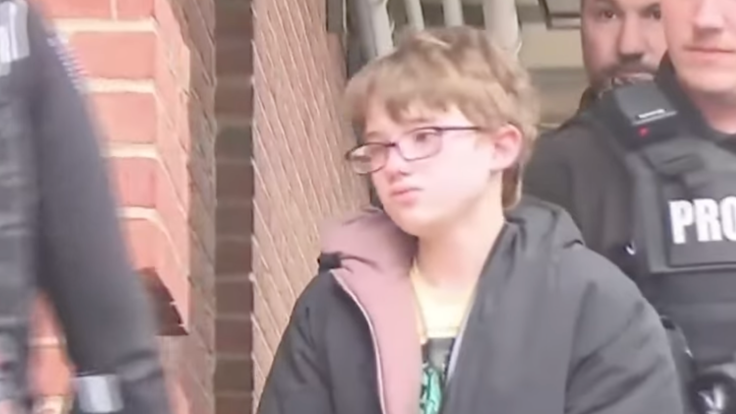
An 11-year-old Pennsylvania boy accused of fatally shooting his adoptive father while he slept is now moving toward an adult criminal trial, a rare and deeply scrutinised prosecution that has reignited debate over how the justice system treats children charged with homicide.
Authorities allege the killing unfolded in the early hours of Jan. 13, 2026 inside a family home in Duncannon, Perry County. Court filings state that the child retrieved a revolver from a locked gun safe after searching for a confiscated Nintendo Switch.
Prosecutors have charged the boy, Clayton Dietz, with criminal homicide as an adult, a procedural path mandated under Pennsylvania law for homicide offences regardless of age. Defence counsel has indicated plans to seek transfer to juvenile court as proceedings advance.
Allegations Detailed in Court Affidavits
According to an affidavit of probable cause referenced in Perry County court records and a contemporaneous news release from the Perry County District Attorney's Office, Pennsylvania State Police responded shortly after 3 a.m. to a report of a man suffering a gunshot wound inside the residence. Troopers found 42-year-old Douglas Dietz dead in bed from an apparent gunshot wound to the head.
Investigators allege the events began hours earlier after the family celebrated Clayton's birthday and went to sleep shortly after midnight. The boy's mother told police she awoke to a loud noise and initially believed it resembled fireworks before discovering blood on the bed and her husband unresponsive.
Police documents state that while officers spoke with the family in the kitchen, a trooper heard the child say words to the effect of 'I killed Daddy.' Authorities further allege that during questioning the boy admitted he had been searching for his Nintendo Switch, which had been taken away, and believed it might be stored inside the gun safe.

The affidavit indicates that the child located keys to the safe, removed a revolver, loaded it, and entered his parents' bedroom. Investigators wrote that he later acknowledged having 'someone in mind' when he fired the weapon and said he acted out of anger without considering the consequences.
Authorities also documented visible injuries on the child, including a contusion above his eye and a small facial laceration, though the filings do not publicly establish how those injuries occurred.
Adult Charges and Legal Procedure
Under Pennsylvania statute, homicide cases are initially filed in adult criminal court even when the accused is a minor. The legal burden then shifts to the defence to petition for decertification, a transfer back to juvenile jurisdiction, where rehabilitation rather than punishment is prioritised.
Court docket entries show Clayton Dietz waived his preliminary hearing on Feb. 19, 2026, allowing the case to proceed directly to the Court of Common Pleas. Bail was denied on the day of arrest, and the child remains detained at Perry County Prison pending further hearings.
🇺🇸 An 11-year-old shot his adoptive father to death because his Nintendo was taken away.
— Mario Nawfal (@MarioNawfal) February 20, 2026
Clayton Dietz's parents told him to go to bed after midnight. He "got mad," and went looking for his Nintendo Switch in the gun safe.
Found the keys instead, and found a revolver next.… pic.twitter.com/aBxfGDJDkF
Defence attorney Dave Wilson has publicly indicated that securing juvenile-court jurisdiction will be a central objective. Prosecutors have not yet disclosed whether they will oppose such a transfer, which would require a judge to weigh factors including the seriousness of the offence, public safety considerations, and the child's amenability to treatment programmes.
Notedly, that adult prosecution of children as young as 11 remains exceptionally uncommon, though not unprecedented. Pennsylvania previously drew national attention in the 2009 prosecution of Jordan Brown, who was also charged as an adult at age 11 in a fatal shooting before his case was ultimately moved into the juvenile system and later overturned on appeal.
Questions Surrounding Access to Firearms
The criminal complaint places significant emphasis on firearm storage and access. Investigators allege the revolver was kept inside a gun safe, but the child obtained keys while searching the home. The filings do not yet clarify whether additional safety mechanisms were in place or whether any storage violations will be examined separately.
Pennsylvania does not impose universal criminal liability for firearm owners whose weapons are accessed by minors, although prosecutors may pursue related charges depending on circumstances. Law-enforcement statements released after the incident confirmed the investigation remains ongoing, suggesting additional findings could emerge as forensic analysis and interviews continue.
The case has drawn renewed scrutiny from child-safety advocates who argue that incidents involving young defendants often reveal broader systemic failures involving supervision, mental-health intervention, and firearm security. Court records, however, remain focused narrowly on the homicide charge itself, and officials have released few details about the child's background beyond confirming his adoption several years earlier.
A Rare and Consequential Prosecution
Cases involving pre-teen defendants charged with intentional homicide remain statistically rare within the United States justice system. When they occur, courts face competing obligations: determining criminal responsibility while accounting for developmental science showing diminished impulse control and risk assessment among children.
Judges overseeing decertification hearings typically rely on psychological evaluations, school records and expert testimony assessing maturity and rehabilitation potential. The outcome can dramatically alter sentencing exposure; an adult conviction for criminal homicide in Pennsylvania can carry life imprisonment, whereas juvenile adjudication centres on supervised treatment until early adulthood.
For now, prosecutors and defence attorneys are preparing for hearings that will determine whether Clayton Dietz's case proceeds before an adult jury or returns to juvenile court — a decision that may shape the rest of the child's life and add another landmark chapter to the fraught legal history of children tried for the gravest crimes.
© Copyright IBTimes 2026. All rights reserved.