UFO Investigation 2026: Why Natural Explanations for 1950 'Satellites' Don't Hold Up
Long before Sputnik made orbit ordinary, a handful of flashes on an old photographic plate left behind a question that still will not sit still.
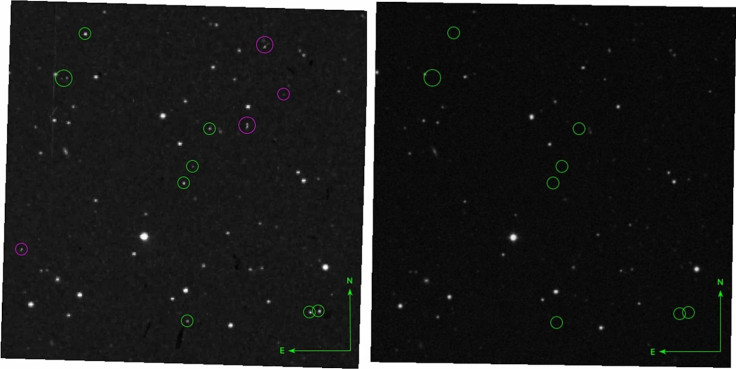
A March 2026 paper has revived an old astronomical mystery, with former NASA developer Ivo Busko arguing that brief flashes captured on 1950 sky plates may be consistent with reflective objects orbiting Earth years before Sputnik 1. The finding, now feeding into the broader UFO Investigation 2026 debate, is based on archival photographic evidence rather than any confirmed identification of what those objects were.
The latest paper builds on earlier work by astronomer Beatriz Villarroel, who first catalogued a cluster of bright, fast appearing points recorded on photographic plates taken in April 1950. Those observations have remained contentious because they seem to predate the first successful satellite launch, leaving researchers to argue over whether the images show an unknown natural phenomenon, contamination on the plates, or something that still does not have a settled scientific explanation.
The Palomar Plate Enigma
The new Busko paper does not claim to have solved the case, but it does strengthen one part of the argument. Working with independent archival plates from Hamburg Observatory, taken in the mid 1950s and digitised by the APPLAUSE archive, Busko reports transients similar to those found by the VASCO project and says they show systematically narrow image profiles compared with ordinary stars. In his abstract, he writes that the result offers 'further support for their interpretation as sub-second optical flashes, consistent with reflections from flat, rotating objects in orbit around Earth'.
That is the part that gives this story its bite. Villarroel's 2021 paper had already argued that well known natural transients, including flaring stars, gamma ray burst afterglows and other short lived events, could not comfortably explain nine such flashes within 30 minutes inside a 10 by 10 arcminute box. The paper also dismissed fragmenting asteroids, meteorites and similar objects because the expected motion should have left elongated streaks or some other visible trace that simply is not there.
Were they filming us?
— Jason Wilde (@JasonWilde108) March 24, 2026
Mid 1950s sky plates (pre-Sputnik) caught thousands of sub-second flashes. Way sharper than stars, they dodge Earth's shadow, sometimes align in groups and spiked 45% around nuclear tests.
Ex NASA scientist Ivo Busko just independently confirmed it on… https://t.co/8WrKGo9Akt
Still, the extraterrestrial jump is far bigger than the evidence allows. Both papers leave room for a stubbornly earthly possibility, namely contamination of the photographic plates by radioactive particles or another unknown defect that happened to mimic star like points of light. Villarroel's study is quite plain about that, noting that contamination cannot be excluded and, in some respects, may be the more down to Earth explanation.
Natural Theories Fall Short
The real difficulty is almost embarrassingly simple. Villarroel's paper says rotating objects near geosynchronous orbit could produce the kind of short glints seen on the plates, and even notes that multiple bright flashes in one field are a known signature of reflective material in orbit. But the same paper also underlines the obvious snag, which is that no satellites are known to have existed before the Soviet launch of Sputnik in 1957, seven years after the 1950 plate was exposed.
That leaves the natural explanation camp in an uncomfortable middle ground. The familiar astronomical options do not fit neatly, yet the most visually satisfying alternative, pre Sputnik orbital hardware, collides head on with the historical record as we know it. The researchers stress that nothing is confirmed here, and the published work describes an intriguing anomaly rather than a verified object with a known origin.
Busko is careful on that score, arguing not for little green men but for a stronger observational basis before the matter is either sensationalised or waved away. Villarroel's earlier paper struck a similar note, calling the simultaneous transients 'a detective story' worthy of the astronomical community's attention. That feels like the most sensible place to leave it for now, with a mystery perched between Cold War contamination, archival imperfection and a set of glints that still refuse to behave like anything science can name with confidence.
© Copyright IBTimes 2026. All rights reserved.
- MOST POPULAR IN Trending