How Did Bobby Cox Die? Real Cause of Death and His Lasting Legacy as MLB Stars Mourn Record-Breaking Manager
Freddie Freeman and others reflect on the impact of Bobby Cox's leadership and legacy in baseball.
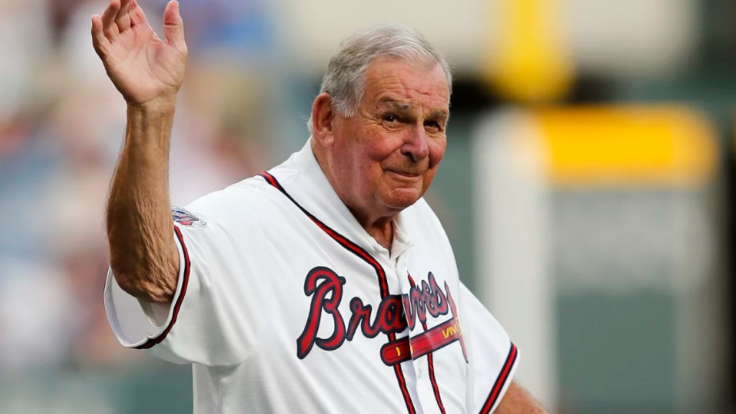
Bobby Cox, the Hall of Fame manager who turned the Atlanta Braves into a 1990s powerhouse, died on Friday in the United States at the age of 84, coaches and former players confirmed over the weekend, leaving Major League Baseball stars mourning a man they say shaped their careers and their lives far beyond the dugout.
Questions from fans about how Cox died have so far gone largely unanswered. The reports and tributes that followed on Friday focused on his age and towering baseball record rather than specifying a medical cause of death. With no formal announcement from family or team officials about the circumstances, the precise cause remains unconfirmed and should be treated with caution until an official statement is released.
Legendary MLB manager and Hall of Famer Bobby Cox dead at 84 as tributes pour in https://t.co/TZFOEbxHiL
— Daily Mail Sport (@MailSport) May 9, 2026
What is not in doubt is the size of the gap he leaves behind. Over 29 seasons as a big‑league manager, Cox amassed 2,504 regular‑season victories, 15 division titles, five pennants and one World Series crown, earning his election to the Hall of Fame and a place among the most successful managers in MLB history.
What Bobby Cox Meant to Freddie Freeman
Freeman's memories are unusually vivid, which is often the case when someone has shaped the beginning of a career. He recalled Cox giving him more at-bats than his record really justified during spring training in 2009, then dissolving the tension before his major league debut on 1 September 2010 with a line that cut through the nerves at once. 'What took you so long to get here?!'
That warmth stayed with him. Freeman said he keeps an autographed Cox jersey in his Atlanta home bearing the inscription, 'To Freddie keep on hitting.' It is a small detail, but an unusually telling one. In baseball, where hierarchy can be rigid and memory can be transactional, players do not tend to preserve those objects unless the relationship truly mattered.
Longtime Atlanta Braves manager Bobby Cox, a Hall of Famer who won a World Series and more than 2,500 games in his storied career, has died at 84, the team announced Saturday.
— ESPN (@espn) May 9, 2026
More: https://t.co/NcUKKdLea4 pic.twitter.com/z7qRDq7eMy
Freeman, now a veteran first baseman with the Los Angeles Dodgers after 12 years with the Braves, said parts of Cox's code still live in him. He spoke about never wearing a hat backwards and keeping sunglasses on the back of his cap, habits that sound almost trivial until you realise they were part of a wider standard.
Cox expected his teams to look right, act right and respect the uniform. There was no music blaring in the clubhouse. Hats faced forward. Even batting practice had rules.
That might sound severe. It probably was, at times. They paint a manager whose strictness made sense to players because it sat alongside obvious loyalty. Freeman put it plainly when he said Cox was a Hall of Fame manager 'who relentlessly had our backs.'
What Bobby Cox Left Behind in Baseball
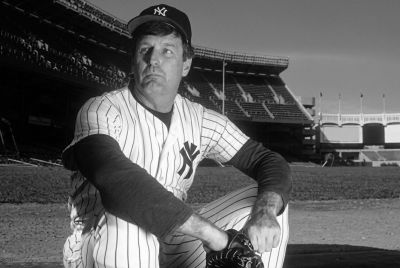
Cox's career had its turns. After a brief spell as a major league player and time managing in the minors, he served as a coach under Billy Martin with the New York Yankees, then took over the Braves in 1978 before being fired four years later by owner Ted Turner.
He resurfaced with the Toronto Blue Jays from 1982 to 1985 and led them to their first division title in his final season there. Turner then brought him back to Atlanta as general manager, where Cox helped assemble the team that would define an era before returning to the dugout.
Bobby Cox, the folksy manager of the Atlanta Braves whose teams ruled the National League during the 1990s and gave the city its first major title as well as World Series trips that fell short, has died.
— First Alert 6 (@WOWT6News) May 9, 2026
Story: https://t.co/9itBObJwE4 pic.twitter.com/nVaisEfPA1
From 1991 through 2005, the Braves won 14 straight division titles, the longest such streak in baseball's divisional era. Their winning percentage from 1991 to 2010 was .581 under Cox, second only to the Yankees' .582 over that span. He won the National League Manager of the Year award four times, was ejected 162 times and finished his career behind only Tony La Russa, Connie Mack and John McGraw on the all-time wins list.
Still, the sharper measure of Cox may lie elsewhere. Walt Weiss, now managing the Braves, said Cox was the finest leader he had ever been around because of the way he built loyalty. Weiss remembered the grace Cox showed when Weiss's son was ill in 1998.
He also remembered the mood after Atlanta lost the 1999 World Series to the Yankees. Players felt they had let Cox down. That is not standard professional sports language. It is the language of attachment.
Dodgers manager Dave Roberts stripped it down to one clean sentence. 'We lost a legend. We lost a great one.'
Cox's influence reached beyond the Hall of Fame names most readily associated with Atlanta, including Chipper Jones, Fred McGriff, Greg Maddux, Tom Glavine and John Smoltz. It carried into later generations through managers such as Brian Snitker and Weiss, and through players like Freeman, who sounded less like a former player revisiting an old boss than a man still carrying instructions from home. 'That's Bobby,' Freeman said. 'Bobby's still in me.'
© Copyright IBTimes 2026. All rights reserved.
- Recommended For You