'Space Jellyfish' Phenomenon Explained: Mysterious Glow Lights Up Asian Sky - Manmade Or Something Eerie?
Chinese Rocket Launch Creates Stunning Sky Display

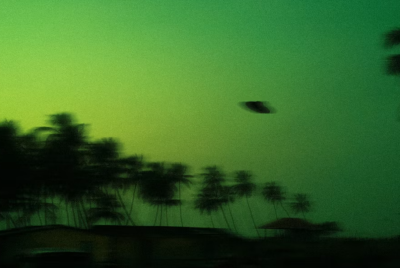
A glowing formation described by witnesses as a 'space jellyfish' was seen across parts of the Philippines on the evening of 11 April 2026. The Philippine Space Agency (PhilSA) said the sighting was 'highly likely' caused by the passage of a Chinese Jielong-3 rocket launched from the South China Sea.
The display occurred at around 19:40 local time and was visible in several regions, including Samar and Leyte. Images and videos shared online showed a bright central glow with trailing, translucent formations extending across the sky.
PhilSA said the effect is a known phenomenon caused by rocket exhaust at high altitude interacting with sunlight, producing visible formations even when the ground is already in darkness.
How the 'Space Jellyfish' Forms
According to PhilSA, the phenomenon occurs when a rocket's exhaust plume is released in the upper atmosphere and illuminated by sunlight during twilight conditions.
In low-pressure environments, the exhaust gases expand rapidly and spread over a wide area. As sunlight reaches these particles from below the horizon, it is scattered, creating a luminous, jellyfish-like structure visible across large distances.
The distinctive 'head' and trailing 'tentacles' are shaped by the expanding plume and the rocket's flight path. Variations in altitude and atmospheric conditions can influence how the formation appears.
The Jielong-3 Rocket
The launch involved the Jielong-3 rocket, also known as Smart Dragon-3, a four-stage solid-fuel rocket developed for commercial satellite missions. It has a lift-off mass of around 140 tonnes and is capable of carrying payloads of up to 1.5 tonnes into sun-synchronous orbit.
T.S. Kelso @tskelso
— AllenZ (@rondaz_4) April 12, 2026
CelesTrak has GP data for 3 objects from the launch (2026-078) of Hulianwang Jishu Shiyan atop a Jielong-3 rocket from waters off Guangdong Province on Apr 11 at 1132 UTC.. 4/12/2026 pic.twitter.com/YlhoO4Wig2
The rocket has been used for multiple launches since its maiden flight in December 2022, including missions carrying clusters of small satellites for communications and Earth observation. It is designed for rapid deployment and can be launched from sea-based platforms, allowing operators to adjust flight paths and launch locations.
PhilSA said the rocket was launched at approximately 19:32 Philippine Standard Time. Its timing, shortly after sunset, created conditions where the exhaust plume remained illuminated at high altitude while observers on the ground were already in darkness.
Sightings and Public Response
Footage of the event was widely shared on social media shortly after it occurred, with clips circulating across multiple platforms. The unusual appearance of the formation led some users to question its origin.
PhilSA said the sighting was consistent with known rocket plume effects and does not pose any risk to the public. The agency added that similar visual phenomena have been observed following other rocket launches.
“SPACE JELLYFISH”
— ABS-CBN News (@ABSCBNNews) April 12, 2026
Ibinida ng netizens ang kanilang mga kuha sa aerial phenomenon na kung tawagin ay “space jellyfish,” na nasilayan sa kalangitan sa malaking bahagi ng bansa sa pagitan ng 7:00 p.m. at 8:00 p.m. nitong Sabado, Abril 11, 2026.
Ayon sa meteorologist na si Mike… pic.twitter.com/g0lCTggngL
Space Jellyfish terlihat dari Butawanan Island Siruma, Camarines Sur, Filipina 11/4/2026 malam.
— NyxNara (@NaraSenyap) April 12, 2026
sc; Cuengcarl San Vicente https://t.co/LaWVoA1M8U pic.twitter.com/VDBWZlcrah
A Growing Pattern of Twilight Plumes
Comparable displays have been reported in other parts of the world following rocket launches, including missions involving SpaceX Falcon 9 vehicles in the United States. These effects are most visible when launches take place shortly after sunset or before sunrise.
As global launch activity increases, such sightings are expected to become more frequent. Visibility depends on factors including atmospheric conditions, launch timing and the observer's location relative to the rocket's trajectory.
SpaceX's Falcon 9 rocket creating a twilight phenomenon in the night sky 😍 @elonmusk pic.twitter.com/ZoyfYh5Nxj
— Pranay Pathole (@PPathole) May 12, 2021
PhilSA said the 11 April sighting was consistent with a rocket launch and confirmed that the phenomenon posed no threat.
© Copyright IBTimes 2026. All rights reserved.
- Recommended For You