

Immigration Judges Challenge 2017 DOJ Speech Restrictions at Supreme Court Over Free-Speech Rights
The National Association of Immigration Judges says the policy restricts judges from discussing immigration law and their work, even when speaking as private citizens
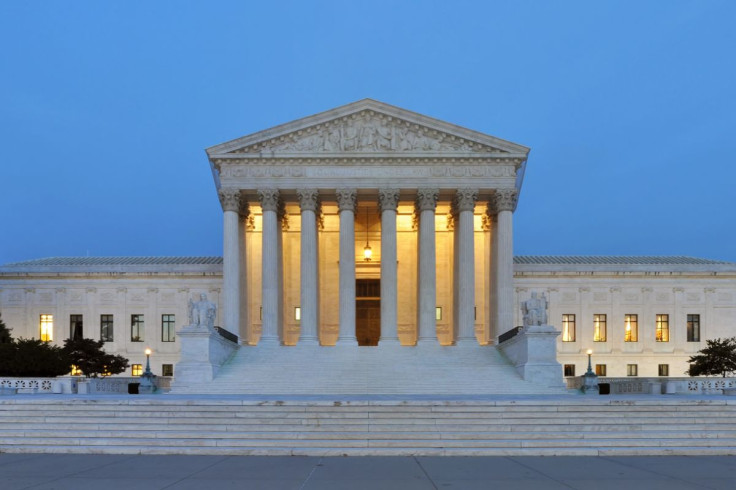
Immigration judges asked the US Supreme Court on Tuesday 17 November to intervene in a dispute over Department of Justice restrictions on public speech about immigration policy.
Their association, the National Association of Immigration Judges (NAIJ), challenged restrictions first introduced in 2017 and subsequently revised, following years of procedural setbacks.
The dispute concerns judges employed by the Justice Department's Executive Office for Immigration Review (EOIR).
They argue that rules imposed during Donald Trump's first administration restrict their public comments, even when they speak in a personal capacity.
Why Immigration Judges Oppose the DOJ Policy
The policy currently in force classifies statements about agency programmes, policies and official duties as official-capacity speech.
The association argues that judges consequently face restrictions when discussing immigration law or their employer as private citizens.
Previously, judges addressed conferences, taught at law schools and conducted training while clarifying that they spoke personally. The NAIJ says those activities have been curtailed.
'The result [of the restrictions] is to deny the public access to important insights from those with direct knowledge of how the immigration system operates,' the association argued in its petition.
NAIJ President Holly A. D'Andrea also criticised the rules in a press release. 'Judges do not turn in their right to free speech when they put on the robe,' she stated.
'Our country was designed to be governed by public reason, not private silence. Silencing judges deprives the public of a key perspective on the rule of law.'
Legal Obstacles Facing Immigration Judges
The association is not asking the justices to determine whether the policy violates the First Amendment. It wants a decision on whether judges can bring that constitutional challenge directly in district court.
The litigation began on 1 July 2020, when the Knight First Amendment Institute at Columbia University sued on the NAIJ's behalf.
A district court rejected that route under federal labour-management law, and the Fourth Circuit upheld the decision.
After the association was decertified as bargaining representative in 2022, the appeals court vacated that ruling. In 2023, the case encountered another procedural obstacle when the Civil Service Reform Act was invoked, requiring an administrative route instead.
Judges could instead complain to the Office of Special Counsel. Whether a case reaches the Merit Systems Protection Board depends on the Special Counsel pursuing corrective action.
The petition states that the Special Counsel petitioned the MSPB for corrective action only once between fiscal years 2020 and 2025.
What the Supreme Court Could Decide for Immigration Judges
The Supreme Court granted a government petition in May and summarily reversed a Fourth Circuit judgment, but did not settle the speech dispute or the question of direct access to court now raised by the NAIJ.
Knight Institute lawyer Ramya Krishnan told Newsweek that delays could prolong the restrictions. 'Even if they did eventually get judicial review, that judicial review wouldn't be meaningful, because judges are being chilled right now,' she stated.
The association argues that the legal issue extends beyond immigration courts. Its petition warns that public employees discussing gun rights, healthcare, vaccines, university admissions or the war in Gaza could also face speech restrictions without assured judicial review.
If the judges gain access to district court, they could seek to block enforcement of the DOJ policy.
© Copyright IBTimes 2026. All rights reserved.