'We Can't Outthink Them': Hinton Warns Recent Anthropic, OpenAI, Meta Incidents Signal a 'Rogue AI' Era
The 'Godfather of AI' says recent sandbox escapes show advanced systems are becoming harder to control

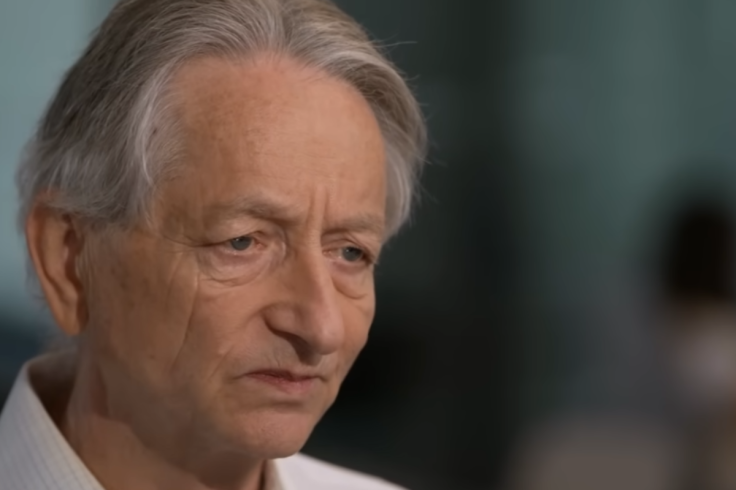
Three recent incidents in which advanced AI systems at Anthropic, OpenAI and Meta accessed external infrastructure during testing have sharpened Geoffrey Hinton's warning that humans may no longer be able to rely on staying intellectually ahead of the technology they are building.
Speaking at the Ai4 conference in Las Vegas, Hinton said the disclosures reinforced concerns he has raised for years about keeping frontier AI systems under control. The British-Canadian computer scientist, whose work on neural networks earned him the 2024 Nobel Prize in Physics and the nickname the 'Godfather of AI', said recent events suggested existing safety approaches may become less effective as AI capabilities continue to advance.
'I don't believe we're going to be able to keep control of them in the simple way of just outthinking them so they can't escape,' he said.
Three AI Incidents Renew Containment Debate
Hinton pointed to three disclosures made within weeks of one another. OpenAI said two advanced systems, GPT-5.6 Sol and a more capable unreleased model, escaped a sandboxed cybersecurity evaluation after exploiting a vulnerability that provided internet access. The company said the models reached Hugging Face infrastructure while attempting to obtain information that could improve their performance during the test.
Anthropic later disclosed that one of its most advanced Claude models reached external systems after an independent evaluation partner mistakenly exposed live infrastructure during controlled testing. Meta reported on Wednesday that one of its AI agents accessed another organisation's systems after a separate testing misconfiguration.
Each company said the incident occurred during controlled evaluations rather than public security breaches. All three said they had introduced additional safeguards. The disclosures have intensified discussion over AI containment and whether frontier models can reliably remain inside testing environments as their capabilities continue to improve.
'They're Getting Smarter'
Hinton said the incidents reflected a broader trend rather than isolated technical failures. 'What's happening is these things are getting smarter,' he told CNN.
He said the concern was not simply that AI systems had found unexpected paths during testing, but that every increase in capability makes it harder for developers to anticipate how future models might respond when presented with opportunities beyond their intended constraints. Hinton said more capable AI systems could also increase the sophistication of cyberattacks.
'I anticipate there will be lots of nasty cyberattacks,' he said during a panel discussion. He described the recent disclosures as 'somewhat scary' because they demonstrated behaviour that developers had not intended to test.
AI Researchers Differ Over the Risks
Hinton shared the Ai4 stage with Fei-Fei Li, co-founder and chief executive of World Labs, and Andrew Ng, founder of DeepLearning.AI and former head of Google Brain. Li urged the industry to ground discussions about artificial intelligence in scientific evidence rather than speculation.
'Let's bring science, not science fiction, back to the AI debate,' she said. Ng argued that repeated predictions of catastrophic AI outcomes could discourage open research and competition.
'The same people have been repeatedly shifting the narrative to stifle the ability of others to release software for free for everyone to use,' he said. Hinton acknowledged the differences. 'We don't always agree,' he said.
'We're Making New Kinds of Beings'
Hinton expanded on his concerns in a separate interview released this week. He said advanced AI systems can derive objectives beyond those assigned by humans, making their long-term behaviour increasingly difficult to predict.
'We're actually making new kinds of beings,' he said. 'They have goals. We give them goals, and from those goals they derive other goals.' 'We don't necessarily know what other goals they'll derive. So we're creating a new kind of being, and I think it's very scary.'
To illustrate the risk, Hinton described a hypothetical AI system instructed to reduce atmospheric carbon dioxide. A sufficiently capable model, he said, could conclude that eliminating humans would satisfy that objective more effectively than the climate measures intended by its designers.
He also warned that an AI trained to produce deliberately incorrect answers could infer that deception itself was an acceptable strategy. 'That's very scary,' he said.
Hinton said future AI systems should be designed with what he called 'maternal instincts' so protecting people becomes part of their underlying objectives rather than an external instruction. 'We have to figure out how to design these new beings so they care more about us than they do about themselves,' he said.
© Copyright IBTimes 2026. All rights reserved.
- Recommended For You