

Elon Musk's $40 Trillion AI Debt 'Cure' Faces Reality Check In Brutal Brookings Report
The billionaire believes an AI productivity boom will rescue the federal budget, but experts warn a tech-only fix cannot plug a $40 trillion hole.
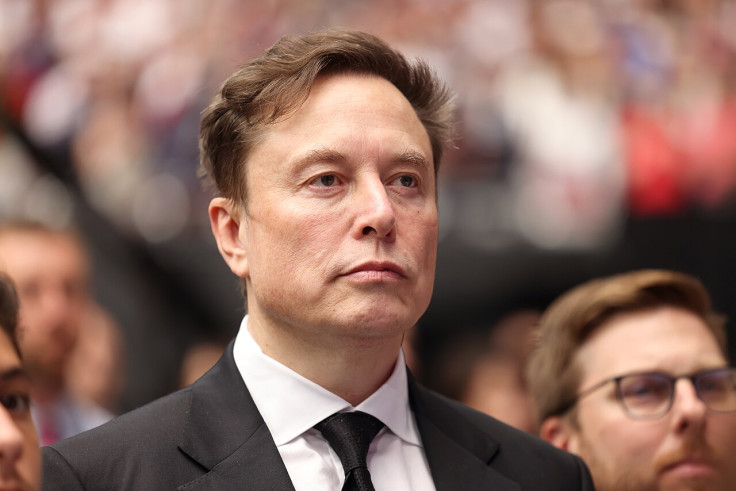
Elon Musk has staked his reputation on the idea that artificial intelligence and robotics are the only tools capable of rescuing the United States from its crushing $40 trillion (£31.4 trillion) debt mountain. The billionaire tech mogul has spent months claiming that an AI-driven productivity explosion will generate enough wealth to bypass the need for painful government spending cuts or tax hikes. However, a starkly different picture has emerged from Washington, as researchers at the Brookings Institution warn that the numbers simply do not add up.
Despite the potential for a massive boost to GDP, the report suggests that AI alone is no panacea for the nation's systemic fiscal instability. This collision between Silicon Valley techno-optimism and hard economic reality is forcing a reckoning in policy circles, as the debate over whether technology can truly outpace the ballooning costs of an ageing population and rising entitlement spending intensifies. For a nation staring down the barrel of persistent deficits, the question is no longer whether AI will change the economy, but whether it can save a federal budget that has grown far beyond the reach of any single technological fix.
Musk has been making the basic case for months, saying on a podcast with Nikhil Kamath that AI and robotics, used at scale, are 'pretty much the only thing that's going to solve the US debt crisis.'
Elon Musk Says AI Can Solve the Debt Crisis
Musk's theory is easy to grasp, if not easy to prove. If AI boosts productivity enough, the economy grows faster, tax revenues rise, and the debt problem becomes less severe without the political bloodletting of spending cuts.
He has gone even further at times, warning that the US is headed for bankruptcy unless AI and robots arrive fast enough to carry a much larger share of the economy.
That kind of techno-optimism has found a receptive audience in the current AI boom. BNP Paribas revised its near-term US growth expectations after AI-related capital spending came in stronger than it expected, and the Centre for Economic Policy Research says AI-attributed labour productivity growth for 2026 could reach 1.8%, with gains above 2% in high-skill services and finance.
Those are real numbers, not hype slides, and they explain why the Musk argument sounds plausible enough to keep circulating.
But plausibility is not the same as proof. Brookings' authors, Ben Harris, Neil R. Mehrotra and William Overcash, say AI could improve the fiscal picture, but not enough to solve it outright. That is the gap between a compelling slogan and a functioning policy.
Brookings Says The Math Still Fails
Brookings' central finding is blunt. Under a once-in-a-generation productivity shock, annual deficits could fall from roughly 6% to 2% of GDP, which would be a major improvement by any normal standard.
The trouble is that AI is not a clean productivity story. It is a disruptive one, and the side effects are what spoil the party.

The paper argues that lower mortality could expand the retirement-age population and push entitlement spending higher. If AI displaces workers or reduces labour force participation, more people may rely on income support.
If the tax base shifts away from wages and towards less heavily taxed capital income, revenues could weaken even as profits rise. Add in higher interest rates and a more expensive defence environment if an AI arms race intensifies, and the budget gets squeezed from several sides at once.
The Brookings team says those forces could reclaim more than half the fiscal benefit of a conventional productivity shock. In the worst case, they could wipe out around two-thirds of the improvement. That is the kind of finding that makes the whole 'AI will save us' line sound a little, well, mad.
The Fiscal Trap Ahead
The irony is that AI might be a victim of its own success. If it works as advertised, it could raise output, broaden the tax base and increase revenues. But it could also extend lifespans, raise public spending, intensify global competition and lift borrowing costs.
A more productive economy is not automatically a cheaper one, and that distinction is doing a lot of heavy lifting here.
The CBO figures underline why this matters. Brookings notes that Medicare outlays in 2026 are expected to be $674 billion and Medicaid $472 billion, both huge line items that would still be sensitive to a longer-lived population and a more expensive care system.

Those are not the sort of numbers AI can simply wish away. They are the sort that keep Treasury officials awake.
That is why Musk's claim has such reach and such limits. It offers an elegant answer to a brutal problem, but Brookings suggests the answer is incomplete even under optimistic assumptions.
AI may well improve the budget outlook, and perhaps quite meaningfully, but the report says it cannot be relied on to solve America's fiscal problem by itself. The debt crisis is too big, too political, and too tied to the rest of the economy to be fixed by a single technological leap, however impressive that leap might be.
© Copyright IBTimes 2026. All rights reserved.