Tech CEO Replaced 80% of Staff After Workers Refused to Embrace AI: 'Would I Do It Again? Absolutely'
After replacing hundreds of workers over two years, IgniteTech says its AI-first strategy boosted productivity and development


The rise of artificial intelligence has triggered excitement, anxiety, and fierce debate across workplaces worldwide. While many companies are still trying to persuade employees to embrace the technology, one chief executive chose a far more dramatic path. Eric Vaughan, CEO of IgniteTech, says his company replaced roughly 80% of its workforce after employees resisted a company-wide push towards artificial intelligence. Even now, he stands firmly by the decision.
'Would I do it again? Absolutely,' Vaughan said during a discussion at the Fortune Brainstorm Tech conference. His remarks have sparked fresh debate about how businesses should approach AI adoption and whether employees unwilling to adapt can survive in an increasingly AI-driven economy.
A Radical Shift Towards AI
IgniteTech, a Texas-based enterprise software company, spent the past several years reshaping its operations around artificial intelligence. The company did not simply introduce AI tools and hope for the best. Instead, it launched a structured programme designed to make AI a central part of everyday work.
One initiative, known as AI Mondays, required employees across all departments to dedicate one full day each week to AI-focused projects. Engineers, sales teams, and support staff were all expected to participate. The company also invested heavily in training. Employees attended prompt-engineering classes, coaching sessions, and workshops aimed at helping them understand and apply AI tools effectively. According to Vaughan, IgniteTech devoted the equivalent of 20% of its payroll over an entire quarter to AI education and workforce development. The investment reflected the company's belief that artificial intelligence would become essential to its future success.
Resistance Proved Harder Than Training
Despite those efforts, Vaughan said many employees remained unwilling to embrace the changes. Speaking at the conference, he argued that the challenge was not a shortage of training or resources. Instead, he believed resistance to change became the biggest obstacle. According to Vaughan, some employees openly rejected the company's AI strategy even after months of education and support.
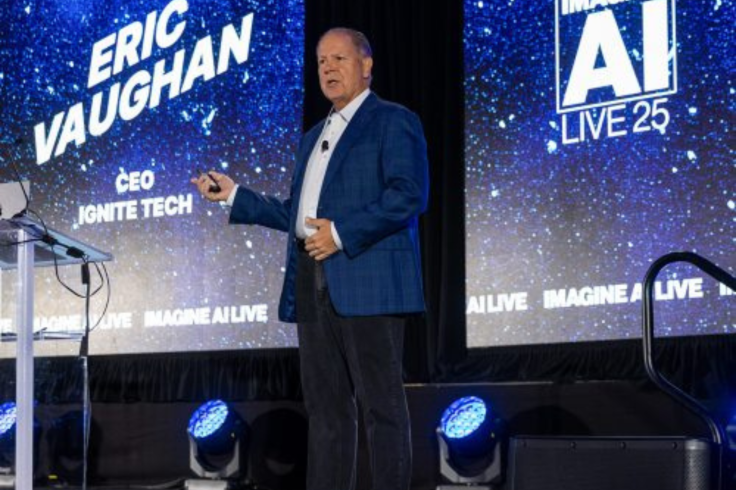
He said IgniteTech ultimately discovered that changing people's attitudes was far more difficult than teaching them new technical skills. Faced with what he viewed as ongoing resistance, Vaughan decided to rebuild the workforce rather than continue trying to persuade reluctant employees. Over a two-year period, the company replaced hundreds of workers as it shifted towards an AI-first culture.
Productivity Gains and New Innovations
Such a large-scale workforce overhaul would be considered risky by many business leaders. Vaughan, however, believes the decision produced significant benefits.
He says the restructuring improved productivity across the business and accelerated the development of new AI-powered products. The company has also developed patent-pending AI solutions as part of its transformation. Supporters of AI-first strategies argue that businesses operating in highly competitive technology sectors must adapt quickly to survive. From that perspective, employees who resist fundamental changes can slow innovation and growth.
Others question whether replacing large numbers of workers is the best way to achieve long-term success. They argue that trust, collaboration, and gradual change may prove more sustainable than sweeping workforce restructuring.
A Wider Challenge Facing Businesses
The debate surrounding IgniteTech reflects a broader challenge facing organisations across the world. At the same Fortune conference, Deloitte vice chair China Widener suggested that many companies are facing what she described as an 'unlearning problem'. Employees are often being asked to abandon work practices that have served them well for years, or even decades. Adopting AI is not simply about learning a new tool. It frequently requires people to rethink how they approach their jobs.
Widener noted that many organisations devote most of their AI budgets to technology while investing far less in workforce adaptation and training. That imbalance may explain why some businesses continue to struggle with AI adoption despite significant spending.
The Human Side of the AI Revolution
Artificial intelligence is transforming workplaces at a remarkable pace, but technology alone does not determine success. For some leaders, cultural alignment has become just as important as technical capability. Employees who understand and support the company's direction are seen as essential to achieving long-term goals. For others, successful AI adoption depends on communication, trust, and giving workers time to adjust to new realities. Vaughan's experience highlights the tensions many organisations now face as they navigate the AI era.
His decision to replace 80% of IgniteTech's workforce may be one of the most striking examples yet of how seriously some executives are taking the shift towards artificial intelligence. Whether other companies follow a similar path remains uncertain, but the debate over how to balance innovation with workforce stability is likely to intensify in the years ahead.
© Copyright IBTimes 2026. All rights reserved.
- Recommended For You