

'Who Knows?': Amazon Manager Asked Whether Robots Could Eventually Replace Warehouse Jobs, Including His Own
Automation is reducing physical tasks and creating technical roles at Amazon's Tracy facility, but the company's wider impact on warehouse employment remains uncertain
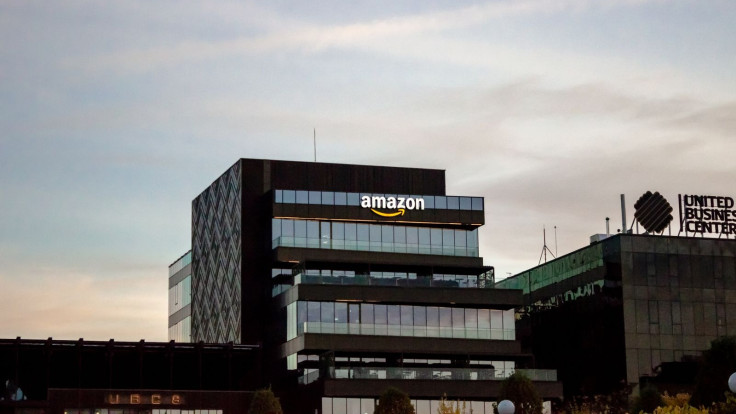
Amazon senior manager Mohammed Khan said he could not predict whether robots would eventually replace warehouse jobs, including his own, in an interview published on Wednesday, 28 October 2026, following a tour of the company's Tracy, California, facility.
Asked about the possibility during an interview with Business Insider, Khan responded, 'Who knows? That's not in our purview right now.'
Khan began his Amazon career as an entry-level picker 12 years ago, when collecting orders meant walking long distances through warehouse aisles.
Today, he oversees operations at a facility where robots transport inventory, sort parcels and move loaded carts.
The technology has reduced some of the physical demands of warehouse work. However, Khan's response raises a broader question about whether new technical positions will be sufficient to offset jobs that automation could eventually eliminate.
Warehouse Jobs Change as Amazon Robots Take Over Repetitive Work
Khan told Business Insider he previously walked approximately 10 miles during an average working day. Hercules robots now transport storage pods directly to employees, eliminating much of the walking once required to retrieve products.
The Tracy facility spans 1.4 million square feet and uses robotic systems including Hercules, Robin, Cardinal, Pegasus and Proteus. Despite the automation, employees continue packing orders, loading vehicles and responding when machinery malfunctions.
According to figures Amazon provided to Business Insider, the facility employs more than 3,000 people, compared with approximately 1,000 when it opened in 2023. A company spokesperson attributed the workforce expansion primarily to increasing customer demand rather than automation alone.
THIS WAREHOUSE FIRED EVERYONE AND DIDN'T EVEN TURN ON THE F*CKING LIGHTS
— VynqorxeAI (@Vynqorxe) October 21, 2026
People used to work here. Now one robot does.
The shift never ended. It just stopped needing anyone.
Look at the frame. Orange vests still hang on the chairs. Monitors are off. Water bottles sit on the… https://t.co/No6paeIBSg pic.twitter.com/zwyEIJHdPl
Khan explained that the machines still require substantial maintenance, monitoring and human intervention. Their limitations have also introduced responsibilities that differ from traditional warehouse work.
Briana Brager is among the employees who have moved into such positions. She joined Amazon approximately two years ago as a picker after spending several years caring for her family.
She now works as a process assistant overseeing robotic operations, coordinating responses when equipment stops or packages become stuck. Her position, informally known as the 'quarterback', involves monitoring machines and directing colleagues to areas requiring assistance.
Brager underwent two weeks of intensive training, followed by additional job shadowing. She told Business Insider that her current responsibilities are less physically demanding than her previous position.
'We call the shots,' she said.
Her experience illustrates how automation can change existing jobs and create opportunities for additional training. However, individual examples of career progression do not establish whether Amazon's overall warehouse workforce will continue growing as more tasks become automated.
Warehouse Jobs Face an Uncertain Future Beyond the Loading Dock
Amazon says its next-generation fulfilment centres are approximately 25 per cent more productive and can reduce order-processing times by up to 25 per cent. The company also reports roughly 30 per cent more maintenance, reliability and engineering roles at advanced robotics facilities.
However, those figures do not establish whether overall warehouse employment will increase or decline as automation expands.
Khan estimated that one Robin robotic arm could perform package-sorting work previously handled by two to seven employees. The estimate does not indicate how many workers, if any, have lost their jobs.
Amazon says affected employees take on other responsibilities, including equipment monitoring, quality control and maintenance.
At Tracy, approximately 200 Proteus robots transport carts previously pushed manually. Workers continue monitoring equipment, resolving routing problems and loading delivery trailers. Some have also pursued technical training through Amazon's apprenticeship programme.
The company is exploring further automation through Project Tetromino, an early-stage concept involving AI-powered package sorting and vehicle loading at delivery stations.
However, Amazon says the project remains under evaluation and has disputed previously reported financial projections and implementation timelines.
Khan compared robotics to a calculator, arguing that technology changes how employees perform tasks rather than necessarily eliminating their responsibilities.
'It's not that the amount of work has changed,' he told Business Insider. 'It's how we approach it.'
Nevertheless, his uncertainty about whether machines could eventually replace his own position reflects a broader concern, whether evolving technical roles can offset potential job losses as warehouse automation advances.
© Copyright IBTimes 2026. All rights reserved.