

Ancient Passage About Jesus' Reported Resurrection Got a 'Theological Makeover', Researcher Suggests
A new analysis of the Josephus passage about Jesus questions its Messiah claim while leaving the original wording and resurrection account unresolved
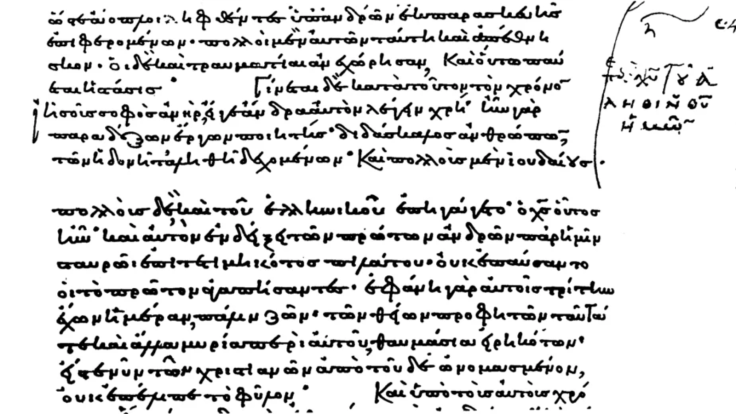
The Josephus passage about Jesus may have been altered to describe him unequivocally as the Messiah, according to a comparative textual analysis published by an independent researcher.
Researcher Jesús Fernández-Pedrera Correa reached that interpretation in his analysis published on 15 August 2026 after comparing Greek, Latin, Arabic and Syriac accounts of the ancient text.
The disputed passage, called the Testimonium Flavianum, appears in Jewish Antiquities, completed around AD 93 or 94 by the Jewish historian Flavius Josephus. It refers to Jesus, his crucifixion and reports that he appeared alive afterwards. Scholars have long questioned whether its explicitly Christian language reflects Josephus' original account.
Fernández-Pedrera Correa is not claiming to have found a lost manuscript. His argument is more specific. Wording that now declares Jesus to be the Christ may have replaced an earlier, more cautious description.
What the Josephus Passage About Jesus Says in Four Traditions
In the surviving Greek version, Jesus 'was the Christ'. It also says he appeared alive again on the third day, in keeping with prophecies. Read without qualification, both assertions appear to affirm central Christian beliefs.
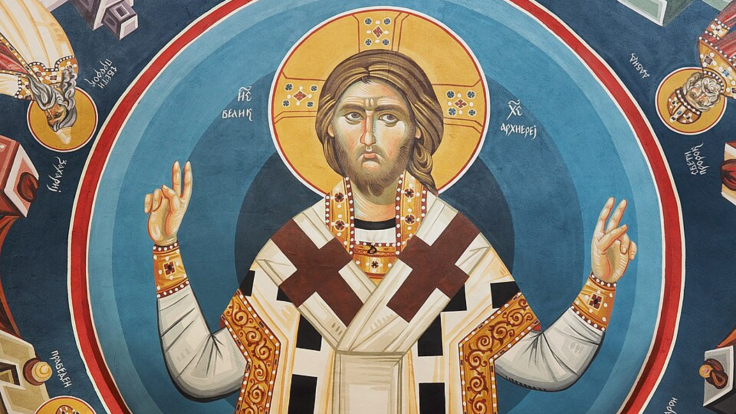
The researcher argues that other transmissions preserve a less emphatic description. Jerome's Latin account, written around AD 392, refers to Jesus as someone believed to be the Messiah. Arabic and Syriac chronicles also qualify that identification, rather than presenting it as settled fact.
Those accounts come from different periods. Agapius of Hierapolis preserved the Arabic rendition in the 10th century, while Michael the Syrian's chronicle dates from the 12th century. Their wording is relevant, but the versions cannot simply be treated as four independent witnesses to Josephus' original text.
There is another difference concerning the reported resurrection. The Greek passage presents Jesus' appearance after death in the narrator's voice. The Arabic account attributes that report to his followers. Recording what disciples said they witnessed is not the same as affirming their account.
Crucially, this does not establish which wording Josephus used. Translation, paraphrase and the transmission of texts over centuries complicate attempts to recover a first-century original.
Earlier Scholarship Complicates the Josephus Passage About Jesus
The analysis was posted as a preprint on Zenodo, not as a peer-reviewed journal paper. Its argument about the messianic declaration is also part of a much older scholarly disagreement, not evidence from a newly discovered document.
In a 2008 study in New Testament Studies, Alice Whealey examined the Arabic and Syriac versions. She concluded that both came through a Syriac translation of Eusebius' Ecclesiastical History. That shared transmission history limits their value as wholly separate confirmation.
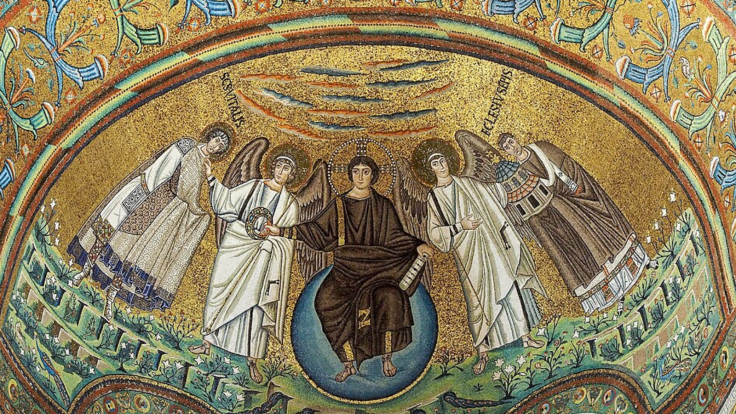
Other researchers favour a different interpretation. In his 2025 book Josephus and Jesus, T. C. Schmidt argued that Josephus authored the passage. Schmidt also proposed that ancient Christian readers understood its wording differently from the way many modern readers do.
The positions are not interchangeable. Fernández-Pedrera Correa considers the unqualified identification of Jesus as Messiah the clearest candidate for alteration. Schmidt's work offers a competing explanation for why the surviving passage sounds more Christian to modern readers.
What Origen Adds to the Josephus Passage About Jesus
An earlier witness also matters. In Against Celsus, third-century Christian writer Origen said Josephus did not believe Jesus was the Christ. Fernández-Pedrera Correa points to this as a reason to question the Greek text's unequivocal declaration.
Josephus also refers elsewhere in Jewish Antiquities to James, the brother of Jesus 'who was called Christ'. Most scholars accept that reference as authentic, although some dispute it. The phrasing identifies Jesus without endorsing the title.
Neither comparison recovers the lost original. Nor does the analysis demonstrate that a particular Christian copyist deliberately falsified the passage. The strongest argument concerns a possible change to the declaration about Jesus' identity, not proof that his reported resurrection was inserted.
Whether Josephus originally described the disciples' testimony remains unsettled. The preprint cannot determine the precise original wording, and comparing later texts cannot establish whether the resurrection itself occurred.
© Copyright IBTimes 2026. All rights reserved.