'I May Pay a Political Price': Burnham To End Pension Earnings Link in 2030 To Fund Care Plan
The proposed system would drop the automatic earnings link while guaranteeing annual increases tied to inflation or 2.5 per cent, with the reform delayed until after the next election

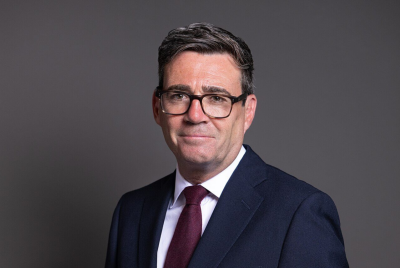
Prime Minister Andy Burnham has confirmed that the state pension triple lock will be rewritten from April 2030, ending its automatic link to earnings so that savings can be used to help fund a new National Care Service in England.
Speaking at Labour's conference in Liverpool on Tuesday, he said the change to the triple lock could save about £15 billion a year by 2040, according to government estimates, and would help fund social care that is free at the point of use.
Mr Burnham acknowledged he may 'pay a political price' for the move but insisted pensioners would still be protected, stressing the reform would be 'fully funded and not through borrowing'.
'Someone has to go through the pain barrier and rip the plaster off,' he said. The revised system would not begin until after the next general election and is expected to be written explicitly into Labour's next manifesto.
How the Adjusted Triple Lock Would Work
The triple lock, in place since 2011, raises the state pension each April by the highest of inflation, earnings growth or 2.5 per cent. It was introduced after decades in which the pension lost value against average pay and will remain unchanged until 2030.
Under the adjusted version, the pension would still rise every year by at least inflation or 2.5 per cent, whichever is higher. What would go is the automatic yearly link to average earnings growth, with the government instead tracking the pension's value against earnings over time and topping it up if it began to fall behind pay.
Mr Burnham told delegates pensioners would 'always share in the rising prosperity of the nation'.
The Office for Budget Responsibility has projected that state pension spending could rise from about 5 per cent of GDP in 2024-25 to 7.7 per cent by 2073-74 under its central projection, with higher spending possible under more volatile inflation and earnings assumptions.
Ministers say the full-rate new State Pension is now worth roughly 30 per cent of median earnings and that the revised policy will broadly maintain that relationship over time.
Care Plan at the Heart of Triple Lock Change
Mr Burnham presented the change as the cost of overhauling England's care system, describing a National Care Service as 'as significant as the creation of the NHS itself'. He recalled how his grandmother Kitty's engagement ring was 'ripped from her finger and stolen in a care home', and said care 'funded out of people's fear' had to end.
He said some older people living solely, or almost entirely, on the state pension currently pay care charges from that income. 'Under my plan, this will no longer happen,' he said. The proposed service would offer social care free at the point of use, with no care charges paid out of the basic state pension.
Criticism and Warnings Over Triple Lock Reform
Jonathan Cribb, deputy director at the Institute for Fiscal Studies (IFS), said savings from scaling back the triple lock would be 'relatively small in the first few years, but rise substantially over time'.
He warned they would not, on their own, cover universal social care in the next parliament. The IFS, which has long argued the current system is unsustainable, welcomed the removal of what it calls a 'permanent ratchet'.
Unite general secretary Sharon Graham said ministers should have 'pulled another lever', such as a wealth tax, rather than changing the triple lock.
Conservative leader Kemi Badenoch said the move proved 'more tax rises are inevitable' under Labour. Reform UK leader Nigel Farage accused Mr Burnham of 'launching an offensive against our elderly'.
Liberal Democrat leader Sir Ed Davey said social care 'can't be funded from the pockets of our poorest pensioners' and criticised the delay until after the next election. Mr Burnham has said the timetable means voters will be able to decide on the policy at the ballot box.
© Copyright IBTimes 2026. All rights reserved.
- Recommended For You