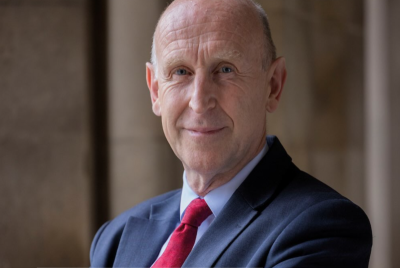
'I Have Heard the Answer': The Line That Ended Keir Starmer's Premiership
Starmer's resignation follows internal party pressure and election setbacks
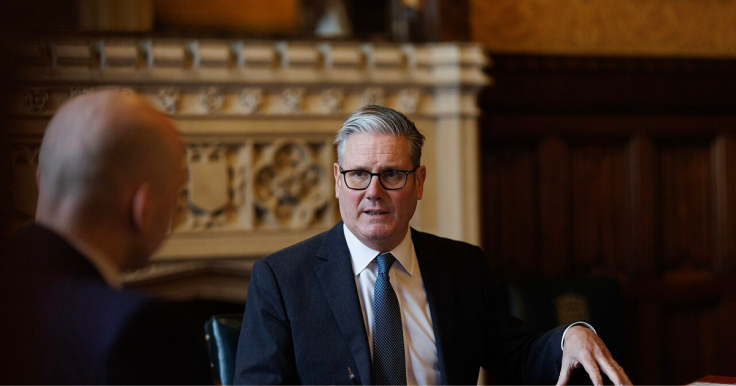
Keir Starmer confirmed outside 10 Downing Street on Monday in London that he resigns as prime minister and leader of the Labour Party, telling the country that he had 'heard the answer' from his own MPs about whether he was still the right person to lead Labour into the next general election.
The news came after weeks of mounting pressure inside Westminster. Labour's local and Welsh election drubbings in early May shredded Starmer's authority, but the timetable only really snapped into focus when Andy Burnham quit as mayor of Greater Manchester, won the Makerfield by‑election and made clear he would challenge for the leadership.
The Words That Finished A Premiership
Starmer's resignation speech began like so many others, with a defence of his record and a claim that every decision in office had been about 'putting the country I love first.' Then came the pivot.
'The question my party is asking now is whether I am best placed to lead us into the next election,' he said from the lectern. 'I have heard the answer... and I accept that answer with good grace.'
They acknowledged what had already happened in private, that Labour MPs and cabinet ministers had withdrawn their confidence and were preparing to move against him. Within moments he added the formal line, 'I will resign as leader of the Labour Party.'
Starmer confirmed he will remain in post as prime minister until Labour's governing body completes a rapid leadership process.
He has asked for nominations to open on 9 July and close by the summer recess on 16 July, so that a new leader, and therefore a new prime minister, is in place before Parliament returns in September.
Until then, the King has been told of his intent but the formal resignation audience at the Palace will wait.
Toward the end, Starmer's voice cracked as he spoke of leaving 'the biggest job in the country' to spend more time on 'the most important job', being 'the best husband I can, to my fantastic wife Vic, who has been a rock by my side through good times and bad; and being the best dad I can to my beautiful children, who are my pride and my joy.'
From Landslide High To Local Election Humiliation
In July 2024 he led Labour to a landslide general election victory after 14 years of Conservative rule, delivering the first Labour government of King Charles's reign and promising a 'plan for change' built around infrastructure, green energy and what he cast as economic competence.
There were early wins. OECD data shows that between the second quarter of 2024, just before Labour took power, and the first quarter of 2026, UK GDP grew by 2.3%, faster than any G7 economy except the United States.
Health waits in England edged down, with NHS figures showing the treatment backlog falling from 7.62 million in June 2024 to 7.22 million by April 2026, and a higher share of patients treated within 18 weeks.
Net migration, which had peaked at an annual 944,000 under the Conservatives in 2023, dropped to 171,000 in 2025, a 48% fall year‑on‑year.
Yet politically, it never quite clicked. Polling from YouGov in August 2024 already had Starmer on a net rating of minus 7. By June 2026, 74% of people told the firm he was doing badly and only 18% thought he was doing well, a net score of minus 56.
Ipsos suggested his personal ratings had sunk below those of Rishi Sunak, Boris Johnson and Theresa May at equivalent points.
The May 2026 local elections turned discontent into open revolt. Labour lost around 1,000 council seats in England, surrendered its long‑held dominance in the Welsh Senedd after 27 years and took a hammering in Scotland.
Reform UK, Nigel Farage's populist, anti‑immigration party and a clear ideological ally of US President Donald Trump, gained nearly 1,300 council seats and made big inroads into devolved legislatures.
Labour MPs privately described Starmer's post‑election fightback speech, delivered with shirt sleeves rolled up, as 'meh', 'really didn't cut the mustard' and the sort of thing that simply made them 'feel sorry for the PM.'
A Premiership Defined By Drift And Pressure From All Sides
Starmer's two years in Number 10 were not devoid of policy content. He scrapped Tony Blair's target of sending 50% of young people to university in favour of what he called 'gold standard apprenticeships', signalling a break with New Labour's university‑heavy thinking.
He signed what was billed as a historic trade deal with President Trump, resetting UK‑US economic relations even as Trump's own domestic politics, including his Iran war and the energy shock it triggered, helped push UK energy bills higher rather than lower.
On immigration, small boat crossings over the Channel remained stubbornly high, but the rate of arrivals has slowed, with 2026 detections down 41% compared with the same period in 2025.
On welfare, Starmer tried to rein in working‑age benefits, then retreated under pressure from his own backbenchers in June 2025. The Office for Budget Responsibility now projects the total welfare bill rising from 10.7% of GDP in 2024‑25 to 11.1% by 2029‑30, driven heavily by health and disability payments, which are forecast to soar from £58.2 billion to £78.1 billion over the same period.
He did, however, legislate to scrap the two‑child limit on Universal Credit. The government's own impact assessment suggests that change will leave around 450,000 fewer children in relative poverty, after housing costs, by the end of this Parliament than would otherwise have been the case.
None of this insulated him from attack. On energy, Ofgem's price cap for a typical household is due to rise to £1,862 this summer, almost £300 higher than the £1,568 cap Labour inherited in July 2024, in part because of the Iran conflict.
On foreign policy, Trump used his Truth Social platform on Sunday to declare that Starmer had 'failed badly on two very important subjects – IMMIGRATION AND ENERGY (OPEN NORTH SEA OIL!)' before adding, somewhat back‑handedly, 'I wish him well!'
Inside Labour, the drip of resignations became a steady leak. Health secretary Wes Streeting walked. Defence secretary John Healey, a long‑standing ally, quit over Starmer's military spending plans, followed by armed forces minister Al Cairns.
By the end, 20 ministers had resigned during his time in office.
The Rise Of Andy Burnham And A Reluctant Exit
Into that vacuum strode Andy Burnham.
The former health secretary had spent nearly a decade as mayor of Greater Manchester, earning the nickname 'King of the North' and a reputation for blunt, retail politics well beyond his patch.
His decision to resign as mayor, run in Makerfield and win decisively over Reform turned him overnight from a regional baron into a Westminster contender.
Burnham made his intentions obvious in his by‑election victory speech at Ashton Town Football Club. 'Everyone knows that politics isn't working,' he told supporters. 'Everyone can feel that the country isn't where it should be. Tonight could, just could, be the turning point.'
Oh my goodness, it was SO hard to say goodbye to everyone at the GMCA. 🥹
— Andy Burnham (@AndyBurnhamGM) June 22, 2026
Thank you all for everything. I have loved working with you and will miss you so much. 🙏🏻
You couldn’t have given me a better leaving present! 🙌🏻
🐝🐝🐝 pic.twitter.com/6jQSIXbjpN
On Monday he dropped the pretence entirely and formally announced he will stand for the Labour leadership, insisting the process should be 'conducted in an orderly and responsible way.'
Within hours, Wes Streeting, the former health secretary who had quit the cabinet in protest at Starmer's leadership and flirted with a run as a 'plucky underdog', rowed in behind him.
'Having spoken at length with Andy in recent days, I'm convinced that there is a place for those ideas under his leadership,' Streeting said on social media. 'We could spend the summer exaggerating small differences, or we can roll up our sleeves and help him to deliver the change our Party and our country needs. That is the choice I am making.'
Labour MPs began referring openly to a potential 'coronation' if no credible rival emerges by 9 July. Burnham himself said Starmer had given 'huge service to our country.'
Starmer will leave as the shortest‑serving Labour prime minister in history, longer in office than Liz Truss or Rishi Sunak but behind all six of his party's previous occupants of Number 10.
The next move belongs to Labour, and the clock is already ticking. If the party unites behind one candidate, Starmer could be gone by July. If not, the new leader must be in place before Parliament returns in September.
© Copyright IBTimes 2026. All rights reserved.
- Recommended For You