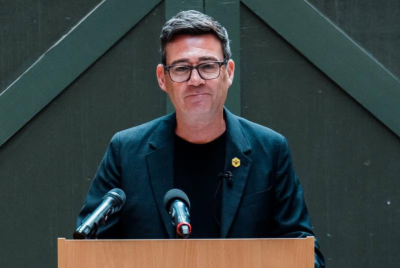
Andy Burnham Targets 1 Million Young NEETs: Sickness Benefit Crackdown Proposed To Revive UK Jobs
UK Prime Minister is under pressure to reduce welfare spending while finding money for other priorities, including defence and a proposed National Care Service
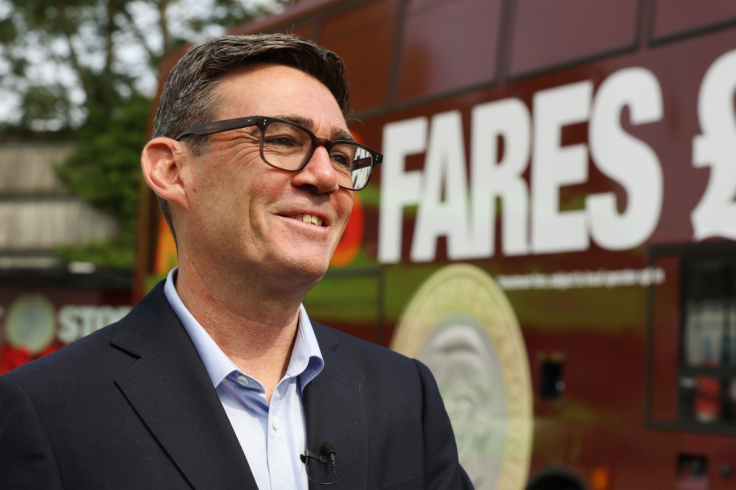
UK Prime Minister Andy Burnham is considering tougher conditions on youth sickness benefits as he seeks to bring around one million young NEETs back into work, education or training.
The proposed measures come as the UK jobs market shows its first signs of stabilising after almost four years of decline. Recruiters reported that permanent placements stopped falling in July, while temporary hiring rose for a fourth consecutive month.
Burnham's plans could require some young benefit claimants to undertake training, voluntary work or work preparation to continue receiving support.
The proposals remain politically sensitive, particularly after the previous government faced a major rebellion over plans to tighten welfare rules.
Andy Burnham Neets Crackdown Tied to Welfare Savings
Burnham used his first speech in Downing Street to promise to 'bring the welfare bill down' and shift the savings into defence spending and a new National Care Service.
Behind the scenes, that ambition has hardened into a specific target, the one million or so young people classed as NEETs, not in education, employment or training.
More than 430,000 people aged 16 to 24 are currently claiming sickness benefits, driven in part by a jump in reported anxiety and by neurodevelopmental conditions such as autism and ADHD. Unlike most other Western economies, Britain still has around 700,000 more people out of work because of long‑term ill health than it did six years ago.
Burnham's answer is to force a change in how sickness benefits work for younger claimants. Under proposals inspired by schemes in the Netherlands, Denmark, Germany and Australia, young people would be required to take part in training, education, work preparation or volunteering in order to continue receiving payments. Those who refuse could see their benefits stripped.
Ministers argue that, in other countries, such conditionality has been more successful at pulling young people back into the labour force than simply signing them off and letting them drift.
'Rays of Light' in Jobs Market as Andy Burnham NEETs Plan Emerges
Ministers insist they are not trying to push teenagers into a vacuum. Maxine Bligh, of the Recruitment and Employment Confederation, said 'rays of light are beginning to break through from the job market as employers revive hiring plans', adding that 'the permanent market is stabilising'.
She called it 'remarkable' that July marked the first month without a fall in permanent placements since Truss's resignation, underlining, as she put it, 'just how prolonged the downturn in permanent hiring has been'.
Callum Licence, group head of advisory at KPMG UK, said temporary hiring had been growing for 'several months' and that permanent hiring was 'starting to turn a corner'.
Even so, the backdrop is twitchy rather than buoyant. According to job site Indeed, postings fell by 11% between the start of 2026 and July, and are still 32% below pre‑Covid levels.
Businesses remain under pressure from higher taxes, elevated energy bills and stubborn inflation.
Licence warned that, with a new government in place, companies would now be watching closely 'for signs that the new policies can translate into greater confidence to invest and hire'.
Conditioning Sickness Benefits for Andy Burnham NEETs
This is where the Andy Burnham NEETs agenda gets properly contentious. Young people on sickness payments typically do not have to look for work and, once assessed, can go as long as a decade without health checks.
Burnham has said he will not be 'squeamish' about tackling what he calls the causes of rising benefits spending, while also insisting that 'crude cuts' are not the answer.
In a recent BBC interview, he argued that 'there are people in the benefits system, young people in their 20s, who have been quite seriously let down because the support wasn't there for them when it should have been there'.
'It's about changing the nature of the support and making some of the support conditional upon people taking opportunities that are presented in front of them,' he said, hinting that 'you might increase the conditions required to receive benefits'.
He framed the government's guarantees of opportunities for young people, from apprenticeships to training courses in plumbing, bricklaying and nursing, as the other side of that deal.
The danger, critics will inevitably argue, is that the stick lands hardest on those with complex mental health needs or unstable home lives who find it hardest to jump through bureaucratic hoops.
Alan Milburn, the former health secretary now leading a government review into youth joblessness, is expected to give intellectual cover to tighter rules.
In a recent report, he highlighted Resolution Foundation findings that 84% of young people who receive the health element of Universal Credit are not required to undertake any 'work‑readying' activities. He called that 'not sustainable, either for the young people themselves or for the taxpayer footing the price for this system failure'.
Milburn has already trailed ideas for an Australian‑style database to track school leavers, after figures suggested almost 80,000 teenagers have effectively 'gone missing' from the system in the past year despite the legal requirement to stay in education or training until 18.
Political Risks of the Andy Burnham NEETs Offensive
The politics around welfare inside Labour are fraught. Sir Keir Starmer, Burnham's predecessor in No 10, was forced to abandon an attempt to tighten disability benefits after more than 120 of his own MPs rebelled, accusing him of mounting 'the biggest attack on the welfare state since George Osborne'.
Any attempt by Burnham to cut the sickness bill for young claimants risks lighting that fuse again. Shadow chancellor Sir Mel Stride has already accused the new Prime Minister of being 'completely without a plan', claiming that early spending pledges add up to a '£96 billion tax bombshell'.
Conservative leader Kemi Badenoch has told Burnham she will only support his social care reforms if they are funded through spending cuts rather than higher taxes or borrowing.
Inside government, there is pressure from the other side too. Wes Streeting, Burnham's defence secretary, has said he would resign if the Prime Minister fails to find an extra £4.7 billion for the military in his first Budget, describing it as 'absolutely' a matter of principle.
Burnham has promised a new National Care Service, modelled on the NHS, to look after an ageing population, at an estimated cost of £18 billion a year. He has previously floated paying for that by scrapping inheritance tax and replacing it with a flat 10% levy on all estates, branded a 'death tax' by opponents.
Officials at the Department for Work and Pensions say the direction of travel is clear. A DWP spokesman said the government would 'always support those who genuinely need it' and was working with disabled people through the Timms Review to ensure Personal Independence Payments are 'fair and fit for the future'.
At the same time, he pointed to 'the biggest youth employment reforms in a generation', backed by £2.5 billion to create 'almost one million opportunities for young people to earn and learn', with Milburn set to recommend further changes later this year.
Recruitment data from KPMG and the Recruitment and Employment Confederation show the permanent placements index flat at 50 in July, a neutral reading that means the jobs market is neither growing nor shrinking.
It is the first month without a decline in permanent hiring since October 2022, when Liz Truss resigned as prime minister, bringing to an end what analysts describe as the longest recorded period of contraction in the survey's history.
Temporary hiring has now risen for four consecutive months and at its fastest pace since 2023, while starting salary inflation hit a six‑month high and part‑time wage growth reached its strongest rate in 26 months.
Official figures from the three months to May put unemployment at 4.9%, slightly below the more than 5% recorded at the start of the year.
Separate research from BDO suggests overall business activity nudged back into growth in July, a modest 'Burnham bounce' helped by World Cup spending and summer tourism.
The reforms could trigger another Labour revolt if MPs believe vulnerable people are being punished without adequate support. The Government said it would continue supporting those who genuinely need help and pointed to £2.5 billion in youth employment reforms designed to create almost one million opportunities to earn and learn.
© Copyright IBTimes 2026. All rights reserved.
- Recommended For You