

Andy Burnham Promises Tax Relief and Cost-of-Living Focus in First PM Agenda
Burnham has promised a review of the tax-free personal allowance in a bid to ease the cost of living, but warns the public that the road to economic recovery will be anything but simple.
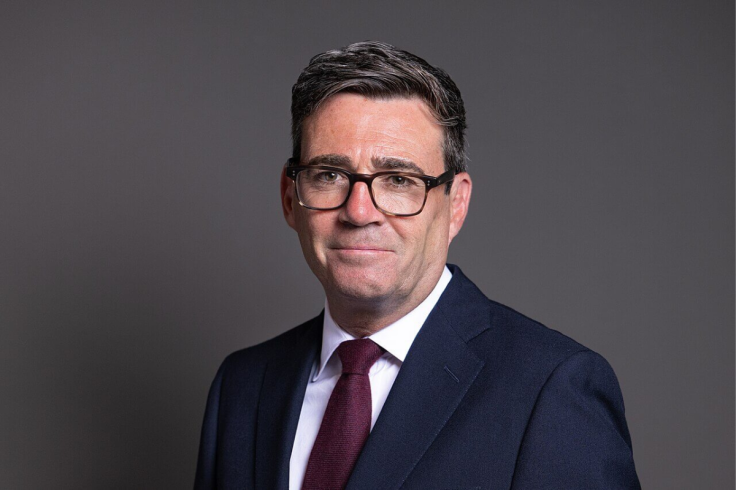
Prime Minister Andy Burnham has placed cost-of-living relief at the absolute centre of his new administration, signalling a potential review of the tax-free personal allowance to give hard-pressed families vital 'breathing space' as they continue to grapple with years of soaring household costs.
Just hours after entering Downing Street, Burnham said he has identified the widening gap between stagnant wages and soaring household costs as the defining challenge of his leadership.
Central to that promise is a review of the tax-free personal allowance, a move that would allow people to earn more before paying income tax. But Burnham also offered an early reality check as he admitted any change would be 'difficult' given the UK's current financial position, setting up what could become the defining challenge of his government ahead of the Budget 2026.
Tax Relief Comes With a Catch
For many households, the idea of paying less tax sounds straightforward. In reality, it is anything but. The tax-free personal allowance determines how much someone can earn before income tax applies. Raising that threshold would increase take-home pay for many workers, offering immediate relief at a time when everyday expenses remain stubbornly high.
The obstacle is funding it.
Income tax and National Insurance thresholds are currently frozen until April 2031 across England, Wales and Northern Ireland. As wages gradually rise, more earnings become taxable, quietly increasing government revenue without changing tax rates.
Reversing even part of that policy would cost the Treasury billions, meaning Burnham and his chancellor would need to find the money elsewhere through spending decisions, borrowing, or changes to other taxes.
It explains why Burnham is talking about UK tax cuts while warning they will not be easy to deliver.
Cost of Living Remains the Top Priority
Throughout his political career, Andy Burnham's cost of living concerns have shaped many of his policy proposals, and his first speech as prime minister made clear that little has changed.
Burnham has repeatedly argued that too many families can no longer afford everyday pleasures, saying people are struggling to pay for 'a pint on a Friday', take their children out for the day, or enjoy a family holiday because their finances are stretched so tightly.
Those pressures extend far beyond rising supermarket prices. Higher mortgage repayments, expensive energy bills and persistent inflation have continued to squeeze household budgets long after the worst of the inflation crisis appeared to ease.
His promise to give people more 'breathing space' is therefore more than a political slogan. It is the central test of whether his government can improve living standards.
Other Tax Changes Could Follow
Although Burnham has maintained Labour's pledge not to raise the main rates of income tax, National Insurance or VAT, that does not rule out broader tax reform.
He has already suggested some people may be asked to pay 'a little bit more', fuelling speculation that other parts of the tax system could change instead.
Among the options previously discussed are replacing council tax and stamp duty with a different property tax and reviewing capital gains tax rates.
Any of those reforms would create clear winners and losers, making them politically sensitive despite the potential to raise revenue needed to fund a personal allowance increase.
A Familiar Challenge for Labour
Burnham is not the first Labour leader to promise relief from rising living costs.
Earlier this year, former Prime Minister Sir Keir Starmer described tackling the cost of living as the government's 'number one focus', while former Chancellor Rachel Reeves insisted every minute spent on other issues was 'a wasted minute'.
Their administration reduced a typical annual household energy bill by around £150 after shifting some energy levies into general taxation.
However, the gains proved short-lived. Rising wholesale gas prices, driven partly by US and Israeli strikes on Iran, pushed energy costs higher again, alongside food prices and mortgage costs.
As Adam French of Moneyfacts observed, 'A more volatile world is a more expensive world.'
The comparison highlights the challenge Burnham now inherits. Even well-planned domestic policies can be quickly undermined by events beyond Westminster's control.
Energy, Housing and Transport Under the Spotlight
Tax relief is only one part of Burnham's wider agenda.
During his first speech as prime minister, Andy Burnham pledged to bring 'essentials under public control' in an effort to make everyday life more affordable.
That comes as household energy debt has reached a record £4.79 billion, according to the latest figures, with Citizens Advice warning many families are still choosing between heating their homes and paying for other essentials.
Housing is also expected to feature prominently. Burnham has argued Britain cannot solve its affordability crisis without building significantly more council homes, while also reducing reliance on expensive private rentals supported by housing benefits.
Transport reforms are also expected to feature prominently, building on Burnham's record as Mayor of Greater Manchester, where overhauling the bus network became one of his defining achievements. But while cheaper fares, lower taxes and more affordable essentials may prove popular with voters, the real test is still to come.
Burnham has promised to put more money back into people's pockets without breaking Labour's fiscal rules, a balancing act that will be scrutinised when his first Budget is unveiled. Until then, his bold promises remain exactly that, promises that must now withstand the economic realities facing Britain.
© Copyright IBTimes 2026. All rights reserved.