Donald Trump Is Having 'Psychotic Breaks' When Reality of the Midterm Elections Hits, George Conway Says
The bill would give dual nationals one year to choose a single citizenship, but remains stalled in committee
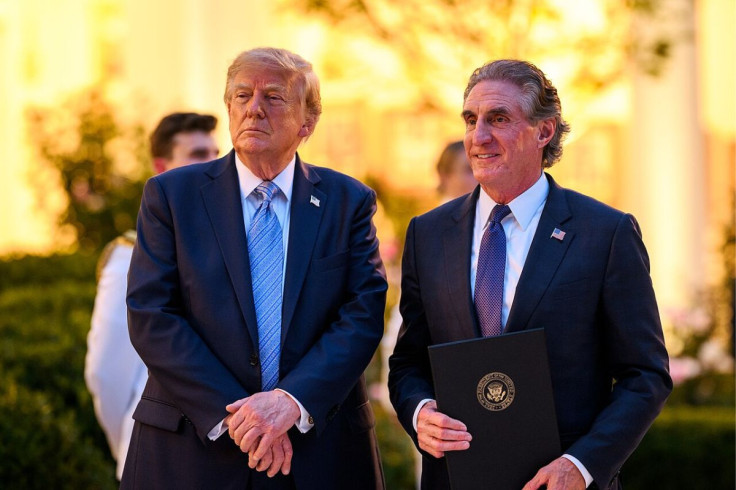
A Republican senator has proposed ending dual citizenship in the United States, a move that would require Americans who hold another nationality to choose between their US citizenship and foreign citizenship if the legislation becomes law.
Sen. Bernie Moreno of Ohio introduced the Exclusive Citizenship Act of 2025, S.3283, on 1 December 2025. The bill was read twice and referred to the Senate Judiciary Committee, where it remains pending.
The proposal would represent a major change from current US policy. The State Department says US law does not require citizens to choose between US citizenship and another nationality, and Americans may acquire foreign citizenship through naturalisation or other means without automatically losing their US citizenship.
Moreno's 'All or Nothing' Proposal
Moreno said when he introduced the measure that being an American citizen was an honour and a privilege and that anyone who wanted to be American should accept an 'all or nothing' standard.
The bill would prohibit an individual from being a US citizen or national while simultaneously holding foreign citizenship. A US citizen who voluntarily acquired another citizenship after the law took effect would be deemed to have relinquished US citizenship under the proposal.
The legislation also sets out a process for people who already hold dual citizenship. They would have one year after enactment to submit written renunciation of either their foreign citizenship or their US citizenship. Those who failed to comply would be deemed, for purposes of federal immigration law, to have voluntarily relinquished US citizenship.
The bill would take effect 180 days after enactment, meaning its proposed requirements would not apply immediately even if Congress passed it and the president signed it.
Golden Passports Could Be Affected
The proposal does not specifically target citizenship-by-investment programmes, often marketed as 'golden passports'. But Americans who have obtained another nationality through investment could be among those affected because the bill covers foreign citizenship generally.
Citizenship-by-investment programmes allow qualifying applicants to obtain nationality under the laws of certain countries, typically after meeting investment or other eligibility requirements. The proposed US restriction would therefore apply based on the resulting foreign citizenship rather than how it was obtained.
The Constitutional Question
The bill could face a significant legal question over whether Congress can require citizenship to be lost through the mechanism it proposes.
Current State Department guidance says a US citizen may lose nationality only after voluntarily performing a potentially expatriating act with the intention of relinquishing US citizenship. The department cites the Supreme Court's decisions in Afroyim v. Rusk and Vance v. Terrazas in explaining those protections.
S.3283 attempts to address that issue by declaring that certain conduct or failure to comply with its requirements would constitute voluntary relinquishment. Whether that statutory declaration would satisfy existing constitutional protections would be a central legal question if the legislation advanced.
A Second Passport Is Not a Tax Escape
Holding another passport does not by itself end a US citizen's tax obligations. The State Department says US citizens, including dual nationals, remain subject to US tax laws.
That means the bill's proposed citizenship restrictions should not be confused with rules governing US taxation. Citizenship, nationality and tax residence can involve separate legal questions.
Canadian Citizenship Adds Another Complication
Changes to Canadian citizenship rules could also matter to some Americans with family connections to Canada.
Can Bill C-3 be reversed? Here’s what an immigration lawyer has to say https://t.co/cwFGM4tBDf
— CanadaVisa (@canadavisa_com) September 20, 2026
Canada's Bill C-3, which took effect on 15 December 2025, changed rules governing citizenship by descent and created new pathways for some people born abroad to Canadian parents or other qualifying connections. Some Americans could therefore hold or confirm Canadian citizenship through descent under Canadian law.
The Bill Has Not Advanced
S.3283 remains an introduced Senate bill rather than enacted law. Moreno is the sponsor, while Sen. Roger Marshall of Kansas is the only listed co-sponsor.
For now, Americans may continue to hold US citizenship alongside another nationality under existing law. Moreno's proposal would fundamentally change that framework if enacted, but it remains subject to the legislative process and would raise significant legal questions before any new citizenship restrictions could take effect.
© Copyright IBTimes 2026. All rights reserved.
- Recommended For You