Candace Owens Claims Students Were Marked Absent for Skipping Erika Kirk's Speech at Nampa Christian School
Candace Owens has accused Nampa Christian School of effectively forcing students to attend Erika Kirk's speech, a claim TPUSA denies

Candace Owens has claimed that students at Nampa Christian School in Idaho were marked absent if they did not attend a speech by Erika Kirk, escalating a dispute over whether pupils were genuinely given a choice to attend the Turning Point USA event.
Owens raised the allegation after an anonymous parent reportedly contacted her and claimed that the assembly was not voluntary. She shared the account while challenging Blake Neff, a producer of The Charlie Kirk Show, and Turning Point USA over their description of the event.
Hey Blake— more parents rolling into the tips box and claiming that students were given an absence if they did not attend Erika’s speech.
— Candace Owens (@RealCandaceO) September 18, 2026
Do you deny this?
Is your plan to gaslight underaged kids and their parents?
Is this the new way forward?; force students to watch Erika… pic.twitter.com/PLwX9A3jLU
The claims have not been independently verified. Turning Point USA spokesperson Andrew Kolvet has disputed Owens' wider account, saying students were free to opt out and that three students did so, while more than 500 attended.
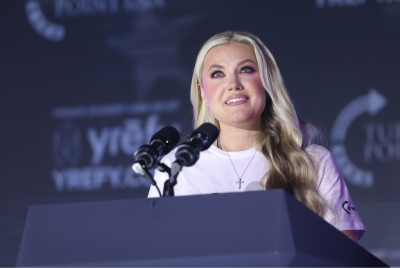
The event took place at Nampa Christian School during a Club America tour stop featuring Erika Kirk. A post celebrating the event said more than 500 high school students attended and described Kirk as delivering a message to a new generation of 'America First leaders'.
Owens Raises Claims From Parents Over Erika Kirk Speech
Owens initially criticised the event by arguing that students had been required to attend it as part of the school day.
'The students were forced to attend this event as a school assembly. They could not opt out,' Owens wrote in an earlier post. She also said parents were informed they could not attend alongside their children.
The students were forced to attend this event as a school assembly. They could not opt out.
— Candace Owens (@RealCandaceO) September 17, 2026
The parents were informed they were not allowed to attend alongside with them.
It is insane to me that you have administrations forcing events on underage kids and then are trying to… https://t.co/GoLbNYKhIK
She later clarified her wording after Neff accused her of changing her account.
'Allow me clarify: The students were not told they could OPT OUT,' Owens wrote. She claimed some parents had nevertheless managed to remove their children from what she described as 'a mandatory assembly scheduled as a part of their regular day'.
Owens has now raised a more specific allegation concerning attendance records.
Allow me clarify: The students were not told they could OPT OUT. Despite this, some parents went above and beyond to opt their students out of what was a mandatory assembly scheduled as a part of their regular day.
— Candace Owens (@RealCandaceO) September 18, 2026
Turning Point USA then presented it as though the students CHOSE… https://t.co/dK1iCCwVvU
'More parents rolling into the tips box and claiming that students were given an absence if they did not attend Erika's speech,' she wrote.
She then asked whether the claim was being denied and questioned whether students were being told they could have opted out 'without mention of the consequence they would have endured'.
The anonymous account shared by Owens similarly alleged that students who opted out would receive an absence and claimed the school had limits on the number of absences students could have.
It also alleged that security restricted movement around the school and that parents were not allowed to attend the assembly.
Erika Kirk Event Attendance Remains Disputed
Kolvet has rejected Owens' characterisation of the event, saying students had the option not to attend.
Wrong again. Students were free to opt out. Three students did so. Over 500 chose to attend. Nothing was forced.
— Andrew Kolvet (@AndrewKolvet) September 17, 2026
What else you got?
'Wrong again. Students were free to opt out. Three students did so. Over 500 chose to attend. Nothing was forced. What else you got?' Kolvet wrote in response to Owens.
That leaves a key unresolved question over what students and their parents were actually told before the assembly.
Owens' position is that students were not explicitly informed that they could decline attendance. TPUSA's position is that students were free to opt out and that three students exercised that option.
The available reporting does not independently establish whether students were told about an opt-out procedure, whether an absence was recorded for anyone who declined to attend, or whether any such absence carried a specific academic consequence.
Nampa Christian Schools' public calendar for 18 September lists school activities including its Jog-a-Thon and a high school football game, but does not publicly identify the Erika Kirk event. The calendar therefore does not establish the school's attendance policy for the assembly.
The disagreement has also become personal. Neff accused Owens of dishonesty and criticised what he described as changes in her account. He wrote that Owens was an example of 'Candace-style dishonesty' and used highly personal language to describe her.
Owens has rejected that characterisation and continued to argue that presenting the event as a voluntary gathering attended by hundreds of enthusiastic students does not accurately reflect what parents and students told her.
The most specific allegation now under examination is whether students who declined to attend were actually marked absent. At present, that claim rests on accounts cited by Owens rather than independent confirmation from Nampa Christian School or attendance records.
The event itself is not in dispute. Erika Kirk appeared at Nampa Christian School as part of a TPUSA Club America event attended by hundreds of students.
What remains contested is whether those students attended because they freely chose to do so, because the event was treated as part of the school day, or because parents and pupils believed that declining to attend could result in an absence.
© Copyright IBTimes 2026. All rights reserved.
- Recommended For You