Capital One Tells Court It Shut 300 Trump Accounts After Anti-Money Laundering Team Reviewed Activity
Bank cites anti-money laundering review in defence against Trump Organization lawsuit

Capital One has told a federal court that its decision to close hundreds of bank accounts linked to Donald Trump's business empire followed an internal anti-money laundering review, pushing back against allegations that the move was politically motivated after the 6 January 2021 Capitol riot.
The explanation appears in a court filing submitted on Friday as part of the Trump Organization's ongoing lawsuit against the financial institution. In the filing, Capital One argues that approximately 300 accounts were closed only after its financial-crimes compliance team reviewed account activity under the bank's standard anti-money laundering procedures.
The bank's position directly challenges the central claim in the lawsuit—that the accounts were terminated because of Trump's political views and the events surrounding the Capitol attack. Instead, Capital One maintains the closures were the result of ordinary compliance processes that large financial institutions routinely carry out to satisfy federal banking regulations.
Capital One Says Compliance Review Prompted Account Closures
According to Capital One's filing, the accounts were reviewed by specialists responsible for monitoring transactions for signs of money laundering, sanctions violations, fraud and other forms of financial crime.
The bank stressed that conducting such reviews is a routine part of its regulatory obligations and does not, on its own, imply criminal wrongdoing by a customer. Importantly, Capital One has not accused the Trump Organization of money laundering or any other financial offence.
Nor does the filing specify what, if anything, investigators identified during their review. Instead, the bank's argument is focused on legal procedure rather than factual allegations about the Trump Organization's financial activity.
According to the filing, banks regularly decide to close customer relationships following internal risk assessments without suggesting that customers have committed crimes or violated banking laws.
Capital One argues that the decision was reached through established compliance mechanisms rather than political considerations, making it inconsistent with the Trump Organization's allegations of ideological discrimination.
Trump Organization Claims Accounts Were Closed Over Politics
The lawsuit, filed by the Trump Organization in 2025, alleges that Capital One abruptly terminated more than 300 business accounts shortly after the Capitol riot on 6 January 2021.
According to the complaint, the company believes the closures were motivated by the bank's view that Donald Trump had incited the attack on the US Capitol.
The lawsuit argues that Capital One acted because of an 'unfounded and misplaced belief' regarding Trump's political responsibility for the events of 6 January, rather than any legitimate banking concern.
The Trump Organization further claims the closures caused financial harm by disrupting banking relationships and interfering with business operations.
Capital One has consistently denied those allegations, maintaining that it does not terminate customer accounts because of political affiliation or ideology.
Earlier in the litigation, the court dismissed several claims brought by the Trump Organization while allowing others to proceed, meaning the central dispute over whether the closures were politically motivated remains unresolved.
Compliance Versus Politics
At the heart of the case lies a broader legal question. Was Capital One carrying out a routine compliance function required by banking regulations, or was it using compliance procedures as cover for political discrimination?
Capital One's latest filing strongly advances the former argument. The bank says anti-money laundering reviews form a routine part of modern banking, particularly for large commercial customers with significant transaction volumes.
Financial institutions operating in the United States are required under the Bank Secrecy Act and related federal regulations to maintain systems that monitor transactions for suspicious activity.
These reviews can lead banks to continue a customer relationship, impose additional monitoring or, in some cases, terminate accounts if the institution determines the relationship no longer aligns with its risk appetite.
Banks are generally not required to accuse customers of criminal conduct before deciding to close accounts. They are also frequently restricted by federal confidentiality rules from disclosing detailed reasons for account closures, particularly where suspicious activity monitoring may be involved. Capital One argues that its handling of the Trump Organization followed those established industry practices.
Part of Trump's Broader 'Debanking' Campaign
The lawsuit has become one of the most prominent examples of President Trump's wider campaign against what he describes as 'debanking.' Trump has repeatedly argued that major financial institutions discriminate against conservatives and politically controversial customers by refusing services or terminating banking relationships.
Throughout his second term, he has publicly criticised several major banks, accusing them of weaponising financial regulation for political purposes. The issue has now moved beyond campaign rhetoric.
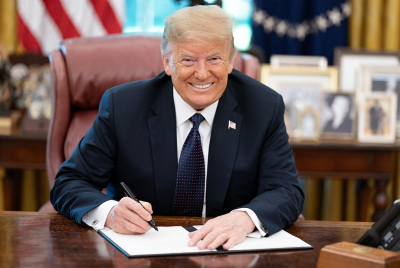
In August, President Trump signed an executive order directing federal regulators to investigate whether banks have improperly denied services to customers based on political or religious beliefs. Supporters argue that financial institutions have become overly influenced by reputational concerns and political pressure.
The banking industry rejects that characterisation. Trade groups and financial institutions have consistently argued that account closures overwhelmingly stem from regulatory compliance obligations, anti-money laundering rules, sanctions screening and risk management requirements rather than political viewpoints.
Court Will Decide Whether Lawsuit Continues
Capital One is now asking the federal court to dismiss the remaining claims, arguing that the Trump Organization has failed to demonstrate that politics—not compliance—drove the account closures.
The latest filing does not resolve the dispute, but it does provide the most detailed public explanation yet for why the bank says the accounts were closed. Whether the court ultimately accepts Capital One's argument remains uncertain.
The case now turns on whether the bank's documented compliance process is sufficient to rebut allegations of political discrimination, or whether the Trump Organization can persuade the court that the anti-money laundering review merely served as a pretext for terminating a politically sensitive customer.
© Copyright IBTimes 2026. All rights reserved.
- Recommended For You