'Living Nostradamus' Warns of Dark Prophecy as Russia Moves Missile Systems to Strategic Arctic Areas
When supernatural predictions align with geopolitical reality, the melting Arctic becomes a very real powderkeg.
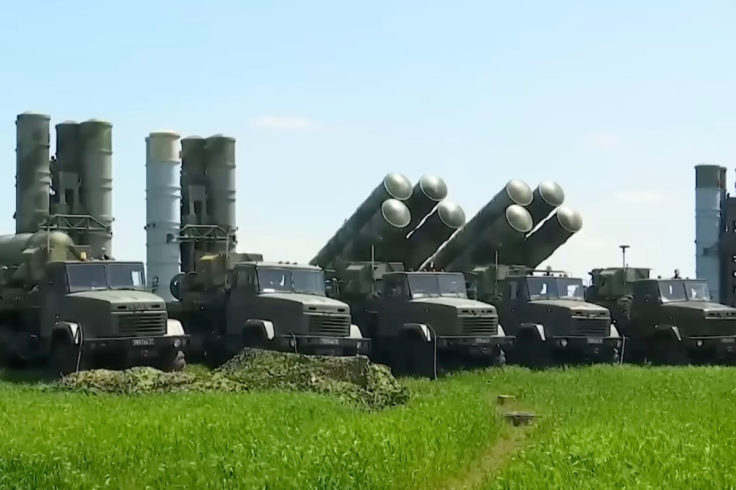
Brazilian psychic Athos Salomé, widely known as the 'Living Nostradamus,' has claimed that two of his major predictions for 2026 have already come to pass and is now warning that a third forecast involving Russia's growing military presence in the Arctic is beginning to unfold.
Salomé, a self-described parapsychologist, first published a list of 10 predictions for 2026 in December 2025. At the time, the forecasts attracted widespread scepticism, with critics arguing that many of his claims were broad enough to fit a variety of future events.
The Brazilian mystic has previously asserted that he foresaw major global developments, including the COVID-19 pandemic and the death of Queen Elizabeth II. Those claims, however, remain disputed, as independent verification of such long-range predictions is difficult and many observers argue they rely on vague wording that can be interpreted after the fact.
Now, Salomé says recent geopolitical developments support his latest forecasts, particularly escalating tensions in the Middle East and Russia's military activity in the Arctic.
'Living Nostradamus' Points To Escalating Middle East Tensions
Among Salomé's headline predictions was a warning that tensions between Iran and Israel would intensify during the second quarter of 2026, driven largely by disputes surrounding Iran's nuclear programme and uranium enrichment activities.
According to Salomé, the region was destined to enter a prolonged period of instability that would involve direct military confrontation and wider international involvement.
Recent events have prompted him to argue that this prediction has effectively materialised.
🇺🇸🇮🇷 President Trump:
— DD Geopolitics (@DD_Geopolitics) July 31, 2026
“I’m losing faith in Iran, because they lie. We were in the middle of a negotiation, I was waiting for Steve [Witkoff] to call, and they launched 5 missiles at our base in Jordan.”
Iran lies?!?! Also, why doesn’t anyone ask why a real estate agent is… pic.twitter.com/49hTdcEeSM
Earlier this week, US President Donald Trump demanded that Iran immediately agree to a ceasefire following what US officials described as a surprise Iranian ballistic missile attack targeting an American military base in Jordan. US forces later launched retaliatory strikes against Iranian-backed groups, raising fears that the conflict could broaden beyond its current theatre.
While those developments broadly align with Salomé's forecast of heightened regional instability, they do not independently validate claims of psychic prediction. The Middle East has experienced recurring geopolitical tensions for decades, and analysts have long warned of the possibility of military escalation involving Iran, Israel and the United States.
World Cup Prediction Also Cited As Evidence
Salomé has also pointed to his prediction surrounding the 2026 FIFA World Cup, claiming he correctly forecast Spain's victory over Argentina in the final.
Before the tournament, he reportedly stated that the eventual champions would wear the 'colours of fire,' later arguing that Spain best matched that symbolism despite widespread predictions favouring Portugal or other European contenders.
Critics, however, have questioned the specificity of that forecast. The description could reasonably have applied to several national teams, including Spain, Portugal, France, the Netherlands, Morocco, England and Argentina, making the prediction difficult to assess objectively.
The debate reflects a common criticism of many prophetic claims: symbolic language often allows multiple interpretations once events have already occurred.
Arctic Warning Raises Fresh Questions
The prediction Salomé now describes as his most urgent concerns Russia's growing military activity in the Arctic.
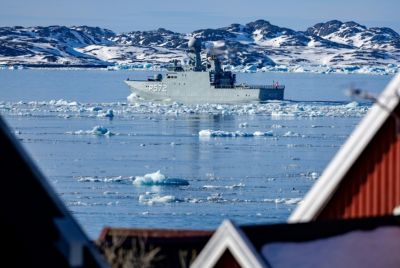
He claims Russia is relocating missile systems to strategic Arctic locations, warning that the region could become one of the world's most dangerous geopolitical flashpoints as melting sea ice opens new shipping lanes and access to previously inaccessible energy reserves.
Russia is amassing nuclear weapons and attack submarines in the Arctic Circle as it prepares for war with Nato, Norway’s defence minister has warned, the Telegraph reports.
— Anton Gerashchenko (@Gerashchenko_en) October 26, 2025
▪️ "Russia is building up on the Kola peninsula ... where one of the largest arsenals of nuclear warheads… https://t.co/GiHUUHWZdh pic.twitter.com/pQZSO1obr6
According to Salomé, the combination of expanding military infrastructure and increased competition over Arctic resources could heighten the risk of confrontation between Russia and NATO during the coming years.
Unlike his supernatural claims, the strategic importance of the Arctic is well documented by defence analysts.
Researchers have increasingly warned that climate change is transforming the region into an arena of economic and military competition.
A recent paper published by the Foreign Policy Research Institute noted that Russia has significantly expanded its Arctic infrastructure while seeking greater control over emerging shipping routes and resource-rich territories.
Carl Parkin, a nuclear risk researcher affiliated with the University of Chicago's Existential Risk Laboratory, argued that melting Arctic ice presents both opportunities and vulnerabilities for Moscow.
Parkin wrote that retreating sea ice allows Russia greater operational access while simultaneously exposing military assets, including nuclear infrastructure, that were previously shielded by harsher environmental conditions.
He warned Western governments to balance strategic opportunities carefully, arguing that excessive pressure on Russia in the region could increase escalation risks.
Although these assessments are grounded in defence analysis rather than prophecy, they illustrate why the Arctic has become an increasingly important focus for military planners around the world.
Other Predictions Cover Global Conflict And Disease
Beyond the Middle East and the Arctic, Salomé's list of predictions extends across multiple geopolitical and public health issues.
He previously forecast that Africa's Sahel region could descend into renewed violence following the withdrawal of Western military forces, particularly warning that extremist groups operating in Niger could trigger wider regional conflicts.
He also predicted that the war between Russia and Ukraine would continue as a prolonged stalemate rather than ending through a decisive military victory.
In Asia, Salomé suggested tensions between China and Taiwan would continue to intensify but stop short of a full-scale invasion, instead remaining characterised by sustained military pressure and diplomatic confrontation.
His forecasts additionally included warnings about renewed public health concerns involving bird flu, dengue fever and mpox outbreaks, arguing that governments would continue facing significant infectious disease challenges throughout 2026.
Prophecy Or Coincidence?
Supporters argue that recent events lend credibility to Salomé's predictions, pointing to the apparent overlap between his forecasts and current international developments.
Sceptics, however, maintain that many of the predictions describe long-standing geopolitical fault lines that analysts have discussed for years. Rising tensions between Iran and Israel, competition in the Arctic, instability in the Sahel and friction between China and Taiwan have all featured prominently in international security assessments well before Salomé released his list.
Without highly specific, independently verifiable predictions made before events unfold, experts caution against interpreting apparent similarities as evidence of psychic ability.
For now, Salomé continues to insist that his remaining forecasts are beginning to emerge. Whether they represent genuine foresight or broad interpretations of already evolving global trends remains firmly open to debate.
© Copyright IBTimes 2026. All rights reserved.
- Recommended For You