Tanzania's Stability Is Becoming Its Strongest Investment Case
Monetary discipline, a record domestic-funded budget and a looming LNG boom are turning Tanzania into a standout in a volatile region.
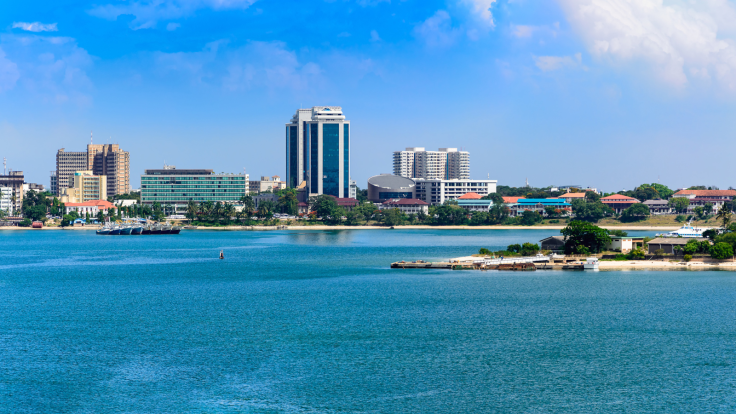
For frontier-market investors, risk is a given. The real question is where that risk is best managed. In Africa, where fiscal pressures are mounting, Tanzania is emerging as one of the region's safer harbours for capital.
That appeal becomes clearer when Tanzania is set against the fiscal strains facing several of its regional peers.
Kenya remains one of the region's largest and most dynamic economies, but it faces difficult fiscal choices. Tax rises have triggered widespread protests, while public debt has climbed to around 71–72% of GDP, according to IMF projections for 2026. Debt servicing now consumes more than two-thirds of ordinary revenue, leaving investors weighing economic uncertainty and political risks around future reforms.
South Africa presents a different challenge. Despite having the continent's most sophisticated financial markets, growth has remained subdued for years. Public debt has risen sharply and unemployment remains stubbornly high at 32.7% in the first quarter of 2026, with youth joblessness far higher still.
Ethiopia's long-term growth potential remains considerable, but its debt restructuring shows how quickly stability can unravel. Bondholders recently rejected Addis Ababa's revised proposal to restructure its US$1 billion Eurobond for a second time in seven months, delaying its return to international capital markets and reinforcing investor caution.
Against this backdrop, Tanzania is beginning to look less like a typical high-risk frontier market and more like a rare pocket of relative stability.
The country is not without challenges. It remains exposed to geopolitical tensions and commodity-price shocks. But its macroeconomic fundamentals have remained resilient. Tanzania stands out not simply because of growth, but because that growth has come with relative monetary and fiscal stability.
Investors often talk about "country risk" as though it were a single number. In reality, it reflects a combination of inflation, fiscal discipline, exchange-rate stability, debt sustainability, political certainty and institutional credibility.
On many of those measures, Tanzania's trajectory has become increasingly favourable.
The clearest evidence may be monetary policy. The Bank of Tanzania raised its central bank rate to 6.25% in July 2026, after holding it at 5.75% through the first half of the year, while inflation remains within the central bank's 3–5% target range.
That is no small achievement. Conflict in the Middle East has fuelled volatility in global energy markets, while fertiliser and transport costs continue to place upward pressure on food prices across emerging markets.
Yet Tanzania has largely avoided the inflation spikes that have forced central banks elsewhere into difficult trade-offs between growth and price stability.
Predictable inflation rarely makes headlines, but it matters enormously for investors. Stable prices help businesses plan further ahead, reduce pressure on borrowing costs and create a more predictable environment for long-term investment.
Fiscal policy tells a similar story: Tanzania is seeking to fund higher spending while preserving the discipline that underpins investor confidence.
Last month, Finance Minister Ambassador Khamis Mussa Omar unveiled Tanzania's largest ever budget, worth more than TZS 62.3 trillion for 2026/27, a 10.3% increase on the previous year. What stands out is not just the scale, but how it is funded. Around three-quarters of the budget is expected to be financed through domestic revenue, with tax revenue targeted to rise to 13.7% of GDP in 2026/27.
Many governments facing rising expenditure have responded by borrowing more. Tanzania is taking a different route. Rather than leaning further on external debt or donor financing, it is betting that stronger tax administration and a broader domestic revenue base can finance higher spending.
Much of that strategy depends on digitalisation. The Tanzania Revenue Authority is deploying artificial intelligence and big data to strengthen tax administration, while mandatory electronic payments across transport, education and tourism are expected to reduce leakages. The new Integrated Domestic Revenue Administration System (IDRAS), launched in February 2026, integrates taxpayer registration, filing, payments and compliance analytics into a single platform, replacing manual paperwork with digital processes.
These reforms may not generate headlines, but they matter. Efficient tax administration does more than increase revenue; it strengthens confidence that government institutions operate consistently and predictably. Increasingly, that is what sophisticated investors reward.
The fiscal story is also underpinned by a compelling growth narrative.
Tanzania holds an estimated 57 trillion cubic feet of recoverable offshore natural gas, and negotiations over a US$42 billion liquefied natural gas export project led by Shell and Equinor are progressing towards a Host Government Agreement expected in 2026. If realised, it would be the largest private investment in the country's history, with the potential to add around two percentage points to annual GDP growth while generating future revenues. Combined with investment in ports, railways and logistics infrastructure, it reinforces Tanzania's long-term potential.
None of this means Tanzania has reached its destination. Challenges remain, from infrastructure gaps to productivity constraints. Sustaining domestic revenue growth without overburdening businesses will require careful execution.
But direction matters.
While Kenya grapples with politically difficult fiscal reforms, South Africa wrestles with deep structural challenges, and Ethiopia is locked out of capital markets, Tanzania is doing the less glamorous work of strengthening institutions, modernising tax administration and maintaining discipline.
In a region where fiscal and political turbulence has become the norm, Tanzania is steadily building a reputation for macroeconomic stability. For investors searching across frontier markets, that may prove one of the country's strongest competitive advantages.
At a time of uncertainty, predictability has become the premium asset. Increasingly, Tanzania looks like one of the safer harbours in a volatile neighbourhood.
© Copyright IBTimes 2026. All rights reserved.
- Recommended For You