China's New Mobilisation Law Could Extend State Control Over Civilians and Private Property
The legislation allows authorities to requisition civilian resources and impose national defence duties if mobilisation is formally implemented, prompting debate over its relevance to Taiwan
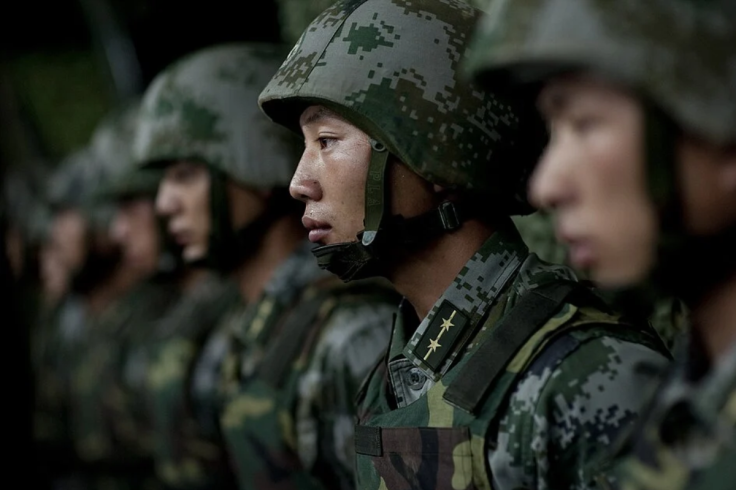
China has revised a defence law that requires eligible citizens to perform national defence duties when national defence mobilisation is implemented and allows the state to requisition civilian resources, from land to aircraft, under specified conditions. The revised law comes into force on 1 October.
The updated National Defense Mobilization Law was adopted by the Standing Committee of China's National People's Congress on 28 August, marking the first major overhaul of the legislation since it was enacted in 2010.
The revision updates the framework for national defence mobilisation, covering civilian personnel, infrastructure and other resources that could be brought into mobilisation efforts.
What the Law Actually Changes
Under the revised law, men aged 18 to 60 and women aged 18 to 55 are required to perform national defence service duties when national defence mobilisation is implemented, with exemptions and other provisions applying to certain groups.
However, the age-based duty is not new, as the previous 2010 law also contained provisions requiring eligible citizens to perform national defence duties during mobilisation.
The law also assigns national defence service duties to organisations and citizens in sectors including transport, communications, energy and healthcare.
It defines national defence mobilisation as action taken when sovereignty, unification, territorial integrity, security or 'development interests' are threatened, while providing mechanisms for shifting economic and social strength towards national defence.
The legislation also provides mechanisms for requisitioning or expropriating civilian resources, with compensation provided under the law. The measures do not automatically take effect simply because the revised legislation comes into force, as a separate mobilisation decision would be required before such powers are implemented.
Carl Thayer, an Asia specialist and emeritus professor at the University of New South Wales, said the revision means China 'will have immediate unfettered access to relevant civilian physical and human resources' in a future conflict.
He projected that Beijing could take over commercial and private assets including planes, ships and private land, along with satellite communications, cyber-security systems and drone production.
China’s military will get every possible resource from the home front if needed during a war, according to a change in the law to take effect in October. https://t.co/O1snT3mDyd
— Defense News (@defense_news) September 14, 2026
Why Analysts Point to Taiwan
Analysts said the revision could be particularly relevant to a scenario involving the Taiwan Strait or South China Sea, although the law itself does not identify a specific conflict as its purpose. The revised legislation runs to 14 chapters and 82 articles, according to the article's source material.
Denny Roy, a senior fellow at the East-West Center in Hawaii, said the move is 'another signal that the Chinese are marching toward a war over Taiwan', calling it a warning to countries supporting Taipei.
Roy's assessment reflects his interpretation of the revision rather than evidence that Beijing has made a decision to go to war.
Roy added the law could also reflect 'the internal mandate to obey' Chinese President Xi Jinping's order to prepare the People's Liberation Army for war, 'even if there is no decision yet to go to war'.
His comments distinguish preparations and mobilisation planning from an actual decision to launch a conflict.
Not Everyone Agrees on the Threat
China's state-run Global Times has pushed back on that framing, arguing in an editorial that Western and Taiwanese media have reacted 'as if facing an imminent, formidable threat' and mislabelled a routine legal update as 'military expansion'.
The characterisation represents the state-run outlet's position and does not independently establish the purpose or likely use of the revised law.
In the South China Sea, Jay Batongbacal, director of the Institute for Maritime Affairs and Law of the Sea at the University of the Philippines, said the timing is 'problematic' but noted Chinese naval presence there has stayed steady rather than escalating.
'You don't know why they do these things,' he said, reflecting uncertainty over what the timing of the revision may signal. For Taiwan, Japan, the Philippines and the wider region, the law's significance lies in its scope.
If Beijing declares and implements a mobilisation, ordinary citizens, private companies and civilian infrastructure could be drawn into a war effort, while neighbouring governments would have limited ability to predict when or how such measures might be activated.
Defence planners in Washington and allied capitals may treat the revision as another data point when assessing China's preparedness for a Taiwan contingency, even without evidence of a decision to go to war.
The legislation therefore provides a framework for mobilisation, but its coming into force on 1 October should not itself be interpreted as evidence that China has decided to begin a conflict.
© Copyright IBTimes 2026. All rights reserved.
- Recommended For You