

What's Next for Al Green? Christian Menefee's Rival Famous for 'Black People Aren't Apes' SOTU Protest Lost
Christian Menefee's win over Al Green in a redrawn Houston district leaves the veteran Trump critic without a seat.
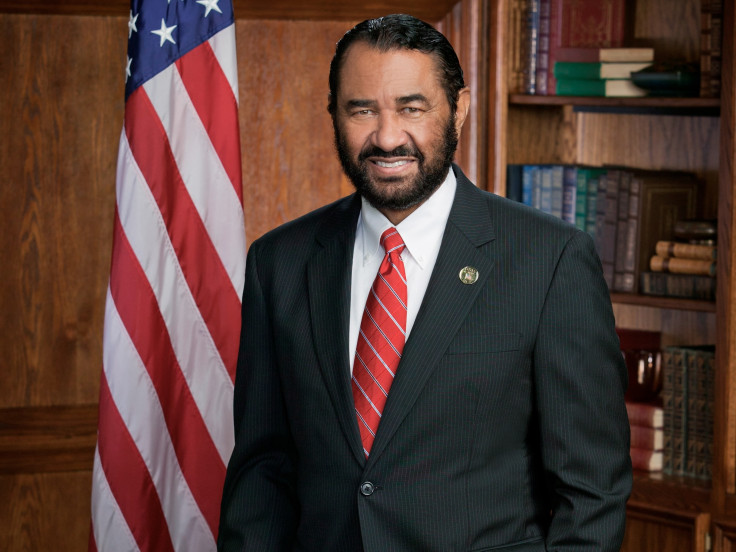
Christian Menefee defeated veteran Democrat Al Green in a closely watched primary runoff on Tuesday for Texas's 18th Congressional District, ending Green's more than two-decade run in Congress and raising questions over what comes next for the high‑profile Trump critic whose 'Black people aren't apes' protest at this year's State of the Union made national headlines.
The runoff was triggered after a sweeping Republican redraw of Texas's congressional map effectively wiped out Green's long‑held 9th district, forcing him to seek political survival in a new seat.
The Republican-dominated legislature pushed through the map last year after Donald Trump publicly pressed Texas lawmakers to protect the party's grip on the US House, according to earlier reporting on the redistricting fight. The 9th, a reliably Democratic stronghold anchored in Houston, was carved up, leaving Green with little choice but to mount a challenge in the neighbouring 18th.
Gerrymandered Lines and New Rival for Green
The mechanics of that gerrymander are not just cartographic detail, they are the spine of Al Green's predicament. The newly drawn lines dismantled his base and effectively merged parts of his old territory into districts less hospitable to his brand of politics.
Green, who first entered Congress in 2005 and built a reputation as a persistent thorn in Trump's side, announced in November that he would run in the 18th District instead.
That seat, long a Democratic bastion itself, had recently opened up. Menefee, a freshman Democratic US representative, was sworn in this January after winning a special election to replace the late congressman Sylvester Turner. Menefee entered the runoff as the incumbent in name but the newcomer in stature, facing an opponent who has spent years on cable news taking swings at Trump and his allies.
On the trail, Green tried to turn that experience into a sharp contrast, painting Menefee as the candidate of big donors and shadowy tech money. He accused Menefee of being aligned with 'Trump crypto cronies,' as reported by Houston Public Media, leaning hard on the idea that his rival was too cosy with interests that Democrats in Houston would instinctively mistrust.
Voters, in the end, opted for the fresher face. Menefee's victory closes the book on this particular race but not on the broader argument about how Republicans used the map to rearrange the state's political furniture. It also leaves Green, at 76, suddenly without a district and with decisions to make about whether his political career is over or just entering a different phase.
From Protest to Forced Exit
To recall how visible Green has been in national politics, you only need to look back a few months. In February, at President Trump's State of the Union address, Green was escorted from the House chamber after he held up a sign reading 'Black people aren't apes!' The protest was aimed at Trump, who had shared an AI‑generated video that depicted Barack and Michelle Obama as apes. Green's removal from the chamber turned a moral rebuke into a visual spectacle, replayed online and on television.
It was not his first high‑profile clash with Trump. Throughout Trump's presidency, Green pushed articles of impeachment and was a regular, unvarnished voice against what he saw as racial animus coming from the White House. That long campaign of opposition made him a hero to many progressives and a convenient target for Republicans intent on re‑drawing him out of office.
Now, with Menefee set to carry the Democratic banner in the 18th, Al Green's future is unclear.
What is clear is that Green's departure from Congress, if it holds, will leave a gap where a particular type of voice once stood. Green did not deal in euphemism. The sign at the State of the Union was not subtle, but it plainly expressed what many Black voters heard in that AI video. Whether one admired his tactics or winced at them, they gave texture to Democratic opposition during the Trump years.
Menefee, for his part, will now have to define his own profile beyond the shadow of the man he has just unseated. As a freshman Democrat in a safely blue seat born out of a hard-edged Republican map, he inherits both the security of a strong partisan base and the scrutiny that comes with replacing one of the party's most outspoken figures. The balance he strikes between local concerns and national battles will determine whether this runoff feels, in time, like a passing of the torch or simply the aftershock of a redistricting pen stroke.
© Copyright IBTimes 2026. All rights reserved.