Was the Donald Trump Dinner Shooting Staged? Inside the Wild False Flag Claims
Officials probe a lone-gunman case as online speculation recasts a political dinner shooting as something darker.

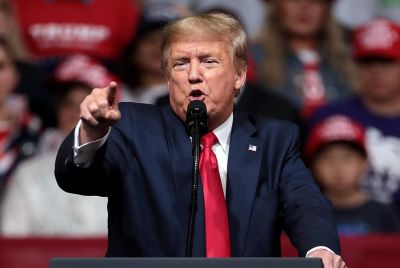
Donald Trump is facing a wave of conspiracy claims in the US after the White House Correspondents' Dinner shooting in Washington on 25 April, with online users accusing him of staging the attack to advance his proposed $400m White House ballroom project.
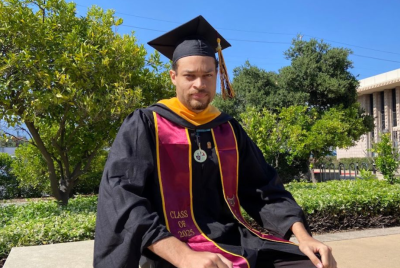
The incident came after a dramatic night at the Washington Hilton, where 31-year-old Cole Tomas Allen was arrested by the Secret Service after allegedly attempting to storm the annual gala, a fixture of the US political calendar. The dinner, which brings together presidents, journalists and celebrities, was the first time Trump had attended the event as president during either of his terms, according to reports.
Within hours, Trump appeared in the West Wing to address the incident and quickly pivoted to a familiar theme. He argued that the attempt on his life showed why his planned high-security White House ballroom, designed to host up to 1,000 guests, was essential.
.@POTUS: It's not a particularly secure building, and I didn't want to say this, but this is why we have to have all of the attributes of what we're planning at the White House. It's drone proof, it's bulletproof glass. That's why Secret Service and the military are demanding it. pic.twitter.com/RfLilmjoto
— Rapid Response 47 (@RapidResponse47) April 26, 2026
'I didn't want to say this, but this is why we have to have all of the attributes of what we're planning at the White House,' he said, describing the proposed venue as larger, more secure, 'drone-proof' and fitted with bulletproof glass.
Dinner Shooting Conspiracy
Trump's ballroom plan had already become a political and legal battleground long before the dinner shooting. Preservation groups have challenged the demolition of existing structures on the White House grounds, and a court ruling in March temporarily froze construction before allowing limited work to resume. Further hearings are set for June.
Against that backdrop, Trump's speed in tying the shooting to his project proved combustible. OK! reports that within hours the word 'staged' was appearing in hundreds of thousands of social media posts, as users speculated that the attack was a 'false flag' operation designed to justify the ballroom or distract from troubles elsewhere, including poor approval ratings and mounting geopolitical strain.
One source familiar with the reaction told OK!: 'What has fueled these claims is not just the shooting itself, but the immediacy with which it was repurposed as a political argument for Trump's ballroom. For some observers, that leap raised questions, even if there is no substantiated proof.'
Another insider was blunter about the dynamics in play, saying the online environment 'amplifies doubt' and that once a theory fits existing suspicions about a leader or an institution, it tends to spread unchecked.
What We Know About the Dinner Shooting
Investigators, for now, are painting a straightforward if chilling picture. Officials say Allen travelled from Torrance, California, to Washington, checking into the Hilton days before the dinner and bringing multiple weapons with him. According to authorities, he left behind a manifesto in which he outlined plans to target government officials and prioritise high-ranking figures, including the president, while expressing a desire to limit wider casualties.
Security at the event has also become part of the online narrative. Some attendees have said screening and checks felt lighter than during previous presidential appearances, though that remains anecdotal. Commentators have seized on the reported decision to evacuate Vice President JD Vance first as a supposed break with protocol, folding that detail into a broader storyline that something about the night did not add up.
Trump himself has pushed back on the 'false flag' accusations, even as he continues to use the attack to argue for the ballroom. A false flag, as commonly defined, is a hostile act intended to mask its true perpetrator and pin blame on someone else, a concept long embedded in conspiracy circles, from fringe theories about 9/11 to more recent mass shootings.
What happened last night is exactly the reason that our great Military, Secret Service, Law Enforcement and, for different reasons, every President for the last 150 years, have been DEMANDING that a large, safe, and secure Ballroom be built-
— Shannon Ford 🇺🇸 (@shannonfordUSA) April 28, 2026
Apr 26, 2026https://t.co/JlAnE4EUqG pic.twitter.com/NEvsWLioI1
On his social media platform, Trump wrote that 'what happened last night is exactly the reason' that the military, Secret Service, law enforcement and 'every president for the last 150 years' had been demanding a large, secure ballroom on the White House grounds.
Meanwhile, the criminal case against Allen is moving in a far less speculative direction. A federal grand jury has indicted him on multiple counts, including attempted assassination of the president, assault on a federal officer with a deadly weapon, interstate transportation of firearms with felonious intent and discharging a firearm during a crime of violence.
At his arraignment on 11 May before US District Judge Trevor McFadden, Allen's lawyer entered a not guilty plea on all charges. He remains in federal custody in Washington without bail and faces a maximum potential sentence of life in prison if convicted. A status conference is scheduled for 29 June.
So far, the conspiracy narratives swirling around the Trump dinner shooting have produced far more noise than evidence. The official investigation, slow and methodical by design, will have to fight for attention in a media environment that often prefers the faster, more intoxicating story.
© Copyright IBTimes 2026. All rights reserved.
- Recommended For You