Coca-Cola's Quiet Packaging Shift Abroad Raises Fresh Questions Over 'Greenwashing'
Coca-Cola has been named the world's worst plastic polluter for six years
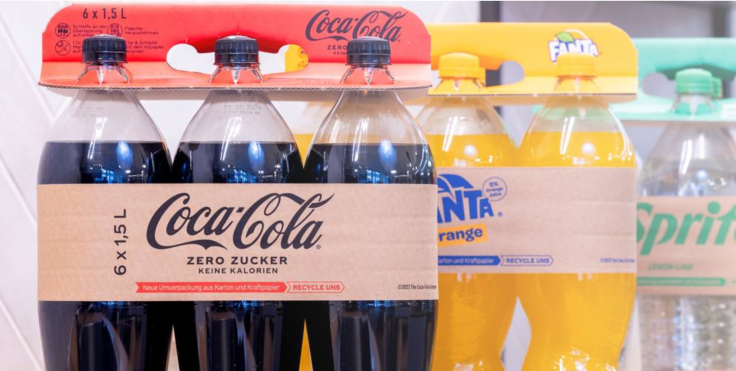
Coca-Cola has quietly introduced new paper-based packaging for its bottled drinks in select European markets, prompting renewed scrutiny regarding the company's record as the world's leading plastic polluter.
The shift, which replaces traditional plastic wrapping with paper-and-cardboard alternatives, has intensified debate over whether the beverage giant is meaningfully cutting waste or merely reshaping its environmental image.
Paper Handles and Wrap Debut Abroad
The new design, developed by Coca-Cola HBC Austria in partnership with DS Smith and Krones, features a recyclable corrugated paper-and-cardboard handle that holds six 1.5-litre bottles together.
According to Packaging Europe, the system also includes a paper wrap and a soft-grip carry handle for ease of use. Coca-Cola HBC estimates the change could eliminate around 220 tonnes of plastic per year.
Stefano Rossi, President of DS Smith, stated in a press release that the goal was to remove unnecessary waste while maintaining durability. He added that the design was produced using DS Smith's Circular Design Metrics approach to minimise environmental impact.
Neither Coca-Cola nor DS Smith has announced if or when the packaging will expand to the United States or other major markets.
Environmental Groups Accuse Coca-Cola of 'Greenwashing'
The packaging update arrives amid longstanding criticism from environmental groups, who argue that Coca-Cola's sustainability initiatives do not reduce its overall reliance on single-use plastic.
Greenpeace Africa Project Lead Hellen Kahaso Dena said the company must stop its greenwashing and curb its plastic output if it is serious about addressing the climate crisis. She stated on the organisation's website that ending Coca-Cola's dependence on single-use plastic is essential for protecting communities and the planet.
Oceana has echoed similar concerns. Senior Vice President of Strategic Initiatives Matt Littlejohn described the company's plastic strategy as irresponsible and worthy of condemnation.
In a press release, he criticised Coca-Cola for backing away from its earlier goals to reduce virgin plastic and expand reusable packaging. Littlejohn added that the company's new recycling-related pledges would not significantly reduce its total plastic use.
Plastic Pollution Record Intensifies the Debate
Coca-Cola has been named the world's worst plastic polluter for six consecutive years. The company produces more than 100 billion single-use plastic bottles annually, with many ending up in landfills and oceans.
Oceana recently projected that Coca-Cola products could contribute approximately 602 million kilograms of plastic to global oceans and waterways each year by 2030.
The criticism intensified after Coca-Cola revised its conservation goals in 2024. The company set targets to increase recycled plastic content to between 30% and 35% globally and to recover 70% to 75% of the equivalent number of bottles and cans it introduces into the market annually.
Oceana argued that more recycled plastic will not reduce overall consumption if the company continues producing large volumes of single-use items.
Coca-Cola's Sustainability Policies and Stated Commitments
On its website, Coca-Cola outlines several pillars under its environmental strategy. These include water stewardship, climate protection initiatives aligned with the Paris Agreement, sustainable packaging efforts under its World Without Waste programme, and ethical agricultural sourcing. The company has also set an aspiration to reach net zero carbon emissions by 2050.
Uncertainty Over Global Rollout
Coca-Cola has not confirmed wider distribution plans for its paper packaging. Environmental groups argue that without a commitment to reduce total plastic production, the company's new approach will not meaningfully address its global waste footprint.
© Copyright IBTimes 2026. All rights reserved.
- MOST POPULAR IN Trending