

Elon Musk Admits Grok 4.8 Is 'Not as Good' as Anthropic Rival, Calling 'Opus 5.5 Is a Masterpiece'
Even fierce AI rivals can recognise excellence, but the race to build the next leading model is far from settled
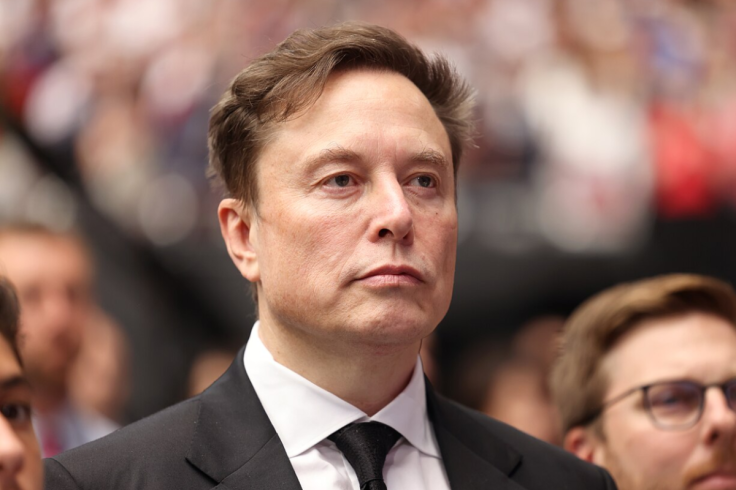
Elon Musk said on X on Tuesday, 10 November, that his unreleased Grok 4.8 would fall short of Anthropic's Claude Opus 5.5. He called the rival AI model a 'masterpiece' while predicting that a future Grok version could surpass it within months.
The comments followed Musk's technical update on Grok 4.8, which he said had completed pretraining but still required refinement. He outlined plans for a limited rollout later this week without confirming a public release date.
Asked by X user Dimdv how the models compared, Musk replied, 'Not as good. Opus 5.5 is a masterpiece.'
Musk also predicted that Grok 5 'should exceed Opus 5.5' within '2 or 3 months'. He offered no independent benchmark results supporting that forecast.
The comparison comes amid intensifying competition between AI developers. SpaceX acquired xAI in February 2026, bringing Musk's artificial intelligence operation into the same corporate group as Starlink.
Elon Musk Explains Why Grok 4.8 Remains Unreleased
In an update on X, Musk said Grok 4.8 had completed pretraining and was undergoing reinforcement learning. He claimed its evaluation results were improving but provided no scores for independent assessment.
Reinforcement learning uses feedback and reward signals to improve how models respond. Musk said engineers had also spent considerable time cleaning supervised fine-tuning data, which helps AI systems follow instructions.
We have dumped JAX/SGLang and rewritten the entire RL and inference stack from scratch in C/C++, which took some extra time.
— Elon Musk (@elonmusk) November 10, 2026
Training (aka pre-training) is done. Lot of cleanup was needed on the SFT data to get that mostly right. Now, 4.8 is in RL and the evals are starting to…
The development process has involved substantial software changes. According to Musk, xAI replaced JAX and SGLang in its reinforcement-learning and inference systems with software rewritten in C and C++.
Inference describes how an AI model produces responses after receiving a prompt. Rewriting the supporting software does not automatically mean the model generates more accurate answers or operates faster.
Musk also credited work by Starlink engineers with contributing to the new software infrastructure. He said the Starlink software used to manage large volumes of data moving through space and to the ground was well suited to AI training.
Despite the changes, Musk described Grok 4.8 as 'not yet incredible'. He nevertheless expressed confidence in its technical foundations.
He plans a 'soft rollout to Bot users' later this week, although eligibility requirements remain unclear. No general release date has been announced.
Elon Musk Faces Growing Competition From Anthropic
Anthropic introduced Claude Opus 5.5 on 22 September, targeting demanding coding and AI-agent tasks. The company said its performance was comparable to Claude Fable 5.1 on most workloads.
Anthropic also reported that Opus 5.5 costs 40% less to operate than Opus 5 on typical workloads. That figure reflects company testing rather than a guaranteed saving for every customer.
Its published Terminal-Bench 4.0 results gave Opus 5.5 a score of 66.4%, compared with 57.9% for OpenAI's GPT-6 Astra.
However, the models were evaluated using different reasoning-effort settings, with Opus 5.5 tested at xhigh effort and GPT-6 Astra at high effort. The results cannot establish which system performs best across every task or operating environment.
The competition has already advanced beyond Opus 5.5. On Monday, 9 November, Anthropic introduced Claude Fable 5.2 and Claude Mythos 5.2, reporting stronger performance across almost all the capabilities it evaluated.
Anthropic continues recommending Opus 5.5 for most everyday coding and knowledge tasks, reserving its newer models for particularly demanding work.
Fable 5.2 is available to general users, while access to Mythos 5.2 requires verification for specialised cybersecurity and biomedical applications.
© Copyright IBTimes 2026. All rights reserved.