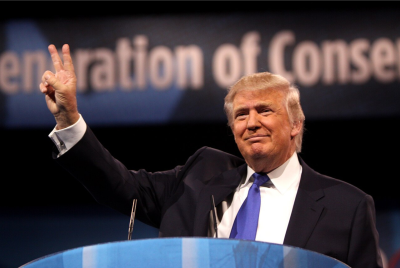
'I Don't Have a Death Wish': Journalist Michael Wolff Claims Jeffrey Epstein Feared Donald Trump
Michael Wolff claims Jeffrey Epstein feared Donald Trump, revealing Epstein's alleged terror and their complex relationship dynamics
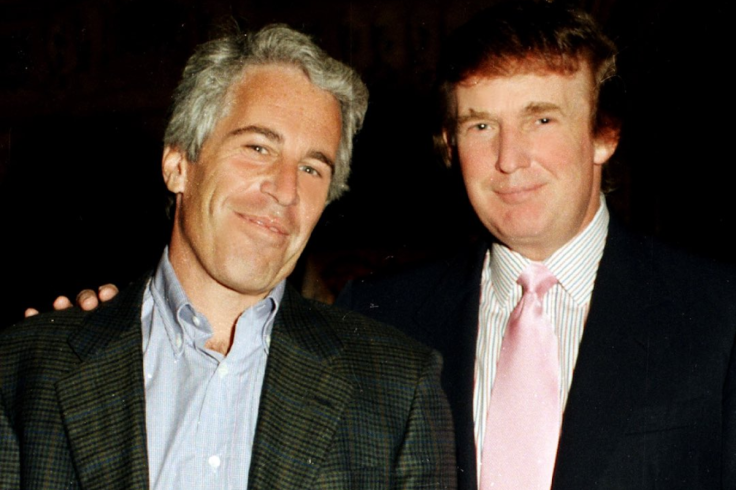
Jeffrey Epstein feared Donald Trump and believed speaking publicly about what he knew could put his life at risk, according to journalist and Trump biographer Michael Wolff.
In a new post on his Substack publication, Howl, Wolff says Epstein told him: 'I may be a paedophile, but I don't have a death wish.'
Epstein was found dead in his Manhattan prison cell on 10 August 2019, 35 days after his arrest on federal sex-trafficking charges.
The New York City chief medical examiner ruled his death a suicide by hanging, a conclusion reaffirmed by subsequent federal reviews.
Epstein's Fear of Trump Emerges in Wolff's Substack
Wolff, who has written extensively about Trump, published the claims on Howl this week. He described pushing Epstein to speak publicly about Trump, including releasing photographs allegedly showing the future president with young women at Epstein's properties. Epstein refused, citing genuine terror of retaliation.
'He was afraid of Trump, terrified perhaps,' Wolff wrote. 'And when Trump won, Epstein saw the game change for him personally.'
Wolff wrote that Epstein believed his position had become more dangerous after Trump won the 2016 election.
The Trump biographer suggested Epstein understood he occupied a uniquely dangerous position; he had led what Wolff called 'a depraved life, one which the president of the United States had participated in.'

Epstein's arrest came on 6 July 2019, just weeks before his death. By then, Trump had been in the White House for two and a half years.
Wolff posits that Epstein watched Trump's rise with mounting dread, convinced the man he once called a friend now had every incentive to keep him quiet.
Just because you're paranoid doesn't mean you aren't being followed, as the saying goes. Whether Epstein's fear was grounded in reality or paranoia remains unproven. What is clear is that he saw himself as 'the story behind the story,' the man who knew too much.
A Friendship Fractured Over Real Estate and Allegations
The Trump-Epstein relationship dates back to the late 1980s, with the two men socialising frequently throughout the 1990s and early 2000s. Flight logs presented during Ghislaine Maxwell's trial show Trump flew on Epstein's private jet seven times between 1993 and 1997, although the records contain eight flight entries because one journey included a stopover.
Trump once told New York Magazine in 2002, 'I've known Jeff for 15 years. Terrific guy. He's a lot of fun to be with. It is even said that he likes beautiful women as much as I do, and many of them are on the younger side.'
Accounts of the falling-out differ. Trump has said Epstein 'stole' employees from Mar-a-Lago, including Virginia Giuffre, while journalists have also reported that Trump barred Epstein after an alleged incident involving a club member's teenage daughter.
A separate 2004 bidding war over a Palm Beach mansion has also been cited as a possible turning point. Trump outbid Epstein and bought the property, Maison de l'Amitié, for $41.35 million.
Wolff suggests the falling out left Epstein vulnerable. He allegedly feared Trump might have reported him to authorities based on activities they engaged in together.
Among the documents released by the House Oversight Committee were emails in which Epstein discussed Trump's relationship with women at his home.
In a 2019 message to Wolff, Epstein wrote that Trump 'knew about the girls' because he had asked Ghislaine Maxwell to stop.
The statements are Epstein's claims and have not been independently established as proof of criminal wrongdoing by Trump.
Then-White House press secretary Karoline Leavitt said in November 2025, 'These emails prove absolutely nothing other than the fact that President Trump did nothing wrong.'
Official Findings on Epstein's Death Remain Unchanged
The official investigations into Epstein's death have concluded that he died by suicide. The US Department of Justice (DOJ) inspector general documented 'numerous and serious failures' by prison staff in 2023 but found no evidence contradicting the FBI's determination that no criminal act was involved. A July 2025 DOJ and FBI review reaffirmed those findings.
The prison did have serious surveillance-camera failures, according to the DOJ inspector general. However, the 2025 DOJ/FBI review said footage from the relevant common area showed no one entering the tiers containing Epstein's cell between about 10:40pm and 6:30am.
Michael Baden, a forensic pathologist hired by Epstein's family, disputed the official conclusion, arguing that fractures in Epstein's neck were more consistent with homicide.
The official medical examiner, however, concluded that the injuries were consistent with suicide by hanging and found no evidence of a struggle.
Wolff's account has not been independently corroborated by the evidence cited publicly so far. The allegations describe Epstein's alleged fears and statements, rather than establishing that Trump threatened or intended to harm him.
These assertions cannot be independently verified and rest solely on Wolff's account of his conversations with Epstein.
What remains clear is that Epstein occupied a dangerous and controversial position within a network of powerful people.
Wolff's account adds another allegation about Epstein's state of mind, but it does not establish that Trump threatened him or played any role in his death. Official investigations continue to stand by the conclusion that Epstein died by suicide.
© Copyright IBTimes 2026. All rights reserved.
- Recommended For You