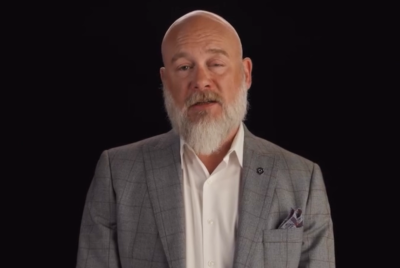
Joe Biden Hidden Illness: Physician Claims Cancer Spread to Bone During Presidency
Joe Biden's stage 4 prostate cancer diagnosis has revived doubts over his health in office, as outside doctors and former allies suggest the disease was far more advanced and earlier than previously disclosed.


Joe Biden's battle with stage 4 prostate cancer has triggered a fresh wave of anxiety in Washington as a physician's assessment that the disease had already spread to his bones during his presidency coincides with reports that the 83-year-old former US leader may have less than six months to live.
Biden publicly disclosed less than a year ago that he was undergoing treatment for what was described as aggressive metastatic prostate cancer, with the malignancy having reached his bones. The admission, which startled even seasoned observers of American politics, came after months of speculation about his health and followed his decision to abandon a bid for re‑election after a bruising 2024 debate with Donald Trump. Since then, friends and former colleagues quoted in US outlets have suggested he appears increasingly frail.
Concerns over Biden's hidden illness were heightened by his appearance on 5 January at the funeral of Tatiana Schlossberg, the 35‑year‑old granddaughter of John F. Kennedy, who died of acute myeloid leukaemia. Attendees and commentators remarked that the ex‑president looked notably diminished, an impression later echoed in reporting by The Washington Post and the tabloid Globe, which has aggressively questioned his condition.
Biden's camp has pushed back on the bleak narrative. The former president's aides insist he is 'doing well' and remains active on a range of projects while receiving radiation and hormone therapy. Officially, there has been no confirmation of any terminal prognosis, and no treating physician has publicly said his life expectancy is measured in months. Nonetheless, political operatives who once worked alongside him paint a less reassuring picture.
One former Democratic operative told Globe that, despite the upbeat briefings, 'he's not in good shape.' Another unnamed Democratic source went further, alleging Biden 'has had it a long time already' and claiming his survival is now 'measured in months rather than years.' Those remarks, though impossible to independently verify, have fed a sense that much of Biden's illness played out away from public scrutiny.
Doctor's Timeline Fuels Questions Over Biden's Cancer
At the centre of the latest controversy is a blunt assessment from Dr. Steven Quay, a physician who has never treated Joe Biden but has reviewed publicly available information about his diagnosis. Speaking to The Free Press, and cited by Newsweek, Quay said that in typical cases it takes 'five to seven years' for prostate cancer to metastasise to the bones.
Quay argued it was 'highly likely' the former president was already seriously ill during his term in the White House and suggested he may have been secretly treated with androgen deprivation therapy, or ADT. That treatment is a standard weapon against advanced prostate cancer, lowering testosterone levels to slow the growth of tumours.
According to Quay, the side effects often associated with ADT include cognitive decline, muscle loss and increased risk of falls — all symptoms critics say Biden displayed while in office, citing high‑profile stumbles on the steps of Air Force One and moments where he appeared to lose his train of thought. None of this amounts to proof that Biden was on ADT, and the White House never confirmed such treatment while he was in power. But Quay's timeline has given ammunition to those who believe the full gravity of his prostate cancer was concealed from voters.
So far, Biden's own doctors have not publicly addressed Quay's claims or the alleged five‑to‑seven‑year progression window.
Other Health Problems Shadow Biden's Prostate Cancer
Biden's prostate cancer has not been his only health concern. Over the years his medical history has grown steadily more complicated, and critics argue that accumulation may be amplifying the impact of his current illness.
During his presidency, the Globe and other outlets repeatedly highlighted what they described as apparent cognitive lapses — moments where he forgot names of close allies or seemed to drift mid‑conversation. The magazine's coverage, though openly hostile, did mirror worries raised quietly by some Democrats about whether age and health were eroding his capacity to serve.
His team has long maintained that Biden remained fit for office, pointing to annual medical check‑ups and his ability to manage a punishing schedule. Yet official disclosures have acknowledged additional issues. In September, his spokesperson confirmed that skin lesions had been removed, according to CNN. Reports have also listed peripheral neuropathy, high cholesterol and atrial fibrillation among his chronic conditions, together with a history of two brain aneurysms, which some commentators have loosely described as 'strokes.'
Each of these problems is serious in its own right. Layered on top of metastatic prostate cancer, they paint a picture of a man fighting on several medical fronts at once.
That cumulative strain is what most concerns some clinicians. Dr. Stuart Fischer, a physician and author of Little Book of Big Medical Emergencies, told Globe that advanced cancer 'is a hypermetabolic state, eating up a lot of calories and making the person gaunt and exhausted and low on oxygen.' Those pressures on the body, he said, can in turn compromise 'the heart and the brain.' Fischer concluded bleakly that 'the grim reaper may indeed be loitering on Mr Biden's doorstep.'
It is a stark forecast, but not an official one. Biden's treating doctors have not publicly endorsed any specific life‑expectancy figure, and no independent records confirming a six‑month prognosis have been made available. Until more detailed medical information is released, any attempt to determine precisely how long the former president may have been living with prostate cancer, and how much time he has left, remains unproven and should be treated with caution.
© Copyright IBTimes 2026. All rights reserved.
- MOST POPULAR IN Trending