

Europe Wants More Control Over Its Own Defence After Trump-Era Tensions Shook Trust in Washington
Spain leads the charge for a unified European army as tensions with the US rise.
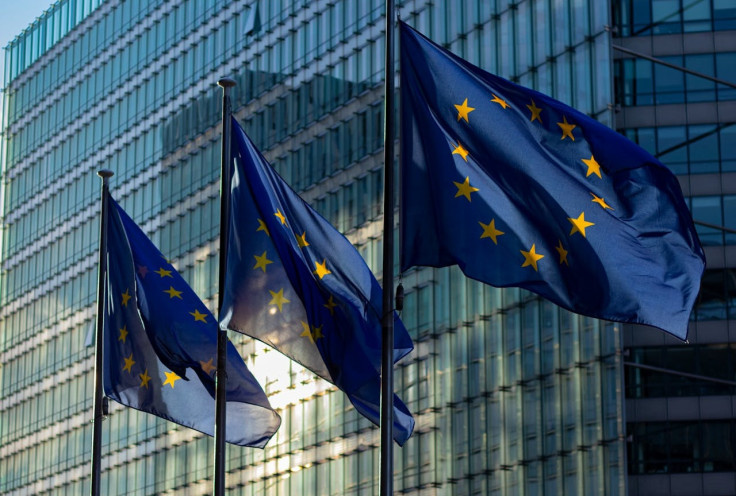
Calls for Europe's greater military independence have been gaining ground in recent months as US President Donald Trump continued his attack on North Atlantic Treaty Organisation (NATO) allies, raising fears about Washington leaving the alliance and exposing the continent to threats from Russia.
As calls for a unified European army grow louder across the continent, Spain has renewed its push to reduce dependence on Washington for military protection.
Spanish Foreign Minister José Manuel Albares said the European Union must strengthen its own defence capabilities and stop relying heavily on the US-led alliance for security guarantees amid rising tensions between America and its European allies.
'We cannot be waking up every morning wondering what the US will do next ... our citizens deserve better', Albares told Politico, as reported by Express.
'This is the moment of the sovereignty and independence of Europe', he added.
Albares recently argued that Europe must 'take full control' of its own security and move towards deeper military integration.
The comments reflect a broader shift happening across the European Union, where defence autonomy is no longer viewed as a distant political idea but as a growing strategic necessity.
Trump-Era NATO Tensions Sparked Europe's Strategic Rethink
Much of Europe's renewed defence urgency stems from concerns about Trump's unpredictable approach to NATO and transatlantic alliances.
During both his first and second terms, Trump repeatedly criticised European countries for depending too heavily on US military protection while failing to meet NATO spending targets.
Trump has repeatedly demanded that members commit five per cent of their gross domestic product to their armed forces, which Spain has rejected. In response, the US continues to threaten Madrid with punitive tariffs and hint at withdrawing all troops from bases there.
Just recently, the US announced troop withdrawals in Germany, and tensions over US policy towards Iran further deepened anxieties among European governments. European leaders are increasingly worried that Washington's priorities could rapidly shift depending on domestic politics, leaving Europe vulnerable during future security crises involving Russia or other geopolitical threats.
That concern has fuelled discussions about creating a stronger European pillar within NATO or even building independent military capabilities capable of operating without direct US leadership. 'Free of dependence means being free of coercion, whether it comes to tariffs or the use of military threat', Albares argued.
Albares Calls for EU Equivalent of NATO's Article 5
In order to protect European nations, the Spanish minister urged the EU to have its own version of NATO's Article 5 mutual defence pact, which states that an armed attack against one NATO member shall be considered an attack against all members and triggers an obligation for each member to come to its assistance.
He further stated that the strength of NATO lies in the fact that its members are so well protected that no one dares to test whether Article 5 would actually be enforced.
'That's what we have to recreate – deterrence. That if you want to mess with me, go somewhere else. Because we will stand together', Albares said.
'We need a military, a common defence capacity', he said, adding that 'if NATO is no longer providing the security that was given before ... (then) we have to do more as Europeans.'
Brussels Expands Defence Investments
The European Union has already launched several major defence investment programmes aimed at expanding weapons manufacturing and reducing dependence on US-made systems.
Recently, Germany has significantly increased its defence spending, with industrial hubs in the Rhine and Ruhr regions ramping up production of tanks, weapons, and ammunition amid growing uncertainty in Europe's security landscape. According to a report by Express, one German defence manufacturer has also launched a £173-million ($233 million) investment drive to expand output.
German Defence Minister Boris Pistorius has previously stated that Germany 'must aim to become a major military power', underscoring the country's shift towards a more assertive defence posture in response to regional and global threats.
Discussions about a unified European defence industry and joint military procurement are also gaining momentum in Brussels.
© Copyright IBTimes 2026. All rights reserved.
- Recommended For You


