

Donald Trump Warns Europe 'We Will Remember' After Iran War Snub as Ex-President Claim Sparks Doubt
Allies push back on US pressure while demanding clarity on war aims.
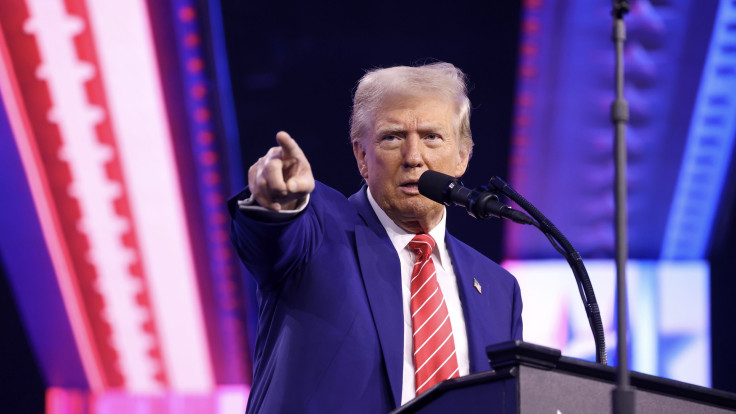
As tensions between the United States, Israel and Iran continue to rise, it seems reasonable for Washington to look to its allies for support. Yet, Donald Trump's warning that Europe would be remembered for refusing to back US action in the Strait of Hormuz has exposed a growing divide among Western partners.
Several European governments have made it clear they will not send naval forces. That refusal is now prompting serious questions about trust, strategy and the risk of a wider war with Iran.
The rejection comes as unease builds across Europe over how the United States has handled its latest moves. Officials say they were not properly consulted and still do not have a clear sense of America's end goal.
Europe Draws a Firm Line
European leaders have taken an unusually direct stance in turning down Washington's request for military support in the Gulf. The request aimed to keep the Strait of Hormuz open after Iran warned that ships linked to the US, Israel and their allies could be targeted.
According to The Guardian, German Chancellor Friedrich Merz said there had never been 'a joint decision to intervene,' effectively ruling out any military contribution. Defence Minister Boris Pistorius was even blunter, saying it is not Germany's war in the first place and that they 'have not started it.'
In London, Prime Minister Keir Starmer struck a careful tone, saying the United Kingdom would not be 'drawn into the wider war.' He acknowledged that keeping the strait open and maintaining stability in the oil market is 'not a simple task,' while stressing that preparations are under way for a workable strategy.
Italy echoed that caution. Foreign Minister Antonio Tajani said diplomacy must come first, warning that any escalation could quickly spiral out of control.
Other allies followed the same line. Australia, France and Japan have all signalled they have no plans to deploy warships. Europe's rejection and reluctant response appear to have frustrated Trump, who has repeatedly urged allies to help reopen shipping operations in the strait.
Doubts over US Strategy Grow
Behind the public refusals sits a deeper concern about where US policy is heading.
During a meeting on Monday, European Union foreign ministers stressed they need clearer answers about Washington's objectives. Estonia's foreign minister Margus Tsahkna said allies want to understand Trump's 'strategic goals.'
EU foreign policy chief Kaja Kallas, on the other hand, said ministers had discussed expanding the mandate of Operation Aspides, a Red Sea mission focused on protecting international shipping. Even so, the idea gained little support among member states.
That hesitation reflects a broader concern. European capitals fear that joining a US-led mission without a defined plan could pull them into a prolonged and unintended conflict.
'We Will Remember'
In response to Europe's refusal to take part in the Iran conflict, US President Donald Trump has responded with a mix of frustration and warning.
As reported by CNBC, he told allies that 'whether we get support or not... we will remember.' a remark widely seen as signalling possible political consequences for those who declined.
The comment has unsettled diplomats, many of whom view it as a shift away from partnership towards pressure.
For officials across Europe, the tone only reinforces their caution. There is a growing concern about being tied to decisions they had little role in shaping.
Lack of Consultation Fuels Mistrust
According to Council on Foreign Relations director Edward Fishman, Trump did not consult allies in Europe or Asia before launching offensive military action against Iran.
That lack of coordination has left governments wary of committing forces. It has also raised questions about whether European allies would expect something in return for any support, especially after facing sharp tariffs from the Trump administration over the past year.
Taken together, it feeds a sense that the traditional alliance structure is under strain, with key decisions increasingly made in Washington without wider agreement.
Confusion Over Trump's Claims
Adding to the uncertainty, Trump has said he recently spoke with a former US president about the strikes on Iran. That claim, however, has been met a series of denials.
Reports say Trump referred to a conversation with an ex-president who told him he wished he had been the one to initiate the bombing.
However, aides to George W. Bush and Barack Obama said they 'have not been in touch' or had 'no recent conversations' with America's 79 year old current president, NBC News reported. An aide to Bill Clinton also suggested Trump was not referring to the former president.
Sources familiar with the matter added that Trump was not speaking about Joe Biden either, leaving the claim unresolved.
The confusion has raised fresh doubts about the reliability of the narrative coming from the White House.
A Fragile Alliance Under Pressure
As tensions in the Gulf continue, the gap between the US and its allies is becoming harder to ignore.
European leaders are signalling they will not be rushed into military action without a clear plan or shared responsibility. For now, their message is steady and direct. This is not a war they chose, and not one they are ready to join.
© Copyright IBTimes 2026. All rights reserved.
- MOST POPULAR IN World


