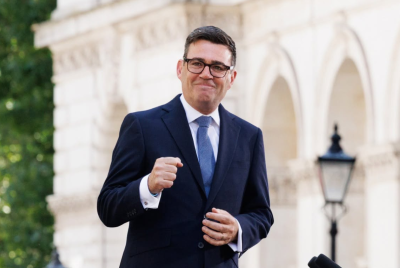
'Oldest Ally' or Not, Starmer Defies Trump with UK Out of Iran Conflict—'Will Not be Drawn Into Wider War'
The Prime Minister has defied the White House's demands for warships, choosing a £53m domestic energy rescue plan over a 'wider war' in the Middle East.

Prime Minister Keir Starmer has firmly rejected Donald Trump's demands for British military intervention in the Strait of Hormuz, declaring that the United Kingdom 'will not be drawn' into an escalating Middle East war.
Despite intense pressure from the White House to deploy warships against Iranian naval blockades, Downing Street has prioritised regional stability and domestic economic security over its traditional role as America's 'Oldest Ally'.
The move, announced on 16 March 2026, signals a historic rift in the 'Special Relationship' as Starmer aligns with a growing European front that includes Germany and Italy, both of whom have similarly dismissed the conflict as 'not a matter for NATO'.
Strategic Caution Over Military Escalation
The Prime Minister's refusal comes at a critical juncture as the Strait of Hormuz remains a high-stakes maritime chokepoint. While President Trump has publicly criticised Starmer's reluctance—reminding London of the 'substantial resources' the US spends on NATO—Britain has opted for a middle-ground strategy.
Instead of deploying the Royal Navy's heavy destroyers, the government is exploring the use of aerial minesweeping drones. This technical pivot follows the inconvenient departure of HMS Middleton, Britain's last active minesweeper in the region, which recently returned for maintenance. Starmer emphasised that any British involvement must be guided by 'national interests and a calm assessment of the facts' rather than foreign political pressure.
A United European Front Against Trump's 'Hawkish' Agenda
The UK's defiance has emboldened a unified European stance against American military expansionism. German Chancellor Friedrich Merz has been particularly vocal, stating that Berlin will not send warships to a conflict where 'the United States and Israel did not consult us' prior to the initial strikes. Italy has echoed this sentiment, with its foreign minister dismissing any naval missions that lack a direct United Nations or European Union mandate.
'This is not our war,' a German Defence Ministry spokesperson clarified, highlighting that the Basic Law prevents German military involvement without a collective alliance decision. This collective reluctance from France, Japan, and Australia has effectively isolated the Trump administration's 'regime change' rhetoric, leaving the US and Israel to navigate the naval blockade without their traditional Western coalition.
Domestic Pressure And The £100 Oil Shock
Starmer's decision to avoid the 'geopolitical quagmire' is heavily influenced by a worsening domestic energy crisis. Global oil prices have spiked past $100 a barrel, threatening to push UK inflation into a dangerous upward spiral. To mitigate the impact on households, the government has launched a £53 million support package for low-income families struggling with winter heating bills.
'De-escalation must be the priority to stabilise the markets,' Starmer noted during a Downing Street briefing. Analysts warn that a full-scale war could turn the oil price surge into a long-term recession for the British economy. By pursuing diplomacy over military action, Starmer hopes to secure a peaceful reopening of the shipping lanes while shielding the UK from the direct blowback of a protracted Middle Eastern conflict.
Tension Between London And Washington
Trump expressed surprise that the UK wouldn't commit ships, even though the British government had been cautious from the outset. The decision to stay out of the initial US offensive against Iran was rooted in principles. Starmer insisted that Britain's approach should be guided by a calm assessment of national interests, not pressure from abroad.
The tension extends beyond diplomatic words. Trump claims the US has spent substantial resources on NATO and allied efforts, including support for Ukraine, even as he criticises Britain's lack of contribution to Iran's crisis. The US's focus on regime change has further complicated the situation, transforming Iran's regional role into a broader conflict.
The situation remains tense. Oil prices remain high, and Iran's threats to target ships raise fears of escalation. Yet, the message from Britain and its European allies is clear: they will not be pulled into a conflict that could spiral out of control. The hope is for a peaceful resolution, but the risks of further escalation linger.
© Copyright IBTimes 2026. All rights reserved.
- MOST POPULAR IN National