Europe Warned It Must Break 'Downward Coping Syndrome' to Counter Trump's America
Analysts warn that Europe's reluctance to adapt could weaken its global standing.
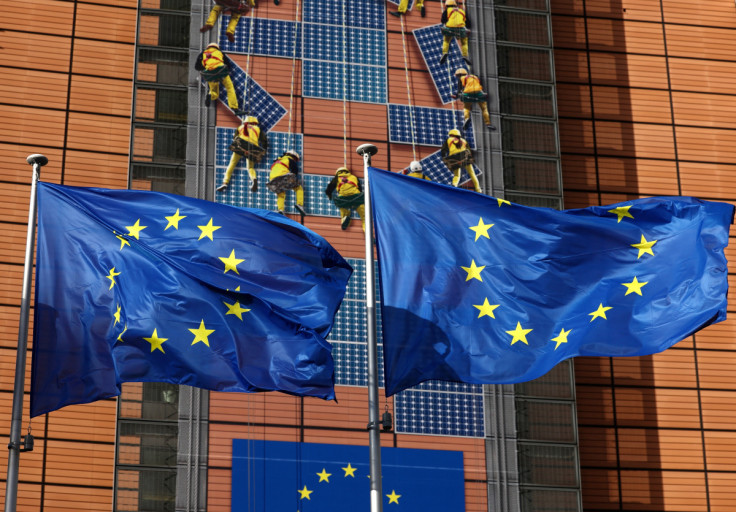
As tensions in the Middle East continues to escalate, Europe is reportedly facing a warning that is becoming harder to ignore. Analysts say the continent could lose both economic strength and political influence unless it begins to confront deeper problems inside its own system.
The concern comes as relations with the United States grow more uncertain under the political resurgence of American President Donald Trump. Some experts believe Europe has become too cautious and, over time, too dependent on outside powers.
Rather than adapting quickly when pressure builds, Europe has reportedly often settled for smaller adjustments that keep problems under control but rarely solve them. Critics say this pattern has created what researchers describe as a 'downward coping syndrome,' a habit that could now threaten Europe's future.
Europe's Danger May Come From Within
Many observers believe Europe's greatest challenge may not come from outside pressures but from its own reluctance to change. According to The Conversation, the idea of 'downward coping syndrome' explains how European governments often respond to crises by lowering expectations instead of tackling the underlying causes. The approach may protect political stability in the short term, yet it slowly erodes the continent's long term strength.
This pattern has surfaced repeatedly in debates over economic reform, defence spending and foreign policy. Instead of pushing through bold changes, leaders often choose smaller compromises that avoid political risk.
In calmer times, that strategy helped maintain balance. Today, however, the environment is far less forgiving, leaving Europe more exposed and vulnerable.
Analysts say the return of a more confrontational United States under Trump has intensified that risk. European leaders could soon face difficult choices about security, trade and diplomatic independence.
Trump's America Raises the Stakes
An opinion analysis published by The New York Times notes that many European governments fear and worry about being drawn into conflicts or strategic confrontations shaped largely by American decisions. The concern is especially strong in discussions about security alliances and relations with countries such as Iran.
European policymakers fear that Washington, under Trump's administration, might act first while expecting Europe to bear part of the consequences. That uncertainty has revived a long‑running debate within the European Union, with many officials arguing that Europe must become stronger and more independent to defend its own interests. The challenge is not only political but also economic.
Regaining Europe's Productivity Edge
Beyond the internal political debate, economists say Europe still has the capacity to rebuild its economic strength. That will only happen if companies grow larger and become more competitive.
Based on an International Monetary Fund report, European firms remain productive but often operate at a smaller scale compared with companies in the United States. The IMF argues that expanding businesses and integrating markets could help Europe regain its productivity advantage.
Scaling up would allow companies to invest more in innovation, research and digital technology. It would also strengthen Europe's ability to compete with both the United States and China.
However, such changes and progress depends on political will. Governments would need to remove barriers that prevent companies from growing across borders inside the European Union. Without those reforms, the continent may struggle to keep pace in a rapidly changing global economy.
Climate Policy Becomes Harder to Manage
Another challenge has emerged in an area where Europe once led confidently. The continent's ambition to take the lead on climate action is creating new complications.
Researchers Steffen Hurka and Yves Steinebach argue that EU climate legislation has become so detailed and complex that even well resourced member nations struggle to implement it effectively. Writing in The Loop, they say the expanding web of rules, reporting requirements and policy tools can overwhelm national administrations. Governments sometimes find it difficult to translate broad EU objectives into workable national policies.
The risk is that complexity slows climate progress rather than accelerating it. Experts warn that overly complicated regulations may also weaken public support if citizens begin to see policies as confusing or ineffective.
A Turning Point for the European Project
The debate unfolding across Europe now goes beyond economics or foreign policy. At its core, it is a question of confidence. For decades, the European Union built its strength through cooperation and gradual reform. That model delivered stability and prosperity across much of the continent.
Yet the global landscape has shifted. Economic competition has intensified, while security concerns are growing and political pressure from both allies and rivals continues to mount.
Breaking what analysts describe as a 'downward coping syndrome' may require Europe to reconsider how it responds to challenges and the speed at which it is willing to act.
The continent still wields considerable economic power and political influence. Experts, however, warn that potential alone is no longer sufficient. Europe must choose whether to adapt gradually or lead decisively in a world that is accelerating.
© Copyright IBTimes 2026. All rights reserved.
- MOST POPULAR IN National