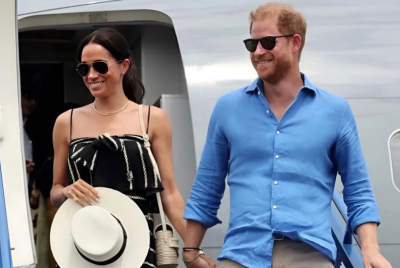
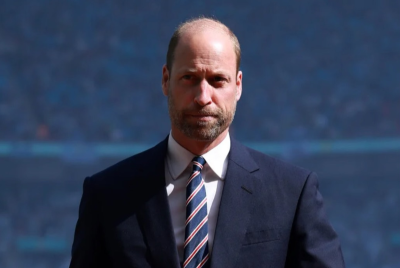
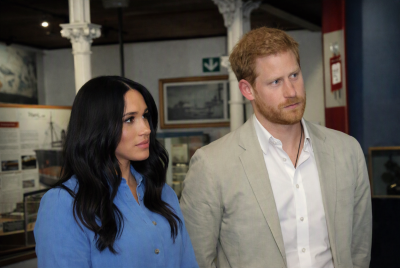
Prince Harry, Meghan Markle UK Return: Royal Commentators Debate Publicity Claims and Their Private Lives
Prince Harry and Meghan Markle face renewed scrutiny after royal experts debated their privacy claims and status as non-working royals
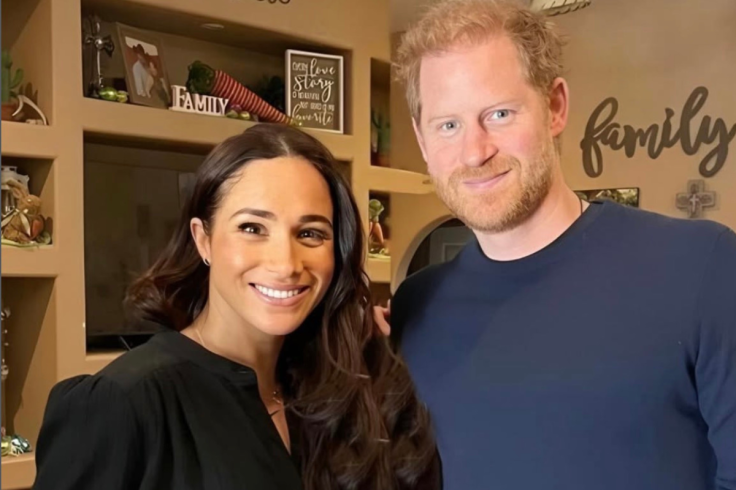
Prince Harry and Meghan Markle's return to the UK has reignited debate over privacy, publicity and their position within the Royal Family. The dispute intensified on 18 September, when royal commentator Kinsey Schofield accused the Sussexes of 'feeding the publicity machine' while objecting to public scrutiny.
The remarks followed comments from a source close to the couple, describing Harry and Meghan as 'public figures.' The source argued that the couple could not realistically live a normal private life because of their global profile.
Prince Harry, Meghan Markle UK Return Clarifies Their Royal Status
The dispute followed a letter issued on 7 September by Lord Chamberlain Lord Benyon at the King's direction. The guidance was circulated to UK Government departments, military bodies and Lord Lieutenancies after Harry and Meghan returned to Britain for an extended period with their children on 26 August.
The letter reiterated that there had been no change to the couple's position since they stepped back from official royal duties in January 2020. It did not create a new status, but restated the arrangements established after their departure from the working Royal Family.
'Their styles as His and Her Royal Highness remain in abeyance and are not used,' the letter stated. It also said their charitable activities were undertaken in a private capacity.
'In short, their position is akin to private citizens with commercial and charitable interests,' the letter continued.
The guidance further instructed organisations to contact the Sussexes' office directly on administrative matters, rather than the Royal Household.
That distinction is central to the dispute. Harry and Meghan remain internationally recognisable, but the letter says they do not represent King Charles III or undertake official duties on behalf of the Crown.
A source close to the Sussexes challenged the characterisation in comments.
'They are public figures,' the source said. 'Members of the public know who they are. The idea that they can live a normal, 'private' life is sadly not realistic.'
The couple's return to the UK has therefore placed renewed attention on the difference between being known by the public and acting for the monarch. It has also revived questions about how much independence can coexist with continued royal prominence.
Royal Commentators Debate Privacy and Publicity
Schofield rejected the suggestion that describing Harry and Meghan as private citizens meant they should be anonymous. She said the phrase referred to their official position rather than their level of fame.
'Being a private citizen does not mean you're anonymous. It simply means you don't represent the King,' Schofield said.
She compared the Sussexes with Zara Tindall and Peter Phillips, Princess Anne's children. Neither has a royal title, but both are recognisable members of the wider Royal Family with commercial interests and public profiles.
'They're recognisable, have commercial interests, attend major royal family events, but they do not represent the monarch,' Schofield said.
Schofield added that, in her view, Harry and Meghan could pursue a quieter public life similar to Zara and Peter. She presented that as a choice by the couple, rather than an independently established fact.
'In my opinion, you can't repeatedly feed the publicity machine and then complain about a lack of privacy,' she said.
She also argued that the palace needed to prevent governments, charities and businesses from mistaking the couple's activities for royal endorsement.
'The palace can't have governments, charities, businesses, even members of the public wondering whether their activities somehow carry the endorsement of the Crown. It doesn't. They don't. King Charles is saying, absolutely not,' Schofield said.
Not every commentator supported the King's position. Royal broadcaster Ian Pelham Turner criticised the decision and argued that Harry's family connection still carried considerable weight in Britain.
'Harry is the son of a king. He has prominence in Britain,' Turner said. He also questioned the approach to security and called for the King to fund his son's protection.
Royal commentator Richard Fitzwilliams described the situation as a 'total mess'. He said the letter could be interpreted as evidence of continued distrust between the King and the Sussexes, although the document itself does not establish the monarch's private feelings.
Fitzwilliams also warned that royal engagements could be overshadowed by the couple's public activities.
'It is simply impossible to anticipate the way this may go,' he said. 'The Sussexes are news whatever they do.'
Harry made his first public appearance since the UK return on 17 September, attending the Invictus Spirit Gala in London. His appearance demonstrated the difficulty of separating the couple's public profile from their official status, even when the two are formally distinct.
For now, the King's letter has clarified that Harry and Meghan are not returning to working royal duties. It has not resolved the more combustible question of whether public visibility, commercial work and demands for privacy can comfortably occupy the same space.
© Copyright IBTimes 2026. All rights reserved.
- Recommended For You