Hayward Explosion Today: Why Evacuation Didn't Happen Despite a Known Gas Line Rupture, According to Investigators
A gas line ruptured by a construction crew led to a Hayward explosion that injured six people and destroyed a home
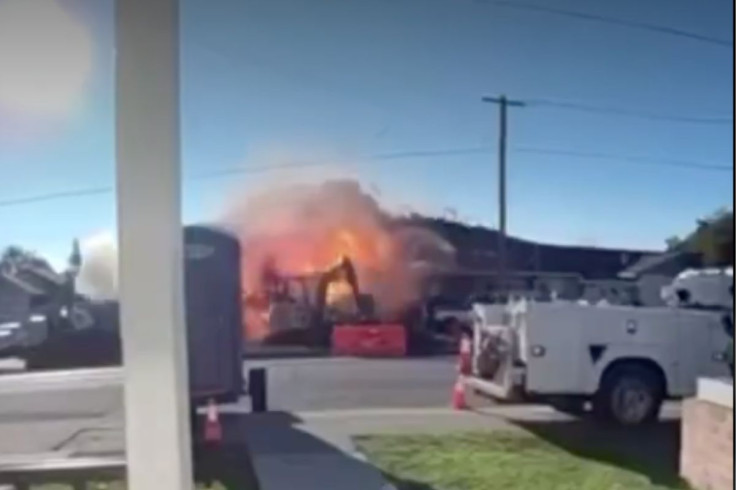
A gas explosion in the Ashland neighbourhood of Hayward, California, on 11 December 2025 injured six people and damaged multiple homes. The blast occurred shortly after crews attempted to manage a ruptured underground gas line, raising questions over why residents were not evacuated despite early warning of the leak. Investigators are reviewing emergency protocols to determine whether the response met safety standards.
The rupture, reportedly caused by a third-party construction crew working on a road project, was reported to Pacific Gas and Electric (PG&E) at approximately 7:35 a.m. Crews worked to isolate the damaged line and reportedly halted the flow of gas around 9:25 a.m. The explosion occurred at 9:38 a.m., destroying one home and affecting neighbouring properties. Six people were taken to hospital with injuries described as non-life-threatening, according to ABC7 News.
Authorities and safety experts have emphasised the complexity of the incident. Decisions about evacuation in the event of a gas line rupture are guided by measurements of gas concentration, structural risk, wind conditions and other factors. First responders reported no clear indications of imminent danger when they arrived, and PG&E advised that the situation could be managed without immediate evacuation.
Initial Response
Firefighters were on scene within two hours of the rupture. Alameda County Fire Deputy Chief Ryan Nishimoto stated that 'we did not smell gas, detect gas, or see any reason for an emergency.' PG&E confirmed that managing the line and isolating the leak was its primary responsibility and that the utility did not instruct fire crews to order residents to leave their homes.
Investigators are examining the interaction between PG&E and first responders to determine whether standard procedures were applied effectively. Safety experts note that while the protocol followed may have been technically correct, delays in isolating the gas flow contributed to a narrow window during which the explosion occurred.
Evacuation Decisions and Expert Criticism
Safety investigators have criticised the reliance on standard thresholds for triggering evacuation. One expert told ABC7 News that greater access to utility valves and faster response systems could allow more precautionary evacuations in similar situations. Analysts have also highlighted the importance of clear communication between utility companies and emergency services to protect public safety.
The National Transportation Safety Board (NTSB), Division of Occupational Safety and Health (Cal/OSHA) and local authorities are conducting a joint investigation into operational and regulatory practices. This includes reviewing whether evacuation protocols or public alert systems require revision, whether the gas line was fully isolated before the explosion, and how ignition occurred within minutes of the shutdown, according to NBC Bay Area.
Gas explosion in Hayward, California (San Francisco Bay Area) injures 6, damages 3 structures after construction crew hit underground gas line.
— GeoTechWar (@geotechwar) December 12, 2025
Blast at 9:40am; PG&E isolated leak but explosion followed. pic.twitter.com/pSaWW3yth6
An explosion and fire erupted in a Hayward residential area on Thursday, destroying homes, shutting down a freeway and injuring six people after a construction crew struck an underground gas line, according to firefighters, witnesses and PG&E.
— KTVU (@KTVU) December 11, 2025
An explosion and fire erupted in a… pic.twitter.com/NUDxitJc9j
We're getting a look at the damage caused by a catastrophic gas line explosion and building fire in Hayward, California on Thursday. Two homes were impacted by the explosion and fire, as well as a workshop in the back of one of them. Another home has some damage on the side… pic.twitter.com/jOBXiqzFwn
— ABC7 News (@abc7newsbayarea) December 12, 2025
Timeline and Next Steps
The critical timeline shows the rupture reported at 7:35 a.m., gas flow halted at 9:25 a.m., and the explosion at 9:38 a.m. Authorities are assessing whether residents should have been notified sooner and whether current hazard assessment tools were sufficient. Communication procedures between PG&E, fire crews and law enforcement remain under review.
The Hayward incident underscores the challenges of balancing rapid risk assessment with precautionary measures in utility-related emergencies. Investigators are expected to recommend improvements to evacuation protocols and inter-agency coordination. Lessons from the explosion could influence future practices in similar urban settings across California and nationwide.
© Copyright IBTimes 2025. All rights reserved.
- Recommended For You