

Amazon's Smart Glasses May Photograph Your Doorstep, but the Million-Robot AI Network Runs Deeper
Amazon's delivery glasses bring its AI-powered logistics system to the doorstep, linking navigation and efficiency gains with new questions over image capture
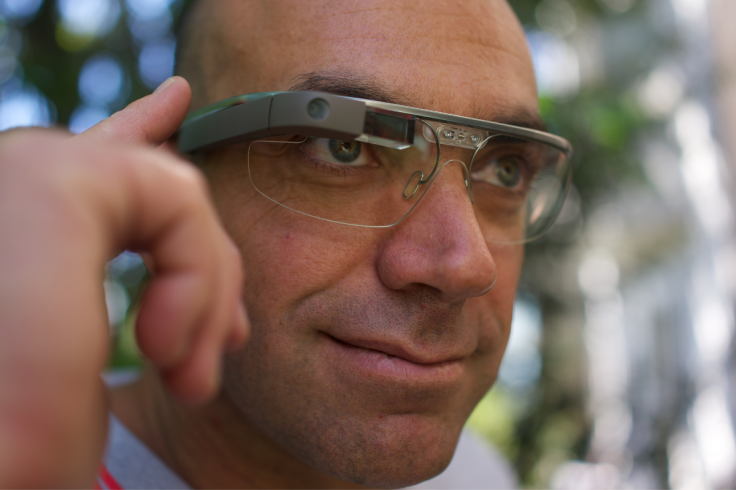
Amazon expects to have more than 20,000 Smart Delivery Glasses devices in the field by the end of 2027 as it expands a wearable system designed for Delivery Associates working for independent Delivery Service Partners.
The glasses use AI, computer vision and Amazon's geospatial technology to display navigation and delivery information in a driver's field of view. Amazon says the devices can help drivers scan packages, follow walking directions and capture proof of delivery without repeatedly checking a phone.
Amazon says hundreds of Delivery Associates helped shape the design. The Verge, citing Bloomberg, reported that drivers using the glasses in a pilot had completed more than 275,000 deliveries.
The technology has also prompted privacy questions. Bloomberg reported that the glasses can capture several thousand still images during a typical shift and that images may include people and private property. Amazon executive Viraj Chatterjee told Bloomberg the company had not considered giving customers an opt-out from that image capture.
Chatterjee said the data was intended to improve deliveries rather than for surveillance. He also said Amazon's systems would blur people and vehicle number plates before images were passed to human reviewers.
Amazon Smart Glasses Sit Alongside a Growing AI and Robotics Operation
The glasses are one part of Amazon's broader use of AI across forecasting, inventory placement and robotics.
Amazon says AI-powered demand forecasting has improved regional forecast accuracy by 20% for millions of popular products, helping it position inventory closer to expected demand.
Amazon announced in June 2025 that it had deployed its millionth robot, with its fleet operating across more than 300 facilities worldwide.
Those systems perform different tasks. Hercules can lift and move up to 1,250 pounds of inventory, while Sparrow uses computer vision and AI to identify and handle individual products.
Sequoia combines robotics, AI and computer vision to manage inventory. Amazon says it can identify and store incoming inventory up to 75% faster than its previous process.
DeepFleet, a generative AI foundation model, is designed to coordinate robot movements and reduce congestion. Amazon says it improves robot fleet travel efficiency by 10%.
Amazon has also developed Project Eluna, an agentic AI system designed to help operations teams interpret real-time and historical data. The company said in October 2025 that Eluna would be piloted at a Tennessee fulfilment centre, initially to optimise sorting. Amazon describes it as a decision-support system that recommends actions to operators, including where personnel might be shifted to avoid bottlenecks.
The next-generation Proteus robot can respond to plain-language instructions and determine factors including route, timing and priority. Amazon says it is being piloted in its laboratories ahead of planned European deployment in the first half of 2027.
Vulcan adds touch sensing to Amazon's robotics portfolio. The company says it can pick and stow approximately 75% of the item types held in its fulfilment centres.
Amazon Smart Glasses Bring Logistics AI to the Doorstep
Amazon's automation extends beyond warehouses. Its Wellspring mapping technology learns from delivery trips to build detailed models of physical locations.
Since 2024, Amazon says Wellspring has identified 202 million parking locations, mapped 2.8 million building entrances and catalogued 85,000 mailrooms and lockers. Its AI-based routing can also account for reduced visibility after sunset and extra time needed to find parking during busy lunch periods.
The Smart Delivery Glasses bring Amazon's geospatial navigation into a driver's line of sight. Bloomberg, as reported by The Verge, said images captured by the devices can also be uploaded to Wellspring.
Amazon has said use of the glasses is optional for participating drivers and their contracted delivery companies. Reuters reported in October 2025 that some drivers saved up to 30 minutes during a shift in early testing, although Amazon cautioned at the time that the technology remained experimental.
The glasses extend technologies already used to guide inventory, robots and delivery routes into the final stage of a parcel's journey. Their expansion also puts fresh attention on how images gathered during deliveries are collected and handled as Amazon scales the system.
© Copyright IBTimes 2026. All rights reserved.