

NASA MAVEN Orbiter Goes Silent After Anomaly — Communication Lost With Earth
Can NASA's engineers recover the crucial mission that captured 3I/ATLAS?

A silent, decade-long vigil over the Martian sky has been broken. One of NASA's most reliable eyes in the cosmos, the Mars Atmosphere and Volatile EvolutioN (MAVEN) orbiter, has suddenly gone dark. After years of transmitting groundbreaking data about the Red Planet's vanishing atmosphere, the veteran spacecraft is now adrift, having been struck by an 'unknown anomaly' that severed its communication with Earth on Dec. 6.
This loss of contact with NASA's Deep Space Network is not just a technical hiccup; it's the momentary silencing of a pivotal mission that has fundamentally changed our understanding of how Mars lost its life-sustaining blanket of air.
Launched in November 2013 and successfully entering Mars's orbit in September 2014, MAVEN's primary goal was never surface imagery, but something far more existential: studying the planet's upper atmosphere, ionosphere, and its destructive interaction with the solar wind. It was designed to tell us how Mars, once a water-rich world, became the desolate, rusty desert we know today.
Its work has been nothing short of spectacular. This year, for instance, MAVEN provided the first direct evidence of 'sputtering', a process where energetic charged particles literally knock atoms out of the top of the atmosphere. The orbiter's combination of instruments was so precise that researchers could map sputtered argon in relation to the solar wind, effectively 'showing sputtering in real time'.
The findings had significant implications for planetary history. 'The direct observation of sputtering confirms that the process was a primary source of atmospheric loss in Mars' early history when the sun's activity was much stronger,' NASA explained in May. Shockingly, the orbiter found this process was happening at a rate four times higher than previously predicted, a figure that, naturally, increased further during intense solar storms.
This tenacious little probe had not only outlived its initial mission but had been extended multiple times, with the expectation that it would continue operating well past its September 2025 extended deadline.
This impressive history of resilience makes the recent silence all the more jarring. NASA's ground stations lost the signal after the orbiter passed behind the Red Planet. 'Telemetry from MAVEN had showed all subsystems working normally before it orbited behind the Red Planet. After the spacecraft emerged from behind Mars, NASA's Deep Space Network did not observe a signal,' NASA confirmed in a statement this week. Engineers and operations teams are now scrambling, 'investigating the anomaly to address the situation'.
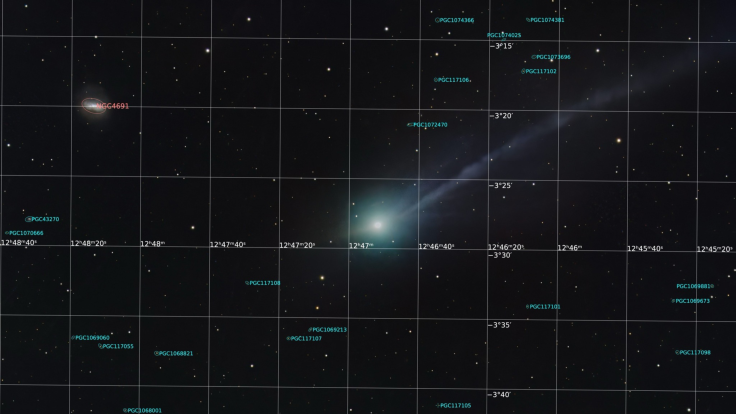
The Silence of a Pioneer: What MAVEN's Data on 3I/ATLAS Revealed
The MAVEN team has always been known for its capacity to adapt and innovate in the face of engineering adversity. As Rich Burns, MAVEN Project Manager at NASA Goddard Space Flight Center, noted when the mission was extended in 2022: 'The MAVEN team has a strong record of innovation in addressing engineering challenges to extend the mission and add capability... This next extended mission brings new opportunities and challenges, and we are confident the team will once again rise to the occasion, enabling much more fantastic MAVEN science'.
This ingenuity wasn't limited to core Martian science alone. Before its unexpected silence, MAVEN had even managed to turn its sophisticated observational instruments toward the darkness beyond our solar system, successfully capturing an image of the fascinating interstellar comet 3I/ATLAS earlier this year.
This ability to diversify its mission and provide unique data on an object that began its journey light-years away underscores the orbiter's immense value — it was a true multi-tasker, not confined solely to the thin atmosphere it was sent to study. The information MAVEN gathered on 3I/ATLAS will be crucial for astronomers seeking to better characterise these fast-moving interlopers.
While MAVEN's scientific loss is devastating, its secondary role as a critical communications conduit for the surface rovers Curiosity and Perseverance is less of an immediate crisis. Fortunately, NASA operates several other orbiters, such as the Mars Reconnaissance Orbiter, that perform this same essential relay function, ensuring the planet's surface missions won't suddenly go mute.

The MAVEN Mystery: Will the Engineers Re-Engage 3I/ATLAS's Image-Capturing Companion?
The history of deep space communication offers a reassuring glimmer of hope. Losing contact with interplanetary probes is an unfortunate, yet not uncommon, aspect of space exploration. These missions often operate at the absolute limit of engineering capability, millions of miles away, where even a tiny fluctuation can prove disastrous.
Only a couple of years ago, in 2023, the US space agency temporarily lost touch with the legendary Voyager 2 probe — a spacecraft that has travelled further than any other — before successfully resuming contact just a few days later.
NASA's engineers have a well-earned reputation for tenacity and often find ingenious ways to remotely reboot or patch issues, even across astronomical distances. For now, the teams investigating the anomaly are remaining tight-lipped, saying only that they will share more information as and when it becomes available. But the urgency is palpable.
The successful capture of the interstellar comet 3I/ATLAS was just one recent example of MAVEN's scientific flexibility. Losing MAVEN prematurely would mean losing an irreplaceable decade-plus of dedicated atmospheric analysis, slowing our efforts to understand Mars's complex past and, crucially, slowing the preparation for future human missions. The world's attention is now focused on NASA's Deep Space Network, waiting for that single, long-awaited electronic breath.
The silence of MAVEN serves as a sobering reminder of the fragile brilliance of deep space engineering. While NASA's remarkable history with missions like Voyager 2 gives us cause for optimism, the clock is ticking on a spacecraft that has rewritten the history of Mars and even contributed to our vital planetary defence knowledge by capturing 3I/ATLAS.
© Copyright IBTimes 2026. All rights reserved.