Ramit Sethi vs. Kevin O'Leary: 'Housing and Healthcare Are Up. But Sure, Blame Coffee'
Sethi promotes making money work through investments to achieve early financial independence, unlike O'Leary's focus on long-term savings for retirement


Multi-millionaire and best-selling author Ramit Sethi realised he didn't have to work anymore at 42, when his investments were generating far more income than his expenses. He is the host of the Netflix show How to Get Rich and is known for constantly guiding people through their financial struggles.
In a recent YouTube clip, Sethi indirectly bashed people who look down on people spending $5 on coffee.
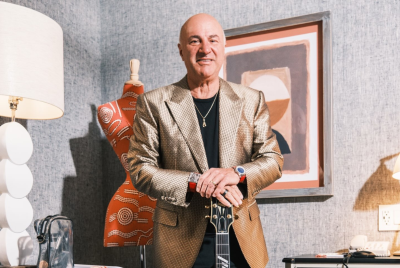
'A bunch of old people, usually old men, looking down and lecturing people, most of them only preach deprivation and restriction,' Sethi said while highlighting the advice shared by investors like Shark Tank's Kevin O'Leary, who often rebukes young people for their financial decisions.
Using O'Leary's example of skipping a $5 coffee, Sethi estimated it would save you $1,825 in a year, but housing costs continue to soar, healthcare is getting more expensive, wages, especially for the middle class, have not kept up.
Sethi added that despite such structural economic change, the advice has stayed the same. 'You are stupid and you need to stop spending money on frivolous things,' he remarked.
In a May interview on The Diary of a CEO podcast posted on X, O'Leary is seen bashing young people spending $28 on lunch while earning $70,000 a year. He views this behaviour as a lack of financial discipline and believes that similar daily expenses could impact long-term wealth accumulation.
O'Leary's Explanation for His Strict Advice
O'Leary focused on the opportunity cost, highlighting that repeated spending on convenience meals lower how much money that could otherwise be invested over time. He believes that if money saved through frugal means is placed into an index fund returning between 8% to 10% annually, the power of compounding could help you create a significant retirement corpus over the years.
Kevin O’Leary says Gen Z is financially cooked when people making $70K a year are spending $28 on lunch pic.twitter.com/7s820Xnhg9
— Mikli (@CryptoMikli) May 18, 2026
The entrepreneur went beyond controlling food expenses to talk about how people should grow more conscious about their frequent purchases related to apparel and accessories that are rarely used. He thinks that even modest spending choices on a regular basis can create missed investment opportunities.
However, Sethi believes it is very much possible to live a rich life without sacrificing your lifestyle. Even if your circumstances compel you to downgrade your lifestyle, his strategies focus on bouncing back fast through short-term strategies while ensuring a budget that does not always compel you to cut back on guilt-free spending.
O'Leary talks about spending control by skipping your $5 coffee, but at the same time, he advocates for investments in Bitcoin, which is going through one of the worst phases in years. Reports have emerged earlier that O'Leary lost millions of dollars on his crypto trades, but he is now making data centres for mining. Even his long-time colleague and billionaire Mark Cuban also recently dumped all his crypto holdings after his trades, especially during the Middle East crisis, didn't work out.
Sethi's Money Making Money Strategy
Sethi believes in the idea of money making money. One should follow this strategy to reach the 'crossover point' where income from investments exceed expenses and can help sustain your lifestyle.
While O'Leary focuses on savings over the decades for a comfortable life in retirement, Sethi focuses on drastically preponing the retirement years through the Financial Independence, Retire Early (FIRE) strategy.
Note that there is lean FIRE for people content with living on a modest $30,000 to $50,000 per year, adopting a minimalist lifestyle and rejecting materialism. On the other hand, Fat FIRE appeals to individuals who aim for a more luxurious lifestyle sustained by their investment returns. Both paths ultimately lead to financial independence, but spending and lifestyle differ drastically.
© Copyright IBTimes 2026. All rights reserved.
- Recommended For You