

Trump Aide Turned His Boss's Speeches Into $100K Winnings: President Calls Betting Scheme a 'Disgrace'
Regulators weigh a settlement as Kalshi freezes the teleprompter operator's winnings
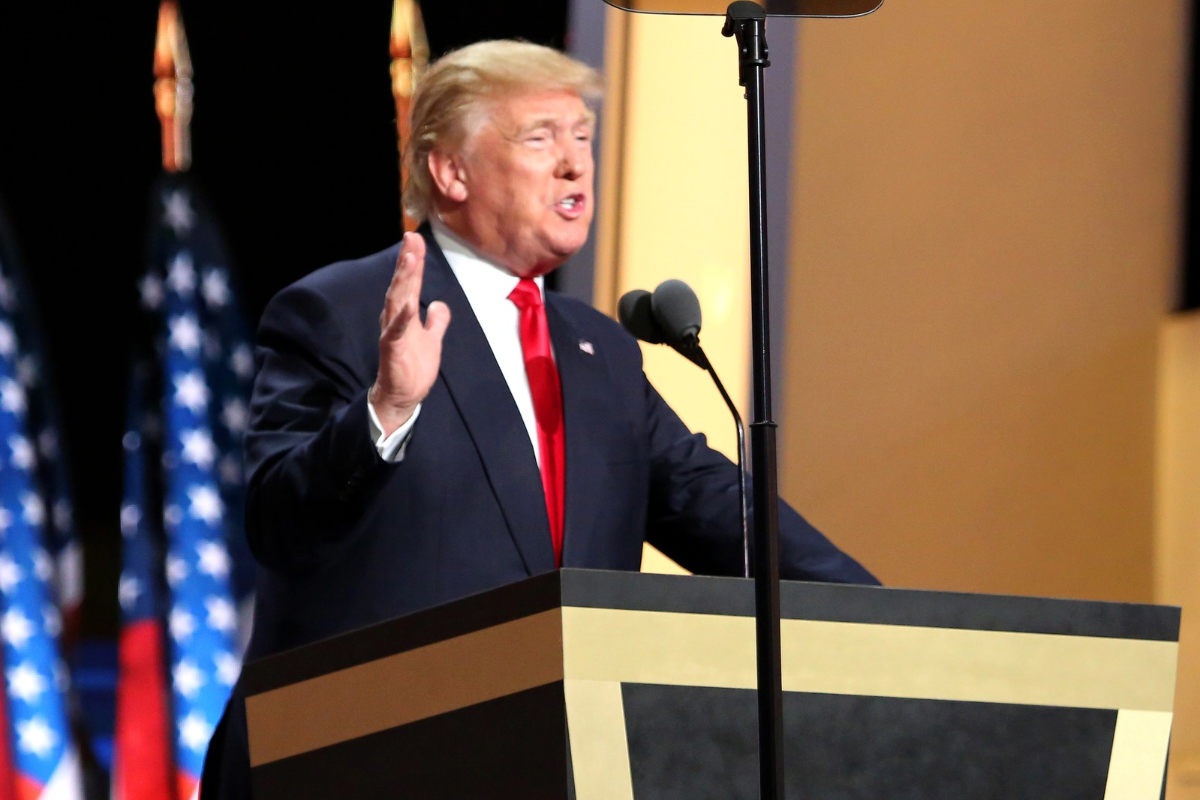
A White House teleprompter operator has been placed on unpaid leave after federal regulators accused him of winning more than $100,000 (£75,000) by betting on the contents of Donald Trump's speeches. The president called the alleged conduct 'deeply unfortunate and frankly a disgrace,' his press secretary said.
The operator is Gabriel Perez, a technical assistant who has run Trump's teleprompter since the 2016 campaign. Investigators at the Commodity Futures Trading Commission (CFTC), the agency that regulates prediction markets, believe he used advance sight of the president's words to place winning bets on the platform Kalshi.
Perez traded on Kalshi's 'mention markets', contracts that settle on whether a speaker uses particular words, phrases or topics during a public appearance. Investigators believe he bet on February's State of the Union address and more than a dozen other speeches over three months, among them a December primetime address, a January speech in Davos, Switzerland, and remarks in March at a Medal of Honor ceremony.
In some cases, sources said, he pulled out of a trade mid-speech when Trump skipped over a word he had bet on. It is the first known case of a White House employee accused of insider trading on a prediction market.
How Kalshi Flagged the Teleprompter Operator's Bets
The activity first surfaced inside Kalshi's own systems. Its surveillance team detected trades in March that did not fit normal buying and selling patterns, froze the account, and locked more than $90,000 (£67,500) in profits before they could be withdrawn. Account data traced the user to a federal employee who operated White House teleprompters.
'Our surveillance team promptly flagged and referred these trades to the CFTC after an exchange investigation,' Robert DeNault, Kalshi's head of enforcement, said in a statement. The company said it had been assisting regulators for months.
Kalshi put the stakes in market terms. 'The words of political leaders like Presidents and Fed chairs cause billions of dollars of movement in FX markets, oil futures, [and] the stock market,' the exchange said. Its rules bar users from trading on information gained through their jobs.
Perez sat for an interview with regulators and acknowledged some of the trades, sources said. The CFTC has signalled it is willing to settle on terms that would make him hand back his profits and stop placing similar bets. At one point the agency flagged the matter to federal prosecutors in Manhattan, who declined to open a criminal case.
Why the Prediction Market Case Reached the White House
Press secretary Karoline Leavitt addressed the allegations on Thursday, telling reporters that Trump had decided himself to place Perez on unpaid administrative leave. 'There are very strict ethical guidelines here at the White House that explicitly state not to do this,' she said, adding that a different operator would run the teleprompter that evening.
In March, the White House had circulated an internal memo warning staff against using nonpublic information to bet on prediction markets.
Kalshi, which the CFTC regulates, raised $1B (£750M) at a $22B (£16.5B) valuation in May, and reported annualised trading volume of $178B (£133.5B). It has since been reported to be in talks for fresh funding at about $40B (£30B).
Perez's case adds to a run of insider-trading scrutiny around prediction markets. The Department of Justice has already brought its first two such cases: a special forces soldier accused of betting about $400,000 (£300,000) on the capture of Venezuelan President Nicolás Maduro, and a Google employee accused of wagering on user search data to win roughly $1M (£750,000). Both pleaded not guilty.
Perez has not been charged, and staff records still list him as a technical adviser who has worked across both Trump terms.
He previously drew scrutiny from congressional and federal investigators over edits to the president's remarks around the 6 January 2021 attack on the US Capitol. His role gives him some of the last eyes on Trump's prepared remarks, though the president frequently departs from his script. 'You take a big chance, especially me because I go off teleprompter about 80% of the time,' Trump told the Detroit Economic Club in January, in one of the speeches investigators believe Perez had bet on.
© Copyright IBTimes 2026. All rights reserved.