

Michael Schumacher Revelation: Rescue Pilot Breaks 12-Year Silence to Reveal Shocking Details of Crash Scene
One routine call-out in the French Alps became a race against time for a man millions still refuse to forget.
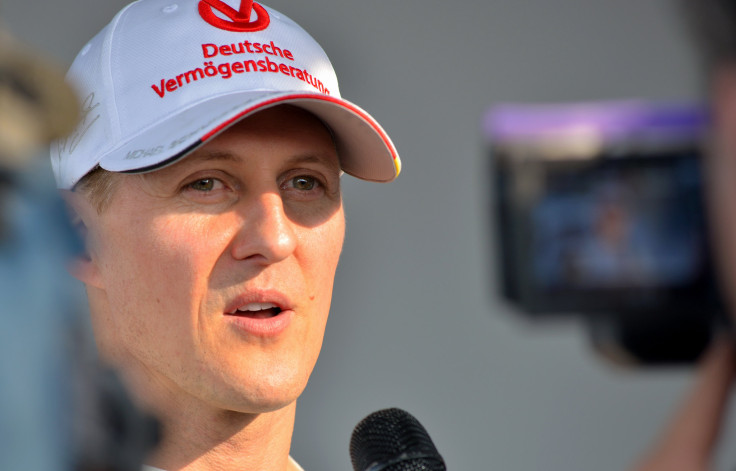
Michael Schumacher's helicopter pilot has broken his silence more than 12 years after the Formula 1 legend's skiing accident in Méribel, recounting in a French newspaper interview how he flew the critically injured driver to hospital on 29 December 2013 and only later grasped the scale of what had happened.
Near-total privacy around Schumacher's condition has been maintained by his family since the incident in the French Alps. The seven-time world champion suffered a severe head injury while skiing off-piste near the resort of Méribel and was airlifted to Grenoble University Hospital, where he underwent emergency treatment. Since then, firm details about his health have been scarce, feeding continuing fascination with one of sport's most closely guarded medical stories.
Michael Schumacher health latest after helicopter pilot breaks silence on F1 icon https://t.co/4ncQ7D6KlB
— GB News (@GBNEWS) May 30, 2026
In the interview with L'Équipe, helicopter pilot Yannick Dainese describes a rescue that, at first, seemed no different to countless other mountain emergencies. He says he was dispatched as part of a routine response team, unaware of the patient's identity until a colleague blurted out the name that would define the mission.
'A rescuer jumped out of the helicopter with the doctor and said to me, "We're flying to Schumacher!" At first, I thought he was joking,' Dainese told the paper.
According to his account, the apparent joke quickly hardened into something more serious when operational orders started to change. He recalls that commanders suddenly became preoccupied with controlling information, telling teams to keep cameras and microphones away from the site and to close off the area to the media. In his reading, that was the moment it became unmistakably clear that this was not just another tourist accident, but Schumacher lying injured on a snowy slope.

Treated 'Like Any Other Patient'
Emergency responders in Alpine resorts deal every winter with a grim catalogue of broken bones, head injuries and high-speed collisions. Dainese insists that, once the helicopter was in the air, Schumacher's global fame did not alter the fundamentals of the job.
He stresses that he is not a Formula 1 fan and that, in the cockpit, the patient was simply a critically injured man in need of rapid evacuation to a neurosurgical unit. The priority, he says, was a safe, fast flight to Grenoble rather than who might be on the stretcher.
Yet even as he downplays any special treatment in medical terms, he concedes that knowing exactly who was behind him in the cabin weighed on him. 'Because I knew he was worshipped like a god,' Dainese said, describing an extra layer of pressure that most pilots never encounter.
He estimates that the flight from Méribel to Grenoble took about 25 minutes. He remembers that journey as almost unnervingly quiet, the cabin dominated by the hushed focus of doctors and paramedics monitoring Schumacher's condition. No shouted orders, no drama, just the steady rhythm of an emergency routine that everyone knew could be the difference between life and death.
When Michael Schumacher interviewed his engineer Andrea Stella pic.twitter.com/gZYaupzFW6
— La Gazzetta Ferrari (@GazzettaFerrari) May 17, 2026
Glimpse of Schumacher's Global Reach
It was not until days later, Dainese says, that he fully understood the global impact of the accident. Returning to Grenoble on a different mission, this time with another patient on board, he found the hospital grounds transformed into something closer to a grand prix paddock than a medical facility.
'What I saw shocked me. There were buses, red flags, and people everywhere the hospital grounds had been transformed into a Formula 1 racetrack. It was unbelievable,' he recalled.
His description tallies with images from that period, when supporters gathered outside the hospital and media outlets from around the world set up camp. Schumacher, by then a seven-time world champion and one of the most successful drivers in F1 history, had become the centre of a vigil that underlined the depth of his following.
What Dainese offers is not new information about Schumacher's condition, which remains firmly off limits, but a rare frontline view of the crucial first hours after the crash. It is a small, human fragment of a story that, for more than a decade, has been dominated by silence and speculation.
Schumacher's family has consistently refused to turn his health into a public spectacle, arguing that medical privacy should apply even to global sporting icons. Official updates have been minimal. Instead, the outside world has been left to piece together hints from occasional remarks made by close friends or former team-mates, none of which has fundamentally altered the central fact that his day-to-day life is unknown to the wider public.
Nothing in Dainese's testimony changes that core reality. His recollections focus squarely on the rescue operation and its immediate aftermath, and do not touch on Schumacher's subsequent treatment or long-term prognosis. No fresh medical details have been confirmed, so anything beyond the pilot's description of the flight and the scenes at Grenoble should be taken with a grain of salt.
© Copyright IBTimes 2026. All rights reserved.