Michael Schumacher's No Longer Bedridden—The Private Reality of the F1 Icon's 2026 Mobility Breakthrough
Twelve years after the skiing accident that shocked the world, the F1 legend has reportedly reached a 'tangible milestone' in his recovery
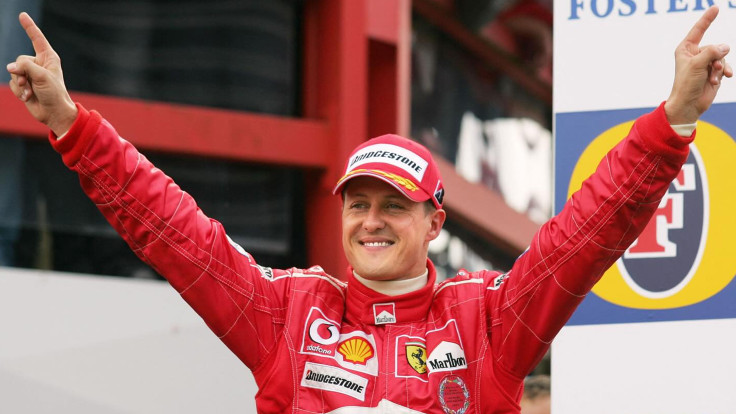
Formula 1 legend Michael Schumacher has reportedly reached a significant milestone in his 12-year recovery journey, with reports claiming the seven-time champion is no longer permanently bed-bound.
According to the Daily Express, Schumacher is no longer permanently bedridden and can now spend time in a wheelchair at his family homes in Switzerland and Mallorca. The guarded update on Schumacher's condition, still not officially confirmed, offers one of the clearest signs in years that his mobility has improved since the catastrophic skiing accident that changed his life in 2013.
Schumacher suffered a traumatic brain injury on 29 December 2013 while skiing off-piste in Méribel, France, when he hit his head on a rock. Doctors at Grenoble Hospital placed him in an artificial coma and operated immediately to relieve pressure on his brain. From that moment, his medical status stopped being a matter of public record and became one of the most closely protected private stories in modern sport, with only occasional, heavily filtered glimpses offered to the outside world.
By early 2014, Schumacher's management said doctors had started reducing his sedation to begin what they called a 'waking process' that would take a very long time. In September that year, it was confirmed that he had been moved out of the hospital and was continuing rehabilitation at the family's home on the shores of Lake Geneva. The transfer was framed as a step forward, but nobody pretended it meant a return to normality.

Schumacher And A Decade Of Silence
Schumacher's condition was defined more by what was not said than by what was. In 2015, his longtime manager, Sabine Kehm, tried to balance hope with realism, stressing that he was making progress 'considering the severity of the injuries,' but warning against 'high expectations.' The phrase that stuck from that period belonged to his former Ferrari boss Jean Todt, who became a quiet but persistent public thread in this story, saying that Michael was 'still fighting.'
That guarded optimism was sharply tested in 2016 when a German magazine claimed Schumacher could walk again. The family's lawyer, Felix Damm, went to court and stated plainly that Michael could not walk. The legal intervention was unusually blunt, and it signalled how far the family was prepared to go to shut down what they saw as false hope and intrusive speculation.
Instead, they tried to redirect attention. In 2017, the family helped launch the Keep Fighting Foundation, a project intended to turn Schumacher's legacy into something constructive for others facing adversity. It was also a subtle message about their own approach: keep going, but keep it private. No fresh medical details were offered.
In 2018, rumours swirled that Schumacher was being moved to a luxury villa in Mallorca for the winter months. Local officials initially appeared to confirm a relocation, only for the family to clarify that his primary base remained in Switzerland. Even geography became contested territory.
The following year brought one of the very few concrete medical reports. French media said Schumacher had been admitted to a Paris hospital for 'cutting-edge' stem cell treatment under a renowned surgeon. Once again, it was Jean Todt who added a small human detail in an interview, saying he had watched Formula 1 races on television with Michael. It was the closest thing the public had to a picture of his life: the great driver, silent to the world, still following the sport he once dominated.
A Private Life, A Public Icon: Michael Schumacher's Milestone
During the COVID-19 pandemic in 2020, outside updates almost disappeared. Todt indicated that Michael was still tracking his son's career, Mick, but the family's strict isolation measures doubled as a shield against outside curiosity as well as infection.
The curtain lifted slightly in 2021 with the release of the Netflix documentary Schumacher. In it, his wife, Corinna, spoke more candidly than anyone from the inner circle had done before. 'Michael is here, but he's different,' she said, confirming that he remained at home undergoing therapy. It was a deeply controlled disclosure, but her phrase captured the reality more honestly than a dozen anonymous 'sources.'
Public tributes followed in 2022, when Michael was awarded the State Prize of North Rhine-Westphalia. Corinna accepted the honour in Cologne, visibly emotional. Her appearance was widely read as an indication of the strain the family had lived under for nearly a decade, trying to care for one of the world's most famous men while keeping the world at bay.
By 2023, the tenth anniversary of the accident, most coverage had turned reflective. Retrospectives revisited his Ferrari glory years, often followed by the now-familiar line about the 'wall of silence' around his health. His brother Ralf offered one of the very few personal insights, saying he 'misses the Michael of the old days' and adding that life is sometimes unfair. It was understated, and that may be why it landed so heavily.
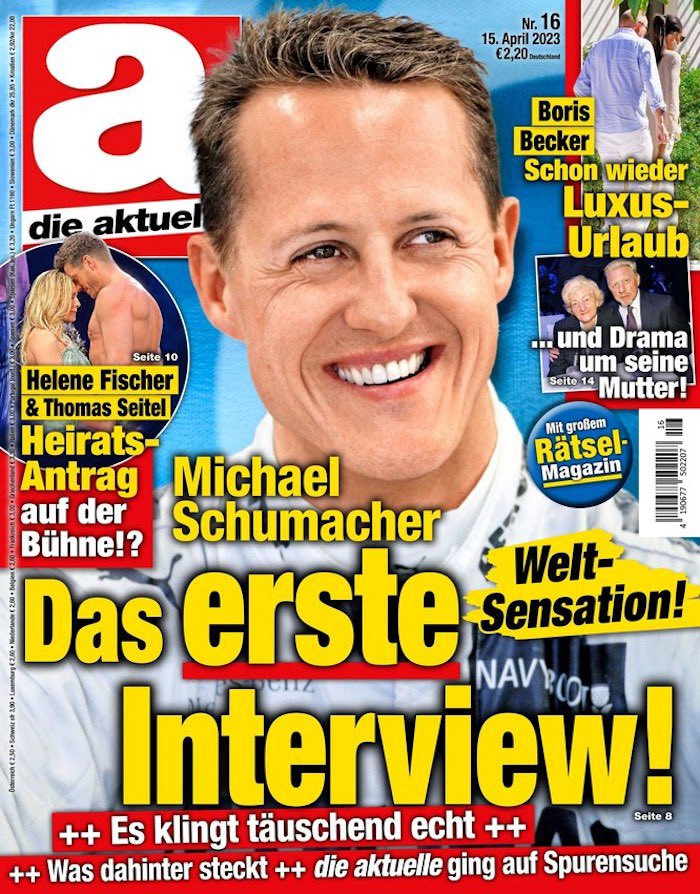
Speculation spiked again in 2024, with claims that Schumacher had attended his daughter, Gina's, wedding at the family villa in Mallorca. Some outlets hailed it as his first 'public' appearance in a decade, though there were no photographs and access was reportedly tight. Former driver Johnny Herbert later dismissed those reports as 'fake news.' The incident underlined how eager some corners of the media and fandom remain for any sign of normality, and how quickly that eagerness can outrun reality.
In 2025, attention shifted to the darker side of that obsession, as three men were convicted of attempting to blackmail the family using stolen personal photos and medical records. The case laid bare the constant security threat hovering around Schumacher's condition, and why the family keeps their circle so small.
Against that background, the 2026 suggestion that Schumacher is now well enough to be regularly wheeled around the gardens of his estates feels significant, even if no official medical bulletin accompanies it. Being 'no longer bed-bound,' as reported, is not a miracle recovery. It is, however, a tangible change in his daily life, the sort of milestone that matters when the progress is slow, private and hard-won.
None of these latest claims has been independently confirmed by the family or by named medical professionals. For now, the only certainty is that Schumacher remains at the centre of an intensely private struggle, while the world is left to piece together his story from fragments.
© Copyright IBTimes 2026. All rights reserved.
- MOST POPULAR IN Sports