Michael Schumacher Revelation: Ex-Colleague Reveals F1 Legend's 'Exceptional' Key Strength
Behind the lap times and titles, Michael Schumacher's enduring legacy at Mercedes, Sam Bird suggests, was the way he quietly bound a team together.
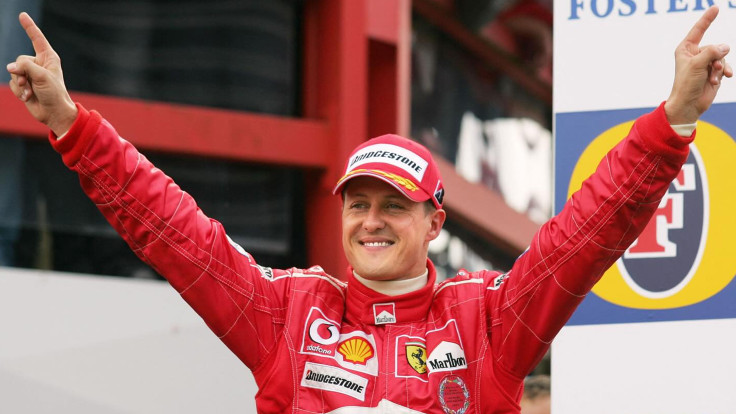
Michael Schumacher's former Mercedes colleague Sam Bird has described the Formula 1 legend's 'exceptional' ability to unite people as the key strength that defined his later career, speaking in a new interview released on YouTube this week.
Schumacher returned to F1 with Mercedes in 2010 after three years away from the sport, ending his first retirement which followed a title-laden spell at Ferrari up to 2006. Bird, then an emerging single-seater talent, spent three seasons embedded in the Mercedes set-up, first driving in the 2010 post-season rookie test and then serving as the team's official reserve in 2011 while also testing for the Brackley squad in 2012 and 2013. That put the Briton in unusually close proximity to one of the sport's most scrutinised comebacks.
Bird, who went on to become one of Formula E's most recognisable names between 2014 and 2025, has now offered a rare, almost understated insight into what it was actually like working alongside Schumacher day to day. Rather than dwelling on lap time or raw speed, he chose to talk about the seven-time champion's softer power inside a racing team.
Speaking on Lucas Stewart's YouTube channel, Bird began with a simple, almost disarming verdict: 'Gosh, Michael—firstly, what a guy.' It is not the sort of phrasing you use for a remote superstar. It sounds more like someone remembering a colleague who stayed late in the office.
Michael Schumacher And The Power Of The Paddock Whisper
The news came after years in which Schumacher's driving achievements have been replayed endlessly, while those who worked with him have mostly guarded their private impressions. Bird, by contrast, was frank that the most valuable lessons he took from the German had little to do with racecraft and everything to do with people.
'What I learned from Michael wasn't necessarily how he drove; it was how he worked with people—his ability to get the team around him working together, to be nice, and to be firm when he needed to be,' Bird said. For a man whose career was built on microscopic margins at 200mph, this is an oddly human legacy.
According to Bird, Schumacher had an instinctive sense of when to push and when to protect, particularly in the pressure-cooker environment of a top F1 operation. He described the veteran as 'really, really good at creating a positive team environment,' insisting that this was 'probably the biggest takeaway' from their time together.
That tallies with long-standing accounts of Schumacher's influence at Ferrari, where staff repeatedly credited him for pulling together a previously fractured operation. Bird explicitly linked the two eras, arguing that the same skill set was visible at Mercedes, even if the results sheet from 2010 to 2012 never reflected the dominance of Schumacher's Ferrari peak.

Inside Mercedes: Michael Schumacher And Nico Rosberg Compared
Bird's reflection also offered a quiet comparison between Schumacher and his Mercedes team-mate Nico Rosberg, whose own reputation in the paddock has centred heavily on technical detail.
'Nico was his team-mate, and Nico was really good at car setup and understanding the numbers and figures where he wanted the car,' Bird recalled. The implication is not that Schumacher was weak in those areas, more that his strengths spilled into another dimension altogether.
'Michael was good at that, but also brilliant at the person-to-person side of things,' Bird said, drawing a line between the data-driven mindset and the interpersonal glue that holds a team together over the course of a long season. In modern F1, where drivers are routinely evaluated by sector times and simulator sessions, it is a reminder that the mood in the garage still matters.
Bird pointed to the emotional connection between Schumacher and Ferrari as evidence of that talent. 'I think you saw that at Ferrari how much they loved him and he brought that over to Mercedes,' he said. The word 'loved' is doing a lot of work there. It suggests that, inside the sport, Schumacher is remembered less as a distant icon and more as a leader people wanted to follow.
Michael Schumacher's 2002 Belgian GP pole lap 🐎❤️ pic.twitter.com/ysZHxfbnDB
— La Gazzetta Ferrari (@GazzettaFerrari) April 16, 2026
Mercedes has not publicly expanded on Bird's remarks, and there is no new official assessment from the team about Schumacher's internal role during those rebuilding seasons, when the outfit was still some years away from the Lewis Hamilton era. What Bird has provided, instead, is a snapshot from the edge of the inner circle: a reserve driver watching how the biggest name in the room handled a briefing, or calmed a debrief, or made sure the mechanics felt seen.
None of that changes Schumacher's official record, or resolves long-running debates about where he sits in the all-time hierarchy. It does, however, underscore why those who shared a garage with him tend to talk less about statistics and more about atmosphere. For Bird, after three years in Schumacher's orbit, the defining memory is not a single overtake or qualifying lap, but the way one man could make an entire team feel as if they were pulling in the same direction.
© Copyright IBTimes 2026. All rights reserved.
- Recommended For You